Lawn Mower Hub

Lawn Mower Types & Technology

Explore the different types of lawn mowers and the latest technology behind them. From push mowers and riding mowers to robotic and electric models, we help you understand the features and innovations that make lawn care easier, faster, and more efficient.

Fall Lawn Mowing Schedule

My Proven Fall Lawn Mowing Schedule Secrets

Quick Overview Your fall lawn mowing schedule should wind down gradually – not stop suddenly – as soil temperatures drop below 50°F. Cool-season grasses (fescue, Kentucky bluegrass) do best at 3 to 3.5 inches for winter; warm-season grasses (Bermuda, Zoysia) go shorter, around 1.5 to 2 inches. Most lawns in the Midwest and Northeast see

My Proven Fall Lawn Mowing Schedule Secrets Read More »

When to Start Mowing in Spring

When to Start Mowing in Spring My Proven Guide

Quick Overview Wait until soil temperature reaches 55°F consistently before your first spring mow – not when the grass looks green. The one-third rule applies on day one: never cut more than one-third of the blade height in a single pass. Cool-season grasses (fescue, bluegrass, ryegrass) are ready earlier than warm-season grasses (Bermuda, Zoysia, St.

When to Start Mowing in Spring My Proven Guide Read More »

Lawn Fertilizing Schedule

My Proven Lawn Fertilizing Schedule Secrets

Quick Overview The single biggest fertilizing mistake is applying at the wrong time – timing matters more than which bag you buy. Cool-season grasses (Kentucky bluegrass, fescue) need their main feeding in fall; warm-season grasses (Bermuda, St. Augustine) need it in late spring through summer. A soil test costs $15-$25 and tells you exactly what

My Proven Lawn Fertilizing Schedule Secrets Read More »

The 13 Mowing Rule Explained

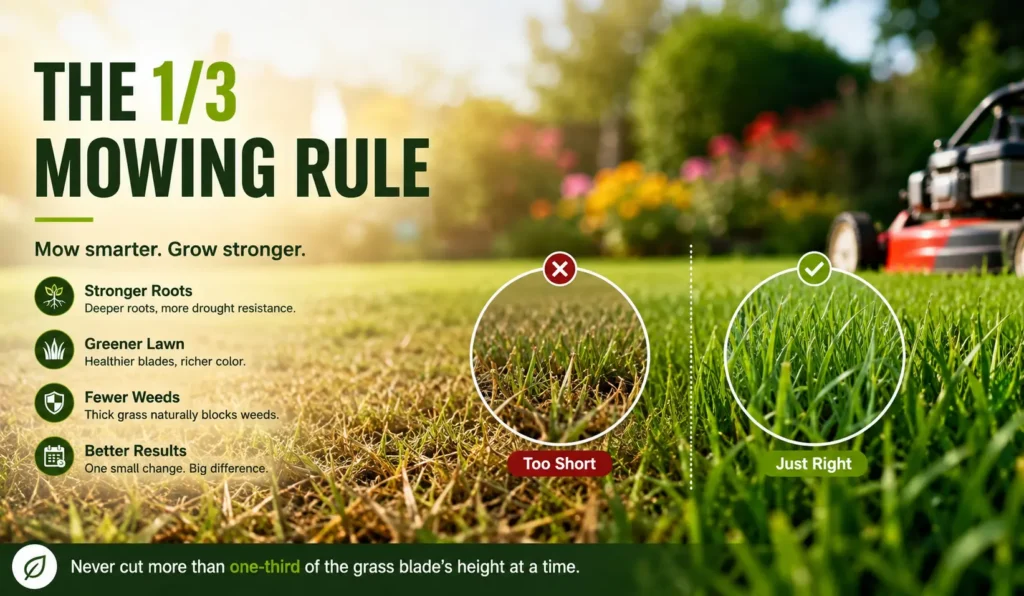
The 1/3 Mowing Rule Explained: My Proven Lawn Fix

Quick Overview The 1/3 mowing rule means you should never cut more than one-third of the grass blade’s height in a single mow. Breaking the rule stresses root systems, triggers yellowing, and opens your lawn to weed invasion. Cool-season grasses like Kentucky Bluegrass thrive at 3-4 inches; warm-season grasses like Bermuda do best at 1-2

The 1/3 Mowing Rule Explained: My Proven Lawn Fix Read More »

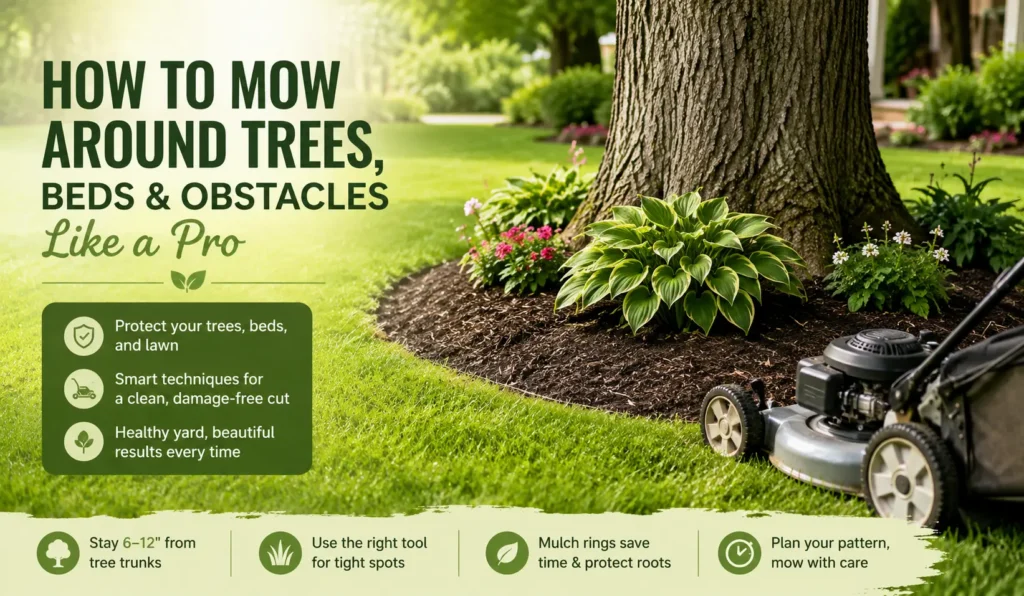
How to Mow Around Trees, Flower Beds and Obstacles

How to Mow Around Trees Flower Beds and Obstacles

Quick Overview Mow around trees by staying at least 6-12 inches from the trunk and using a string trimmer for anything closer – direct mower contact damages bark and compresses roots. Always mow the perimeter of beds and obstacles first, then work outward – this prevents scalping edges on your second pass. Mulch rings around

How to Mow Around Trees Flower Beds and Obstacles Read More »

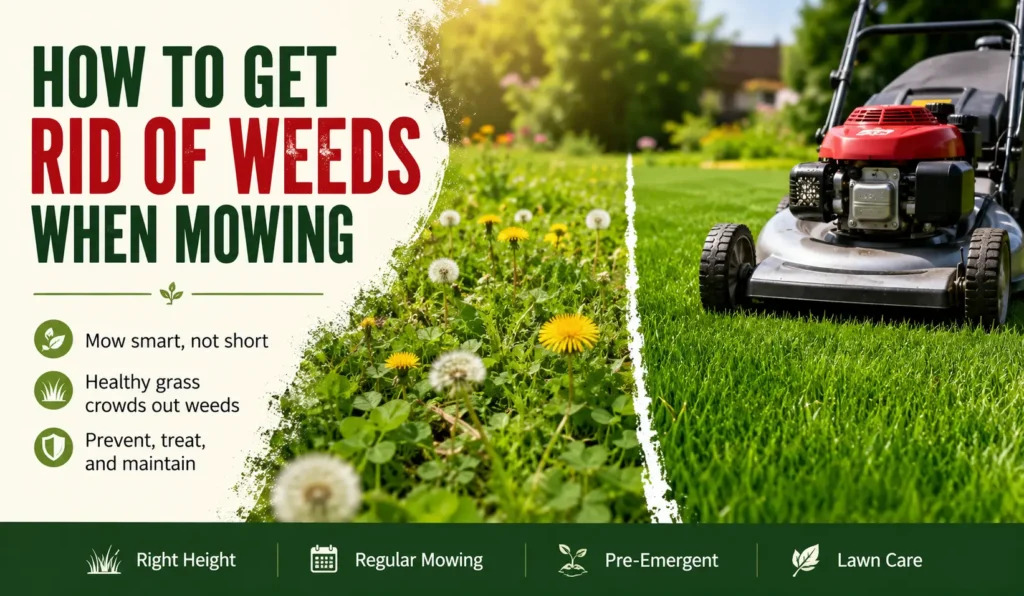
How to Get Rid of Weeds When Mowing

How to Get Rid of Weeds When Mowing: My Proven Fix

Quick Guide Mowing alone does not kill weeds – it cuts them back temporarily while the root survives and regrows Cutting at the correct height (3-4 inches for most cool-season grasses) shades the soil surface and blocks weed seed germination Pre-emergent herbicide applied before soil hits 55°F stops crabgrass before it starts – this is

How to Get Rid of Weeds When Mowing: My Proven Fix Read More »