
Quick Overview
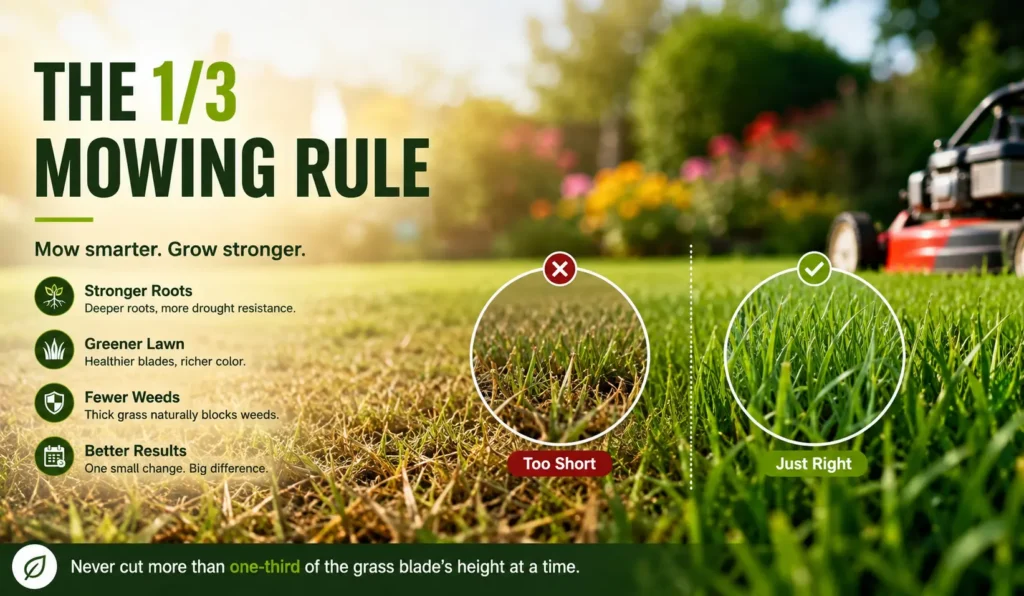
- The 1/3 mowing rule means you should never cut more than one-third of the grass blade’s height in a single mow.
- Breaking the rule stresses root systems, triggers yellowing, and opens your lawn to weed invasion.
- Cool-season grasses like Kentucky Bluegrass thrive at 3-4 inches; warm-season grasses like Bermuda do best at 1-2 inches.
- Mow frequency should follow growth rate, not the calendar – every 5-7 days in spring, less often in summer heat.
- One correct adjustment to your mowing height can visibly change lawn health within two to three weeks.
A few summers ago, I made a mistake I still think about. I was rushing through my Florida backyard on a Saturday morning, trying to knock out the lawn before a family cookout. The grass had gotten away from me – maybe 10 days of growth in July heat. I dropped the mower deck low, figured I’d just get it all in one pass, and called it done.
By Monday, half the lawn was yellow. Not patchy yellow. Almost-dead yellow.
That’s when I finally understood the 1/3 mowing rule – not just as a guideline I’d heard from landscapers, but as something with real consequences when you ignore it. If you mow your lawn regularly but aren’t sure whether you’re doing it right, this guide is for you. We’ll cover what the rule is, why it matters at a biological level, and how to actually apply it based on your grass type and climate.
What Is the 1/3 Mowing Rule?
The 1/3 mowing rule is simple: never remove more than one-third of the grass blade’s length in a single mowing session. If your lawn is at 3 inches, don’t cut it below 2 inches. If it’s at 6 inches, don’t go below 4.
That’s the whole rule. But the reason it works is worth understanding, because once you see the biology behind it, you’ll never ignore it again.
The Simple Science Behind It
Grass blades are where photosynthesis happens. The blade captures sunlight and converts it into energy that feeds the roots. Cut too much of the blade at once, and the plant loses most of its food-producing surface in seconds.
When that happens, the grass shifts into emergency mode. It pulls stored energy from the roots to grow new leaf tissue as fast as possible. That depletes root reserves, shrinks root depth, and leaves the plant weaker than before the mow.
Short roots mean less access to deep soil moisture. Less moisture access means the grass dries out faster. In a Phoenix summer or a Florida July, that stress can kill a lawn section in days.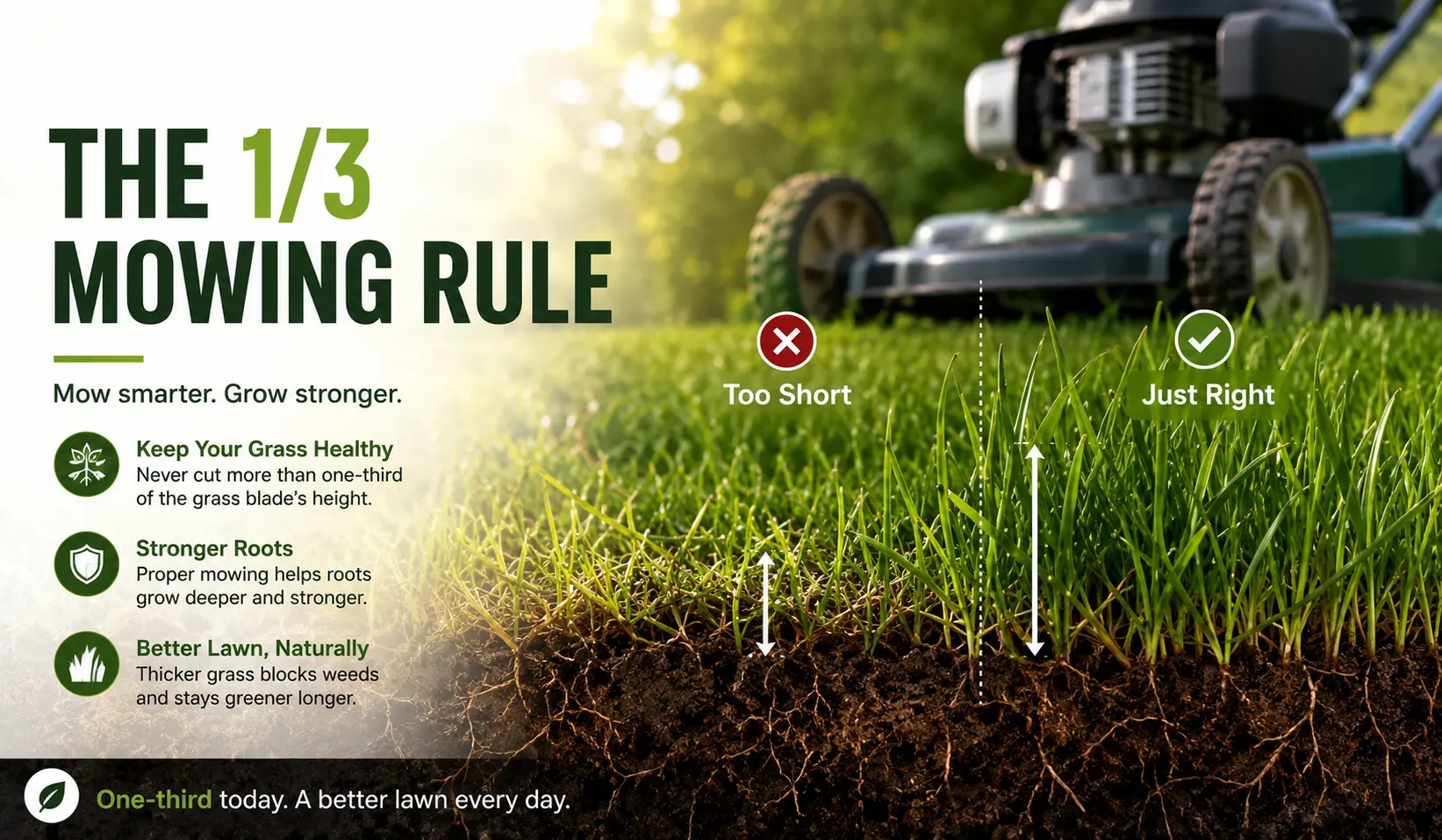
What Happens When You Break the Rule
The first thing you’ll see is color change. Grass turns yellow or brown within 24-48 hours of being scalped. That’s not sun damage – that’s the grass cannibalizing itself.
Then you lose density. Thin, stressed turf can’t compete with weed seeds already sitting in the soil. Within two or three weeks of a bad scalp, crabgrass and broadleaf weeds move in.
Recovery is slow. A badly scalped warm-season lawn in summer can take four to six weeks to fully bounce back. In that window, it looks awful and it’s vulnerable.
Why This Rule Matters More Than You Think
Most homeowners think mowing is just about appearance. Keep it tidy, keep it short. But mowing is actually one of the most stressful events a lawn goes through. Done wrong, repeatedly, it’s the single biggest cause of thin, patchy turf in residential yards.
How It Protects Grass Roots
Root depth follows leaf height. That’s not a metaphor – it’s how grass biology works. Grass varieties that are kept taller tend to develop deeper root systems. Deeper roots reach soil moisture that surface roots can’t, which means the lawn holds up better during dry spells.
When you consistently mow too low, you train the grass to stay shallow. A 1-inch Bermuda lawn mowed to the soil has nowhere left to go. A 2-inch Bermuda lawn has a buffer that keeps root depth intact.
The 1/3 rule protects that buffer every single time you mow.
The Connection to Lawn Color and Thickness
The lush, dark-green lawn your neighbor seems to maintain without effort – that’s almost always the result of correct mowing height combined with decent watering. Mowing height affects chlorophyll density. More blade surface means more green pigment, which means deeper color.
Thickness is also a direct result of how the plant responds to mowing. A clean cut at the right height encourages the grass to tiller – to spread laterally and fill gaps. A scalp cut sends the plant vertical, chasing sunlight, with no energy left for spreading.
How It Affects Weed Growth
Tall, dense turf blocks sunlight at the soil surface. Weed seeds need light to germinate. A thick lawn at the right height is one of the most effective weed suppressants available – and it’s free.
Mow too short and you break the canopy. Light hits the soil. Seeds that have been sitting dormant for months suddenly have what they need to sprout. I’ve seen a single bad mow open up a Midwest backyard to a full dandelion invasion by mid-May.
How to Apply the 1/3 Rule for Your Grass Type
The rule is universal. The numbers it applies to are not. Cool-season and warm-season grasses have completely different ideal heights, and mowing one like the other will cause problems.
Cool-Season Grasses (Kentucky Bluegrass, Fescue, Ryegrass)
These grasses grow fastest in spring and fall. They go semi-dormant in summer heat, which means they also grow more slowly and need less frequent mowing.
Ideal maintenance height for Kentucky Bluegrass is 2.5-3.5 inches. Tall Fescue does best at 3-4 inches. Perennial Ryegrass sits at 2-3 inches.
Using the 1/3 rule, you’d mow Tall Fescue when it reaches 6 inches, cutting back to 4. In a Minnesota spring, that might mean mowing every five days during a warm, wet stretch.
Warm-Season Grasses (Bermuda, Zoysia, St. Augustine)
Warm-season grasses peak in summer and go dormant in winter. They generally prefer lower heights than cool-season types.
Bermuda grass performs best at 1-2 inches. Zoysia sits comfortably at 1.5-2.5 inches. St. Augustine, the lawn staple across the Gulf Coast, does well at 3.5-4 inches – higher than most people realize.
In a Phoenix summer, Bermuda can grow half an inch per day during peak heat. That means if you let a Bermuda lawn go 10 days, you’re looking at 4-5 inches of growth – and a 1/3 rule mow would only take it to 3 inches. Most homeowners drop the deck to 1 inch in one pass. That’s where the scalping starts.
Ideal Mowing Heights by Grass Type
| Grass Type | Ideal Height | Mow When It Reaches | Region |
|---|---|---|---|
| Kentucky Bluegrass | 2.5-3.5 in | 4-5 in | Midwest, Northeast |
| Tall Fescue | 3-4 in | 5-6 in | Transitional zones |
| Perennial Ryegrass | 2-3 in | 3.5-4.5 in | Pacific Northwest, Northeast |
| Bermuda | 1-2 in | 2.5-3 in | South, Southwest |
| Zoysia | 1.5-2.5 in | 3-4 in | Southeast, Transitional |
| St. Augustine | 3.5-4 in | 5.5-6 in | Gulf Coast, Florida |
How Often Should You Mow to Follow This Rule?
The 1/3 rule means mowing frequency is set by grass growth rate – not by what day of the week it is. That takes some getting used to if you’ve always mowed on a Saturday schedule.
Mowing Frequency in Spring vs. Summer vs. Fall
Spring is the most demanding season for cool-season grass. Kentucky Bluegrass in Ohio can put on an inch per week in April. That means mowing every five to seven days to stay within the 1/3 rule.
Summer slows cool-season grasses down significantly. The same Ohio lawn might only need mowing every 10-14 days in July. Warm-season grasses flip this – they grow fastest in summer and may need mowing twice a week in peak heat.
Fall growth on cool-season grass picks up again as temperatures drop. Mow until the grass actually stops growing, not until the calendar says to stop. In mild Midwest falls, that might mean mowing into late November.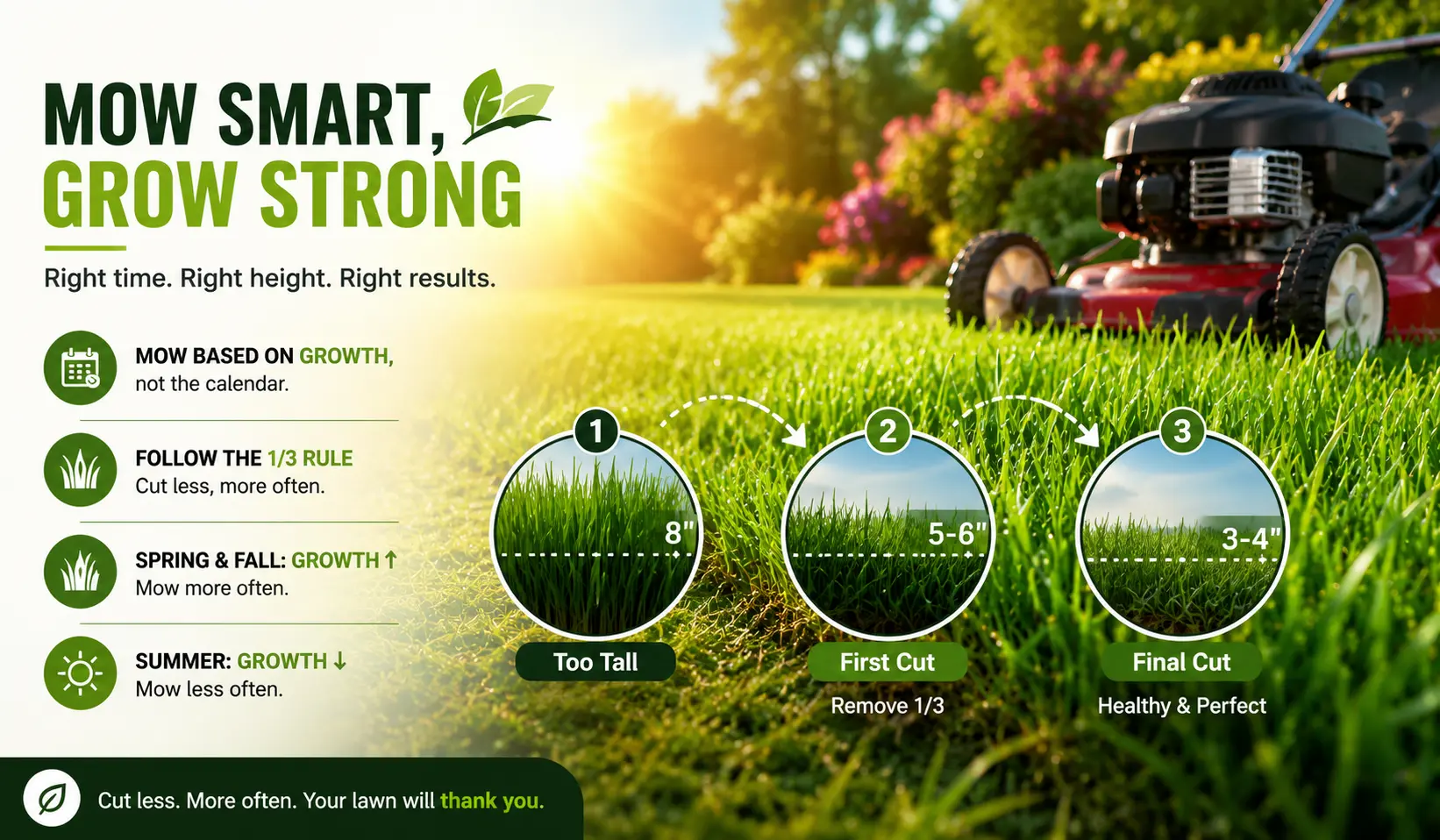
What to Do When You’ve Let the Grass Get Too Long
Life gets busy. Sometimes you come back from a two-week vacation to grass that’s at 8 inches. You can’t follow the 1/3 rule in one mow without leaving the lawn at 5-6 inches, which might look messy.
Here’s the honest approach: mow in stages.
Set the deck to take off one-third today. Wait two or three days. Take off another third. Wait again. Get the lawn to target height over one to two weeks. Yes, it takes longer. But the grass stays healthy, and you avoid the yellow-lawn disaster I walked into in my Florida backyard.
Seasonal Mowing Schedule by Climate
| Season | Cool-Season Grass | Warm-Season Grass |
|---|---|---|
| Spring | Every 5-7 days | Every 10-14 days (slow start) |
| Summer | Every 10-14 days | Every 5-7 days (peak growth) |
| Fall | Every 7-10 days | Slow down, stop before dormancy |
| Winter | Stop (dormant) | Stop (dormant) |
Common Mistakes That Violate the 1/3 Rule
Most homeowners break the rule the same three ways. Knowing them makes them easier to avoid.
Mowing Too Low (Scalping)
Scalping is the most damaging mistake, and it usually comes from one of two habits: always setting the deck on the lowest setting, or dropping it low when the lawn gets too tall to try to “get ahead” of it.
I’ve seen both habits destroy otherwise healthy lawns. A scalped lawn in a Florida summer doesn’t just look bad – it lets soil temperature spike, which kills shallow roots and makes recovery even slower.
Set your mowing height first, before you start. Check where the deck is. Many homeowners have no idea they’ve been mowing at 1 inch for years.
Waiting Too Long Between Mows
This is the trap I fell into that July morning. If you wait 10-14 days during peak grass growth season, you’ll always break the 1/3 rule just to get the lawn to a presentable height.
The fix is to mow more often during fast-growth periods, even if the lawn looks fine. Mowing when the grass is slightly shorter than the trigger height doesn’t hurt. Waiting too long always does.
Using a Dull Blade
A dull mower blade doesn’t cut grass – it tears it. A torn grass blade has a ragged, white tip that turns brown within a day or two. It also creates an opening for fungal disease to enter the plant.
Sharpen your mower blade at least once per season, or every 20-25 hours of use. It makes a noticeable difference in how the lawn looks the day after mowing, and it reduces recovery time significantly.
Real Lawn Scenarios Where This Rule Saved the Grass
Recovering a Scalped Florida Lawn in Summer
After my bad July mow, the lawn was about 40% yellow. I raised the deck to the highest setting – 4 inches on my mower – and let the grass grow to 5 inches before the next cut. I didn’t fertilize aggressively (that can stress an already-weakened lawn in heat). I just watered consistently and stayed patient.
By week three, the yellow patches were filling back in. By week six, you couldn’t tell anything had happened. The 1/3 rule, applied consistently in recovery, did the work.
Managing Fast Spring Growth in the Midwest
A Minnesota spring can throw three or four inches of growth at Kentucky Bluegrass in under two weeks during a warm, wet April. It’s genuinely hard to keep up with.
The approach that works: mow before the lawn looks like it needs it. Check height twice a week instead of once. Set a reminder if you have to. Staying slightly ahead of the trigger point means you never face a lawn that’s too tall to manage within the rule.
Keeping Bermuda Healthy Through Arizona Heat
Bermuda in Phoenix is a full-time summer project. Peak summer growth means mowing twice a week to stay within the 1/3 rule at a 1.5-inch target height.
The common mistake is skipping a mow during a heat wave, thinking the grass is stressed and needs a break. But letting Bermuda get tall in 110-degree heat doesn’t protect it – it shades itself unevenly, creates moisture pockets at the soil surface, and increases disease risk. Short and frequent is the right call for Bermuda in desert heat.
My Final Thoughts
I’ve been mowing lawns for a long time across a lot of different climates, and the 1/3 rule is the single piece of advice I give every homeowner who asks why their lawn looks tired. Not fertilizer. Not irrigation. Not aerating. Just: stop cutting so much at once.
It sounds almost too simple. But the biology is real. Less blade removed means less root stress, more consistent color, denser turf, and fewer weeds over the course of a season. The improvement isn’t dramatic after one mow. It builds over weeks and months, and eventually you’re the neighbor whose lawn always looks right without seeming to try that hard.
Start on your next mow. Check your current grass height before you pull the mower out. Set the deck at no lower than two-thirds of that height. Then do the same thing the next time. That’s all it takes to get the rule working in your favor.
Quick Reference Table
| Grass Type | Ideal Height | Max Height Before Mowing | Mowing Frequency |
|---|---|---|---|
| Kentucky Bluegrass | 2.5-3.5 in | 4.5-5 in | Every 5-7 days (spring/fall) |
| Tall Fescue | 3-4 in | 5.5-6 in | Every 7-10 days |
| Perennial Ryegrass | 2-3 in | 3.5-4.5 in | Every 5-7 days (spring) |
| Bermuda | 1-2 in | 2.5-3 in | Every 5-7 days (summer) |
| Zoysia | 1.5-2.5 in | 3.5-4 in | Every 7-10 days |
| St. Augustine | 3.5-4 in | 5.5-6 in | Every 7-10 days |
Frequently Asked Questions About the 1/3 Mowing Rule
What is the 1/3 mowing rule?
The 1/3 mowing rule means you should never cut more than one-third of the grass blade’s height in a single mowing session. If your lawn is 3 inches tall, don’t mow it below 2 inches. The rule protects the grass blade’s ability to photosynthesize and prevents root system stress.
Why does breaking the 1/3 rule turn grass yellow?
When you remove more than one-third of the blade in one mow, the grass loses most of its photosynthesis surface instantly. The plant pulls energy reserves from its roots to regrow leaf tissue, which depletes root health and causes visible yellowing within 24-48 hours. This is called scalping.
How do I follow the 1/3 rule when my grass gets too long?
Mow in stages. Take off one-third today, wait two to three days, then mow again. Repeat until you reach your target height. This takes longer but avoids the root stress and discoloration that comes from a single aggressive cut.
Does the 1/3 rule apply to all grass types?
Yes – the rule applies to every grass type. The numbers change depending on whether you’re growing warm-season or cool-season grass, but the principle of removing no more than one-third of the blade at a time is the same across all varieties.
How does the 1/3 rule help with weed control?
Grass kept at the right height maintains a dense canopy that blocks sunlight from reaching the soil surface. Weed seeds need light to germinate. Consistent correct mowing height means fewer weed seeds get the light they need to sprout, reducing weed pressure over time without herbicide.
How often should I sharpen my mower blade if I follow the 1/3 rule?
Sharpen the blade at least once per season, or every 20-25 mowing hours. A sharp blade makes a clean cut that heals faster. A dull blade tears the grass tip, which turns brown and creates openings for disease – which undermines the benefits of following the 1/3 rule correctly.