
Quick Overview
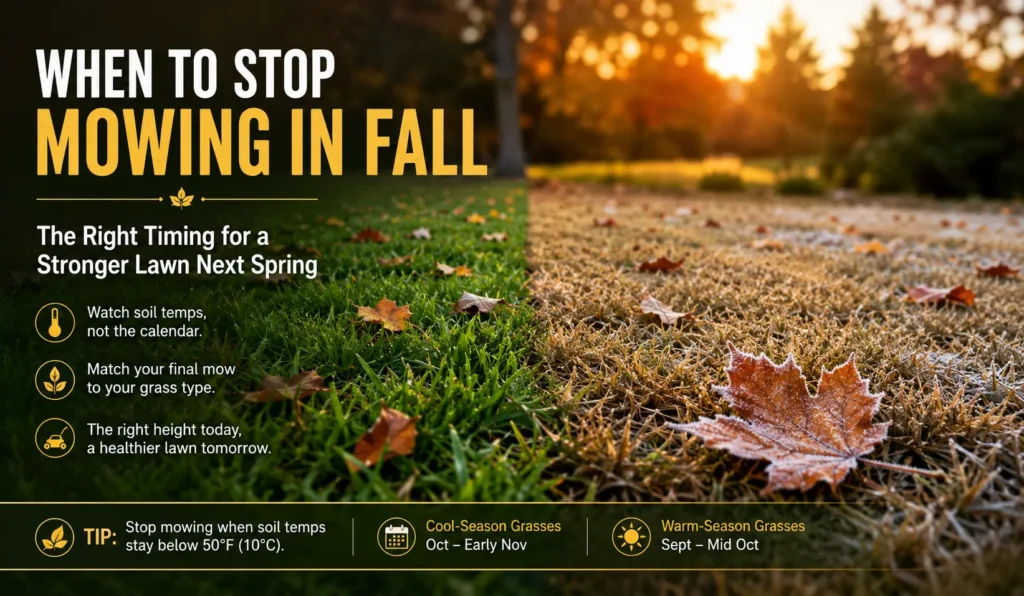
- Stop mowing when soil temperatures consistently drop below 50°F (10°C) – not when the calendar tells you to.
- Cool-season grasses (Kentucky bluegrass, fescue, ryegrass) typically get their last cut in October to early November; warm-season grasses (Bermuda, zoysia, St. Augustine) stop earlier, usually September to mid-October.
- The final mow height matters: cut cool-season grasses to 2.5-3 inches, warm-season grasses to 1.5-2 inches before winter.
- Mowing too late into dormancy or too short before winter both stress the lawn and slow spring recovery.
- Your grass’s growth rate is the most reliable signal – when it stops growing noticeably week to week, you’re close to done.
I still remember the October morning I drove past two neighbors’ houses within thirty seconds of each other. One had their mower sitting idle in the garage, grass already a touch long and yellowing at the tips. The other was out there in a light jacket, engine running, mowing what looked like barely-grown turf in the cold. Both of them were wrong about when to stop mowing in fall – just wrong in opposite directions.
Getting the timing right isn’t complicated, but it does require paying attention to your lawn rather than the date on your phone. This guide is for homeowners who want their grass to actually survive winter and come back thick in spring, not just survive it and limp along.
Why Fall Mowing Timing Actually Matters
Most people treat fall mowing as something that just winds down naturally – you mow less and less until it feels pointless. But what happens to your lawn in those final weeks of the season has a direct effect on how it handles winter stress and how fast it greens up in April.
What Happens to Grass as Temperatures Drop
Grass growth slows significantly once daytime air temperatures fall below 60°F (15°C) and soil temperatures drop toward 50°F (10°C). At that threshold, cool-season grasses begin redirecting energy away from leaf production and into root storage. They’re essentially packing provisions for winter.
Warm-season grasses hit this transition earlier and more sharply. Bermuda grass, for example, can go dormant and turn straw-colored seemingly overnight when a cold front rolls through Georgia or Texas in October.
During this slowdown, the grass plant is storing carbohydrates in its crown and root system. That stored energy is what it uses to survive winter and push new growth in spring. Any stress you add during this window – whether from mowing too short, mowing wet grass, or mowing after the plant has fully stopped growing – chips away at those reserves.
The Real Cost of Stopping Too Early – or Too Late
Stop too early, and you go into winter with grass that’s too long. Long grass mats down under snow and leaf cover, creating the perfect environment for snow mold and other fungal diseases. I learned this the hard way in my first Minnesota winter – I stopped mowing in mid-September because it “felt like fall,” and came out in March to patches of gray, matted turf that took two full seasons to fill back in.
Stop too late, and you’re cutting grass that’s actively trying to harden off for winter. You’re removing leaf tissue the plant needs for insulation and stressing roots that are no longer equipped to recover quickly.
The window you’re aiming for is narrow, but it’s readable if you know what to watch for.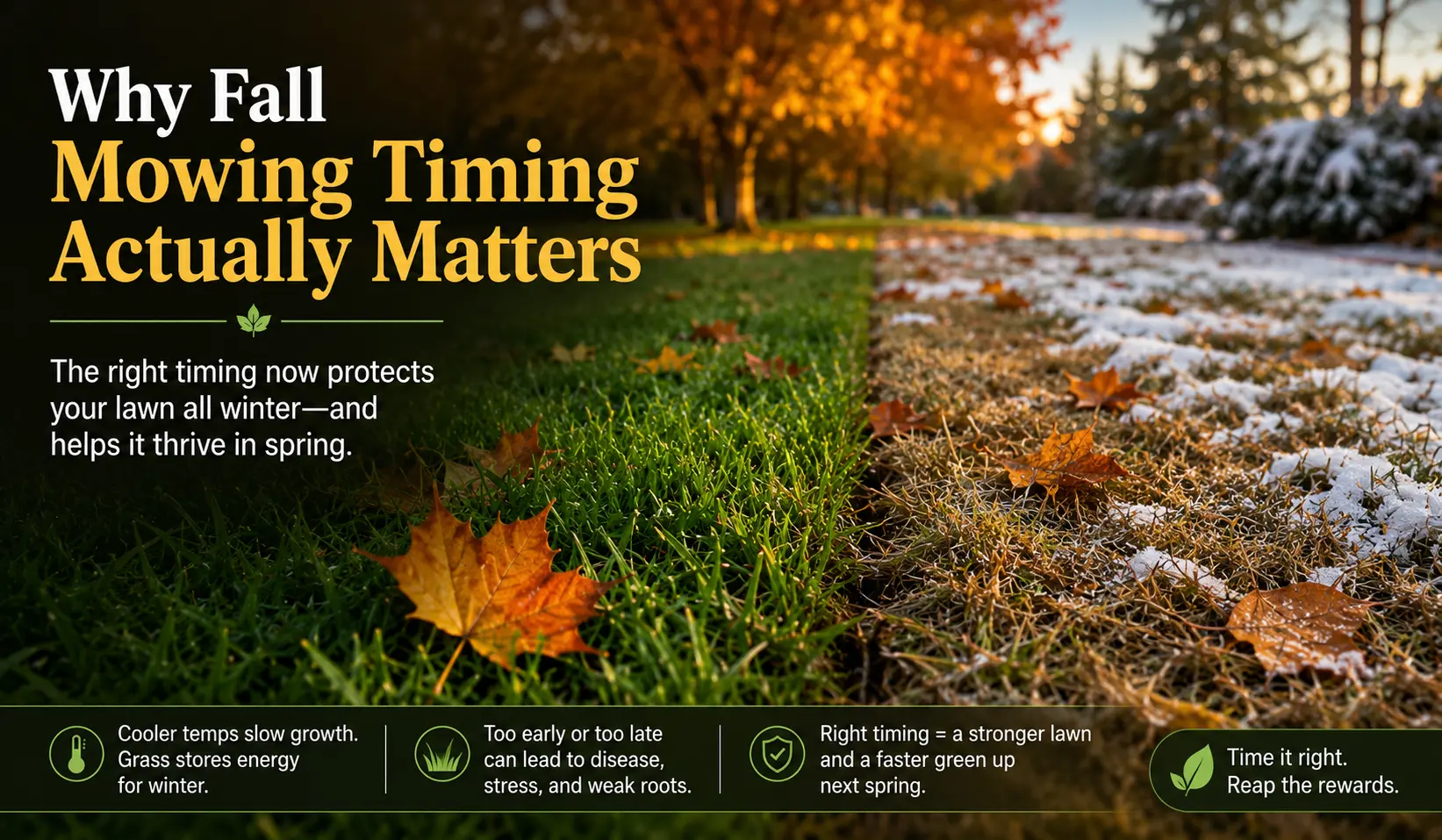
The Key Signs It’s Time to Stop Mowing
No single date works for every lawn in every climate. Here’s what to actually watch.
The Temperature Rule Most People Get Wrong
Most guides say “stop mowing when it gets cold.” That’s not specific enough to be useful. The number that matters is soil temperature at the 2-4 inch depth, not air temperature.
Grass roots and crowns respond to soil temperature, not what the thermometer says on your porch. Soil temperatures lag air temperatures by several weeks in fall – so even after a cold snap drops air temps into the 40s, your soil might still be sitting at 55°F or warmer, and your grass is still actively growing.
You can check your local soil temperature through your state’s cooperative extension service or through soil temperature maps provided by the NOAA (National Oceanic and Atmospheric Administration). Many university extension programs post weekly updates by region from September through November.
The benchmark: once soil temperatures at 2-4 inches have been below 50°F (10°C) for several consecutive days, cool-season grasses are functionally dormant or near-dormant. That’s your signal to stop.
For warm-season grasses, the threshold is a bit higher – around 55°F soil temperature – because they go dormant earlier in the cycle.
Watch the Growth Rate, Not the Calendar
Here’s the practical version: stand at the edge of your lawn and look at it two weeks in a row. Is it meaningfully taller? If you can barely tell it grew, you’re almost done. If you need to mow but you’re questioning whether it actually needed it, that’s your last or second-to-last mow of the season.
I started doing this instead of mowing on a fixed schedule about six years ago, and it completely changed how my lawn transitions into winter. You develop an eye for it – the grass just starts looking tired rather than actively growing.
How Your Grass Type Changes Everything
Cool-season grasses (Kentucky bluegrass, tall fescue, fine fescue, perennial ryegrass) actually get a second growth surge in fall as temperatures drop from summer highs. They might grow more actively in September and October than they did in August. This is normal, and these grasses stay green much later into fall than warm-season types.
Warm-season grasses (Bermuda, zoysia, St. Augustine, centipede grass) slow dramatically once nights start cooling. They’re warm-weather plants, and they don’t have that fall growth surge. Once you see them start to lose their green color, dormancy is beginning and mowing should wrap up quickly.
Comparison: Cool-Season vs. Warm-Season Grass – When to Stop
| Grass Type | Examples | Signs of Dormancy | Typical Last Mow Window | Final Cut Height |
|---|---|---|---|---|
| Cool-season | Kentucky bluegrass, tall fescue, perennial ryegrass | Growth slows after fall surge; soil temp below 50°F | Late October to mid-November | 2.5-3 inches |
| Warm-season | Bermuda, zoysia, St. Augustine, centipede | Color fades to straw/tan; growth nearly stops | Mid-September to mid-October | 1.5-2 inches |
When to Stop Mowing by US Region
Climate varies enough across the US that a Minnesota homeowner and a Florida homeowner are essentially managing two different problems. Here’s how the timing breaks down by region.
The Midwest and Northeast (Minnesota, Ohio, New York)
This is where fall mowing timing is the most consequential – and the most unforgiving. Minnesota, Wisconsin, Ohio, and upstate New York all have real winters with extended periods of snow cover.
In these regions, cool-season grasses stay green and grow through September and into October. First frost often arrives in late September in Minnesota, but that doesn’t mean you stop mowing. Grass can handle light frosts.
The key here is watching for consistent hard freezes – nights below 28°F (-2°C) sustained for several days. That’s when soil temperatures really start to drop and root activity shuts down.
Most Midwest and Northeast homeowners should plan for their final mow sometime in late October, though a warm fall can push this into early November. In 2021, I knew people in Ohio who were still doing cleanup mows on November 12th because the weather stayed mild.
The one thing I’d never do in this region: stop in mid-October because it “feels like fall” and leave your grass at 4+ inches going into winter. That’s the recipe for snow mold.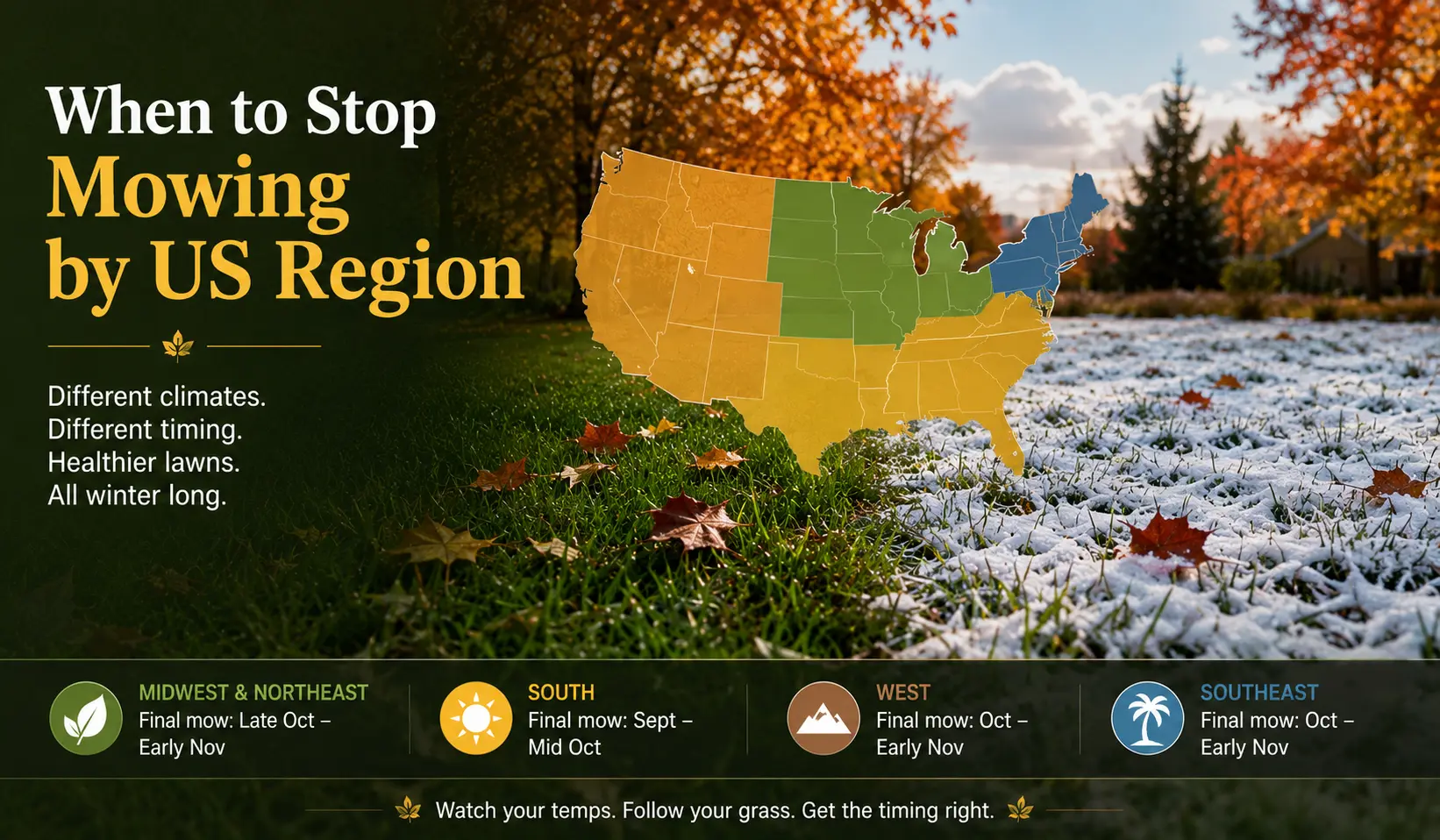
The Southeast and Gulf Coast (Florida, Georgia, Texas)
Warm-season grasses dominate this region, and they play by different rules. Bermuda and zoysia in Georgia start going dormant as October temperatures cool. St. Augustine in Florida may stay green almost year-round in the southern part of the state.
In the Southeast, the last mow typically happens in September to mid-October for most warm-season grasses. Once the grass starts losing color – going from green to olive to tan – stop mowing. Cutting dormant warm-season grass doesn’t help it and can expose the crowns to winter damage.
Texas is complicated because it spans USDA hardiness zones 6 through 10. North Texas behaves more like the Southeast proper, while South Texas lawns might barely go dormant at all.
One genuine frustration I’ve had in this region is the October warm snap. Temperatures drop, you stop mowing, then two weeks of warm weather hit and the Bermuda perks back up briefly. My advice: don’t resume mowing just because you see a little green flash. If soil temps are below 55°F and it’s mid-October or later, let it go.
The Pacific Northwest and Mountain States
The Pacific Northwest is the strangest region for fall mowing. Oregon and Washington have mild, wet falls – lawns can stay green into December or beyond. Cool-season grasses in the Willamette Valley or around Seattle don’t go dormant the way they do in Ohio.
The issue in the Pacific Northwest is usually the opposite of dormancy timing: mowing frequency is often less critical than managing wet conditions. Mowing waterlogged grass in November causes compaction and tears rather than clean cuts. This is a region where blade sharpness and dry windows matter more than stopping dates.
Mountain states like Colorado and Idaho follow more conventional cool-season timing, with final mows in early to mid-October depending on elevation. High-altitude lawns at 6,000+ feet can see killing frosts in September.
Region-by-Region Last Mow Guide
| Region | Grass Type | Typical Last Mow | Key Signal |
|---|---|---|---|
| Midwest/Northeast (MN, OH, NY) | Cool-season | Late October – early November | Soil temp below 50°F; consistent hard freezes |
| Southeast (GA, SC, NC) | Warm-season | September – mid-October | Grass losing color; nights below 55°F |
| Gulf Coast/South FL | Warm-season | October – November (or no clear stop) | Depends on local winter temps |
| Texas (North) | Warm-season | October | Similar to Southeast |
| Pacific Northwest | Cool-season | November – December | Growth stops; avoid wet-ground mowing |
| Mountain West | Cool-season | Early – mid-October | First hard frost; elevation matters |
The Last Mow – How to Do It Right
When you do decide it’s time for the final cut of the year, the quality of that mow matters more than most people realize.
What Cutting Height to Use Before Winter
For cool-season grasses, aim for 2.5 to 3 inches going into winter. This height gives the crowns some insulation from cold and ice without being so long that the grass mats down under snow.
Don’t drop below 2 inches for cool-season types before winter. That’s scalping territory when the lawn is already stressed from cold.
For warm-season grasses, a lower final cut – around 1.5 to 2 inches – is standard. Bermuda actually handles winter better when cut shorter because there’s less dead leaf material to harbor disease. Zoysia is similar.
If your grass went into fall a little long – say 4 or 5 inches because you were traveling or just let it go – don’t cut it all the way down to 2.5 inches in one pass. Drop it by one inch at a time on successive mows, spaced a few days apart. Removing more than a third of the blade height in one cut (the “one-third rule”) is stressful for the plant at any time of year, but especially so in late fall.
Should You Mulch Leaves or Bag Them?
Light leaf cover can be mulched directly into the lawn with a mowing pass – the fine particles break down and feed the soil. I do this through October without a second thought.
But once leaves are more than about half an inch deep or consistently wet, mulching becomes a problem. Heavy mulched leaves can smother grass crowns over winter and create mat conditions that lead to disease.
If you have mature deciduous trees – oaks, maples, anything that drops heavily in November – bag the final mow or blow the leaves off before your last cut. The tradeoff in labor is worth it when you see the lawn coming up clean in April.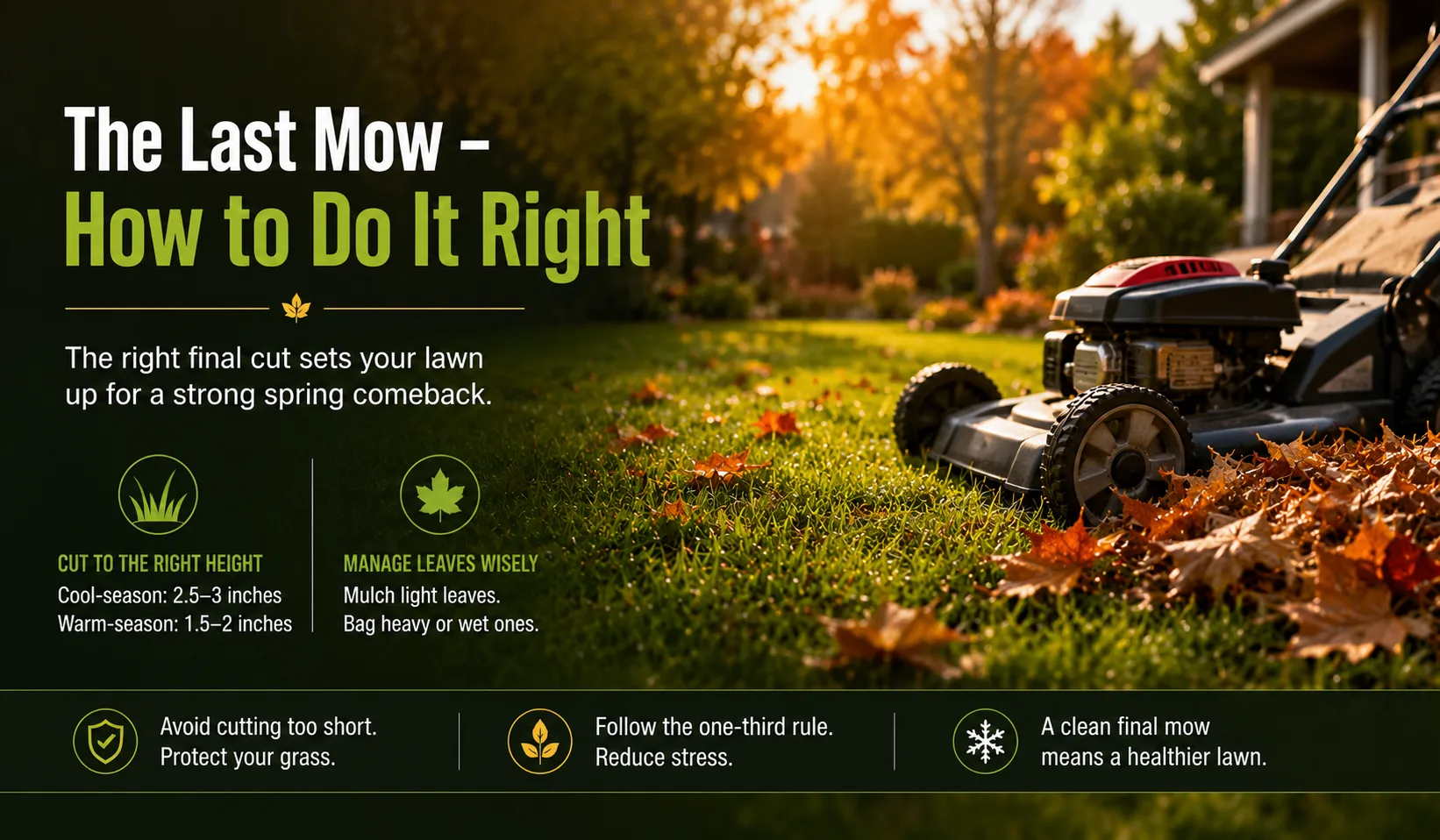
Blade Sharpness and Mower Prep for Storage
A sharp blade on your final mow is worth the ten minutes it takes to sharpen or swap it. Dull blades tear grass instead of cutting it cleanly, leaving ragged ends that brown quickly and are more vulnerable to disease through the winter.
After the last mow, drain the fuel from the mower or run the tank empty. Old fuel breaks down and gums up the carburetor. Add a fuel stabilizer if you prefer to keep fuel in the tank – products like Sta-Bil are widely available.
Clean the underside of the deck. Dried grass and debris hold moisture against the metal and accelerate rust. A stiff brush or putty knife and a quick rinse goes a long way.
Mistakes People Make With Fall Mowing
Most lawn problems that show up in spring were actually created the previous fall. These are the ones I see most often.
Scalping the Lawn Too Short Before Winter
Someone hears that “a short final mow helps the lawn go dormant” – this isn’t really how it works, and taking the grass below 2 inches in late fall exposes the crown to temperature extremes it wouldn’t otherwise face.
I made this mistake in my second year in the Midwest. Cut everything to 1.5 inches in late October, thinking I was being thorough. The following spring, I had dead patches in the lower spots of the yard where cold air settled and had direct contact with the exposed crowns. Took two full seasons to restore those areas with overseeding.
The crown – the point where the grass plant meets the soil – is the most temperature-sensitive part of the plant. Leaving 2.5 to 3 inches of blade provides a buffer.
Mowing Wet or Frost-Covered Grass
Two things you should never mow: wet grass in fall and frost-covered grass in the morning.
Wet fall grass tears rather than cuts, leaves clumps that can smother the lawn, and compacts soil more severely than summer mowing because fall soils are often already saturated.
Frost-covered grass is especially damaging. The ice crystals in the grass blades are rigid – when you walk on or run a mower over frost-covered lawn, you’re physically breaking the plant cells. That damage shows up as brown footprints or mower tracks that can persist for weeks.
Wait until mid-morning on frost days, after the frost has melted and the grass is dry. If that means skipping a mow because rain and cold arrive in the afternoon, skip it.
Skipping the Final Mow Entirely
On the other end, some people stop mowing in early October and just let the grass run into winter at 4 or 5 inches. I’ve seen this especially in yards where the homeowner is done with yardwork and mentally checked out for the season.
Tall grass going into winter is a mat waiting to happen. It flattens under snow and holds moisture against the crowns, which is exactly the environment that snow mold (Microdochium patch and gray snow mold are the most common US varieties) needs to establish.
One clean final mow at the right height is low-effort insurance against a significant spring problem.
What to Do After the Last Mow
The final mow isn’t actually the end of fall lawn work. Two or three other tasks done at the right time will meaningfully improve spring performance.
Fertilizing at the Right Time
Fall fertilization is the most effective fertilization of the year for cool-season grasses. Applied in late September to late October (timing varies by region), a slow-release nitrogen fertilizer feeds root development rather than leaf growth.
The goal is to build root mass and carbohydrate reserves before dormancy – not to push green growth that will just get killed by frost.
For warm-season grasses, stop fertilizing 6-8 weeks before the first expected frost date. Late fertilization pushes tender new growth that’s easily killed by cold.
Overseeding and Aeration Timing
Fall is the best time to overseed cool-season lawns. Soil is still warm enough to germinate seed, temperatures are ideal for new seedling establishment, and the lawn is past its summer stress period.
Aim to overseed at least 45 days before your first expected frost – you want seedlings to establish a meaningful root system before winter. In the Midwest, that means August or early September, not October.
Core aeration should happen before overseeding in fall, and before the ground gets hard. A core aerator pulls small plugs of soil, reducing compaction and allowing water and nutrients to reach roots more efficiently.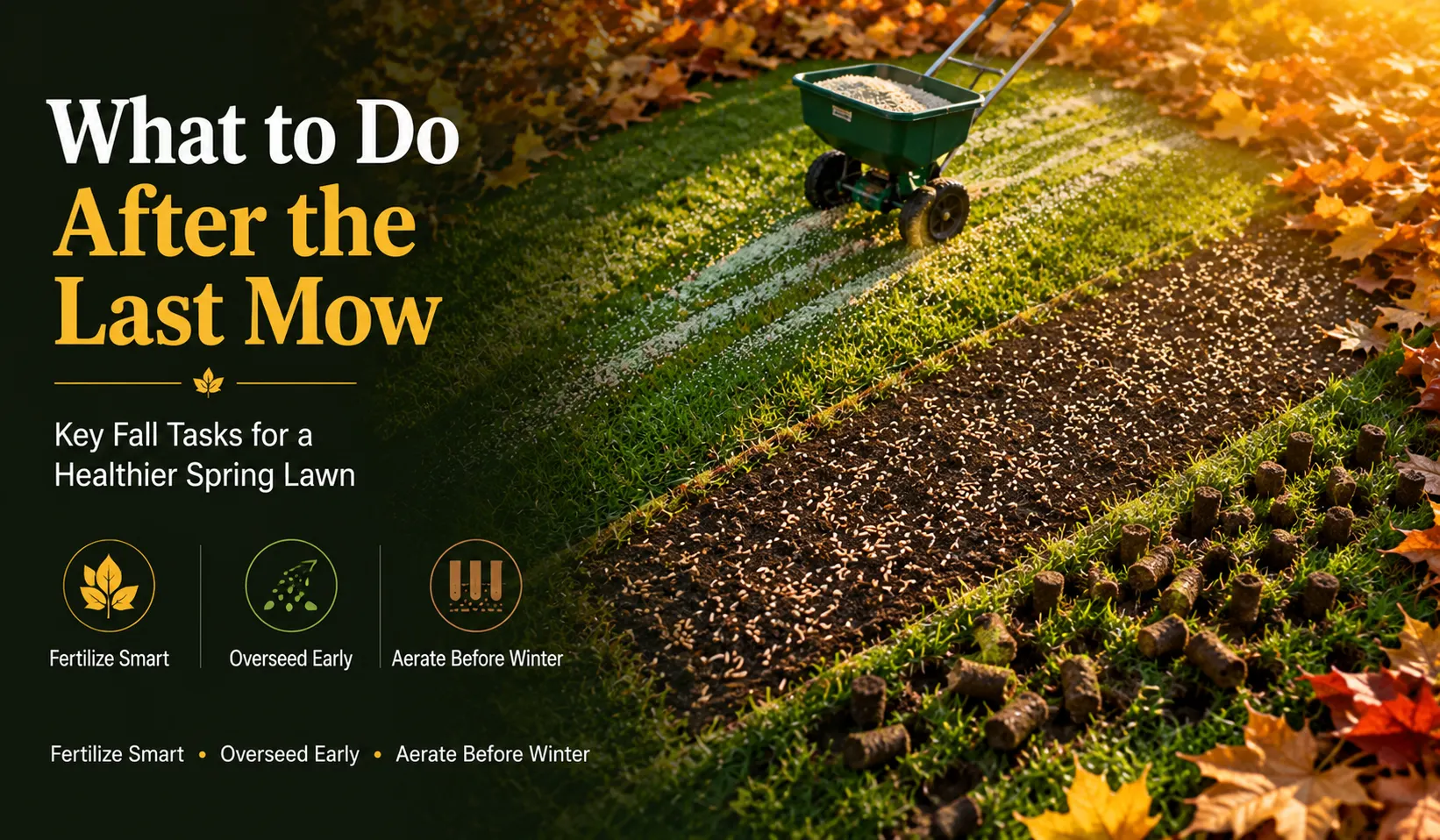
Storing Your Mower Properly for Winter
Beyond the fuel issue mentioned above, disconnect the spark plug lead before cleaning or doing any maintenance on the mower deck. This prevents accidental starts.
If your mower has a battery (electric or battery-powered models), store the battery indoors in a garage or basement where temperatures stay above freezing. Lithium-ion batteries lose capacity quickly when stored cold.
Lubricate any moving parts, cables, and pivot points with light machine oil or a spray lubricant. Come spring, you want it to start on the first pull or first button press.
My Final Recommendation
After mowing my own lawn through Minnesota cold fronts, Pacific Northwest drizzle seasons, and one memorable October in Georgia where it was 78°F on Halloween, the thing I’d tell any homeowner is this: trust observation over schedule.
Your grass will tell you when it’s done growing. The rate slows, the color deepens toward a more muted green, and the urgency of weekly mowing just fades. When you find yourself questioning whether a mow is even necessary, you’re probably within one or two cuts of the end.
The one mistake worth avoiding above all others is the emotional cut-off – stopping because the calendar says October 15th, or because the neighbor stopped, or because you’re just over it. Give the lawn what it actually needs in those final two to three weeks, and it will reward you with a faster, cleaner green-up in March or April.
One thing to carry into next fall: check your local soil temperature starting in mid-September. Bookmark your cooperative extension service’s weekly soil temperature map, or look at the NOAA’s soil moisture and temperature data for your area. When that soil temperature at 2-4 inches crosses below 50°F (or 55°F for warm-season grasses) and stays there for a week, you’re looking at your last one or two mows. Everything else follows from that number.
Quick Reference Table
| Grass Type | Final Cut Height | Typical Last Mow by Region | One Common Mistake |
|---|---|---|---|
| Kentucky bluegrass | 2.5-3 inches | Late Oct (Midwest/NE), Nov (PNW) | Cutting below 2 inches before winter |
| Tall fescue | 3 inches | Late Oct – early Nov | Stopping too early in a warm fall |
| Perennial ryegrass | 2.5 inches | Late Oct – early Nov | Mowing frost-covered grass |
| Bermuda grass | 1.5-2 inches | Mid-Sept – mid-Oct (South) | Fertilizing late and pushing tender growth |
| Zoysia | 1.5-2 inches | Sept – mid-Oct | Bagging instead of mulching light leaf cover |
| St. Augustine | 2-2.5 inches | Oct – Nov (varies by subregion) | Continuing to mow after color fades |
| Centipede grass | 1.5-2 inches | Sept – Oct | Scalping before dormancy |
Frequently Asked Questions About When to Stop Mowing in Fall
When should I stop mowing in fall?
Stop mowing when soil temperatures at the 2-4 inch depth consistently drop below 50°F for cool-season grasses, or below 55°F for warm-season grasses. This typically happens between late September and mid-November depending on your region and grass type. Growth rate is the most practical signal: when your lawn stops growing noticeably week to week, you’re within one or two mows of done.
What happens if I stop mowing too early in fall?
Grass left too long going into winter – over 3.5 to 4 inches – is prone to matting under snow and leaf cover. Matted grass holds moisture against the crowns and creates conditions favorable to snow mold and other fungal diseases. These issues appear as gray or pink patches in spring and can take multiple seasons to fully repair.
What is the best height to cut grass before winter?
Cut cool-season grasses (bluegrass, fescue, ryegrass) to 2.5-3 inches for their final mow. Cut warm-season grasses (Bermuda, zoysia, St. Augustine) to 1.5-2 inches. Never remove more than one-third of the blade height in a single mow – if grass is very long, step down gradually over multiple cuts.
Does grass type change when I should stop mowing?
Yes, significantly. Warm-season grasses go dormant earlier than cool-season grasses and often show clear color change (fading to tan or straw) as a signal. Cool-season grasses can stay green and growing into October or November in most US climates – they may actually grow more actively in fall than in late summer. Match your stop date to your specific grass type, not just your calendar.
Should I mow after the first frost?
Light frosts don’t stop cool-season grass growth – you may still need one or two more mows after the first frost of the season. However, never mow while frost is still on the grass. Wait until it melts and the grass blades are dry, typically mid-morning. Mowing frost-covered grass breaks grass cells and leaves visible brown damage that can persist for weeks.
How does region affect when I should stop mowing in fall?
Timing shifts by four to six weeks across US regions. Midwest and Northeast homeowners (Minnesota, Ohio, New York) generally make their last mow in late October to early November. Southeast homeowners with warm-season grasses typically stop in September to mid-October. Pacific Northwest lawns with cool-season grass may not stop growing until November or December due to the mild, wet climate.
What should I do right after the last mow of the year?
After the final mow: bag or remove heavy leaf accumulation, check mower blades and sharpen if needed, drain the fuel tank or add stabilizer, clean the underside of the mower deck, and disconnect the spark plug lead before storage. For the lawn itself, late fall is an appropriate time to apply a slow-release fall fertilizer to cool-season grasses if you haven’t already done so.