
Quick Overview
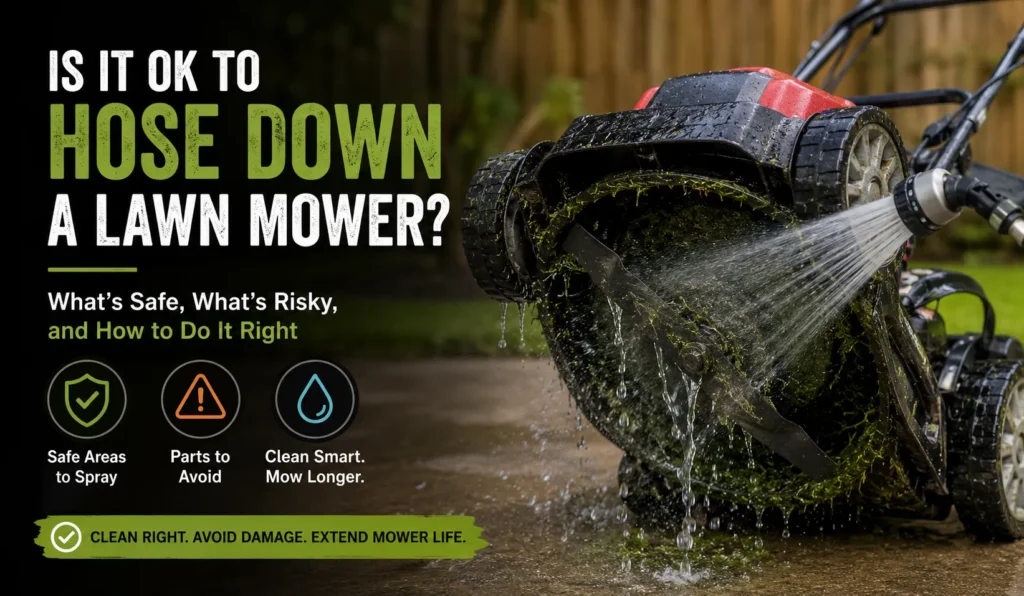
- Hosing down a lawn mower is safe on some parts and risky on others – the deck is fine, the engine and battery port are not.
- Gas mowers risk water in the air filter, spark plug, and carburetor. Battery mowers risk water in the battery port and electronics.
- The safer method: tilt the mower correctly, spray only the underside of the deck, and let it dry fully before storage.
- Rust and corrosion are the most common long-term result of doing this wrong, especially in humid states like Florida.
- A brush, a hose attachment port (if your mower has one), or compressed air often beats a full hose-down.
I still remember the exact spot in my driveway. Grass caked hard on the underside of the deck, hose in my hand, thumb over the nozzle. I almost pulled the trigger without thinking. That’s the moment most people ask the same question: is it OK to hose down a lawn mower? Short answer – sometimes yes, sometimes no, and the difference matters more than most homeowners realize.
This guide is for anyone who mows their own lawn and wants their mower to last. Maybe you’re in humid Florida, where grass clippings turn into cement by the time you’re done mowing. Maybe you’re in Phoenix, where dust cakes onto everything by July. Either way, the water question comes up eventually.
I’ve tested this on gas mowers and battery mowers, in dry heat and thick humidity. Some of what I learned came from doing it right. Some came from doing it wrong and paying for it later.
Why I Used to Hose Down My Mower Without Thinking Twice
I did this for years without a second thought. It felt harmless. Spray it, watch the grass wash away, move on with my day.
The Habit Most Homeowners Grew Up With
Most of us learned this from a parent or a neighbor. Someone hosed down their mower every weekend, and it never seemed to cause problems. So we copied it.
It’s an easy habit to pick up. The hose is already out from watering the lawn. The mower is right there, covered in clippings. Spraying it down feels like the natural next step.
For a while, it worked fine for me too. No visible damage. No strange noises. Just a clean mower and a satisfying rinse.
When It Finally Backfired on Me
One spring in Minnesota, I sprayed my gas mower a little too aggressively near the air filter housing. I didn’t think much of it at the time.
A few weeks later, the engine started sputtering. It ran rough, then stalled completely. I pulled the air filter and found it damp and moldy inside.
Water had worked its way past the filter and into places it had no business being. That repair cost me a new filter and a full carburetor cleaning. That was the day I stopped hosing down mowers without a plan.
The Real Risk: Gas Mowers vs. Battery Mowers
Gas mowers and battery mowers fail in different ways when water gets where it shouldn’t. Gas mowers suffer from water in the fuel and ignition system. Battery mowers suffer from water in the electronics and battery contacts.
Knowing which parts to avoid depends entirely on which type you own. Let’s break down each one.
Gas Mower Trouble Spots (Air Filter, Spark Plug, Carburetor)
The air filter is the biggest risk on any gas mower. It’s designed to block dust, not water. Once it gets wet, it can mold, clog, or stop filtering properly.
The spark plug is another weak point. Water around the plug can cause a weak spark or no spark at all. That means a mower that won’t start, right when you need it most.
The carburetor mixes air and fuel for combustion. Water in the carburetor throws off that mixture. Your engine may run rough, stall, or refuse to start until it dries out completely.
Battery Mower Trouble Spots (Battery Port, Vents, Electronics)
The battery port is the single most sensitive spot on any battery-powered mower. Brands like EGO and Ryobi build these ports with contacts that corrode fast if they get wet.
Vents on the motor housing let air in for cooling. Those same vents let water in just as easily. Once inside, water can reach circuit boards and wiring.
The control panel and switches are also vulnerable. Water sitting in a button or dial can cause it to stick, short out, or stop responding.
Compression Table: Risk Areas by Mower Type
| Mower Type | High-Risk Area | What Water Damage Looks Like |
|---|---|---|
| Gas | Air filter | Mold, clogging, rough idle |
| Gas | Spark plug | Weak spark, no start |
| Gas | Carburetor | Stalling, flooding, hard starts |
| Battery | Battery port | Corrosion, connection failure |
| Battery | Motor vents | Internal water intrusion |
| Battery | Control panel | Sticking buttons, short circuits |
The Right Way to Clean a Mower With Water
Water itself isn’t the enemy. Where it lands is what matters. Done carefully, hosing down a mower deck is one of the fastest ways to keep it running well.
The key is control. You want water hitting grass and dirt, not engines, batteries, or wiring.
What Parts Are Safe to Spray
The underside of the deck is the safest spot to spray. This is where grass clippings build up thickest, and it’s built to handle moisture better than any other part.
The wheels and outer housing can usually handle a light rinse too. Just avoid pointing the hose directly at any seams or joints.
Tires and blade areas clean up well with water. Just don’t linger too long in one spot, especially near axles.
What Parts to Always Avoid
Never spray directly into the engine on a gas mower. That includes the air filter housing, the spark plug area, and the muffler.
Never spray into the battery compartment on a battery mower. Even a quick blast can push water past the seals.
Avoid any vents, switches, or control panels on either mower type. These spots don’t drain well once water gets inside.
Tilting the Mower Correctly
Tilt the mower so the air filter and spark plug stay facing up, not down. On most gas mowers, that means tilting with the carburetor side higher.
Check your owner’s manual for the exact tilt direction. Tilting the wrong way can let oil leak into the air filter or cylinder.
For battery mowers, always remove the battery before tilting or cleaning. Then tilt with the battery port facing up, away from water spray.
Drying Time Before Storage
Let the deck air dry for at least an hour before storing the mower. A quick rinse followed by damp storage is a fast track to rust.
In humid states like Florida or Louisiana, give it longer. Two to three hours in open air makes a real difference.
In drier climates like Arizona, thirty minutes to an hour is usually enough. The dry air does a lot of the work for you.
Compression Table: Cleaning Dos and Don’ts
| Do | Don’t |
|---|---|
| Spray the underside of the deck | Spray into the air filter or spark plug |
| Tilt with air filter facing up | Tilt with carburetor facing down |
| Remove battery before cleaning | Spray directly into the battery port |
| Let the mower air dry fully | Store the mower while still wet |
| Rinse wheels and outer housing | Spray into vents or control panels |
What Happens If You Do It Wrong
Getting this wrong doesn’t always show up right away. Sometimes it takes weeks. Sometimes it takes a full season before you notice the damage.
Rust and Corrosion Over Time
Rust forms wherever water sits on bare metal for too long. The mower deck is most at risk, especially around bolts, screws, and blade mounts.
In humid regions, this happens faster. A mower stored wet in a muggy Georgia garage can show rust spots within a few weeks.
Corrosion looks different but causes similar problems. It eats away at metal contacts, especially on battery terminals and electrical connectors.
Electrical Damage in Battery Models
Water inside a battery port can corrode the contacts within days. Once that happens, the battery may not connect properly, or at all.
I’ve seen this happen to a neighbor’s EGO mower after one careless hose-down. The battery wouldn’t click into place anymore. The contacts had corroded just enough to break the connection.
Circuit boards are even more sensitive. Even a small amount of moisture can cause short circuits that show up as random shutoffs or error lights.
Engine Trouble in Gas Models
A wet air filter is the most common issue I see. It restricts airflow, which chokes the engine and causes rough idling or stalling.
Water in the carburetor is worse. It can mix with fuel and prevent proper combustion, leading to hard starts or a complete no-start situation.
In the worst cases, water sitting in a cylinder can cause internal rust. That kind of damage often means a costly engine rebuild.
Compression Table: Consequences by Mistake
| Mistake | Mower Type | Result |
|---|---|---|
| Spraying air filter directly | Gas | Rough idle, hard starts |
| Spraying carburetor directly | Gas | Stalling, flooding |
| Spraying battery port | Battery | Corrosion, connection failure |
| Storing mower wet | Both | Rust on deck and bolts |
| Spraying control panel | Battery | Sticking buttons, shorts |
Better Alternatives to Hosing Down Your Mower
A hose isn’t always the best tool for the job. Sometimes a brush does a better job with less risk.
Brushing and Scraping the Deck
A stiff brush or plastic scraper removes dried grass without any water at all. This works especially well right after mowing, before clippings harden.
I keep an old putty knife in my garage just for this. It scrapes packed grass off the deck in seconds, no water needed.
For stubborn buildup, a wire brush works well on metal decks. Just avoid using it near painted surfaces, since it can scratch the finish.
Using a Garden Hose Attachment Port (If Your Mower Has One)
Some Toro and Honda mowers include a hose attachment port built into the deck. This lets you spray water directly under the deck while the mower runs, with no risk to the engine.
You connect a standard garden hose, start the mower, and let it spin the blade while water flushes out clippings from below. It’s one of the safest cleaning methods available.
If your mower has this feature, use it. It solves the exact problem this article is about.
Compressed Air for Tight Spots
A can of compressed air clears grass and dust from tight spots like cooling fins and vents. This works well on both gas and battery mowers.
It’s especially useful for battery mowers, since air won’t risk corrosion the way water can. A quick blast around the vents keeps things clean without any moisture risk.
Compressed air also works well for clearing out engine cooling fins on gas mowers, where grass buildup can cause overheating.
Common Mistakes People Make When Cleaning Their Mower
Most mower damage from cleaning comes down to a few repeated mistakes. I’ve made some of these myself.
Spraying Directly Into the Engine or Battery Housing
This is the single most common mistake. People aim the hose at the loudest, dirtiest part of the mower, which is often right where the engine or battery lives.
It feels satisfying to blast grass off every visible surface. But that satisfaction comes at the cost of moisture creeping into places it shouldn’t.
Skipping Regular Cleaning Altogether
The opposite mistake is just as costly. Some people avoid cleaning entirely out of fear of doing it wrong.
Built-up grass holds moisture against the deck, which causes rust just as fast as improper hosing does. Regular, careful cleaning beats no cleaning every time.
Pros and Cons Table (Hosing Down vs. Safer Cleaning Methods)
| Method | Pros | Cons |
|---|---|---|
| Hosing down (careless) | Fast, low effort | High risk of engine or battery damage |
| Hosing down (careful, tilted) | Fast, thorough on deck | Still requires care and dry time |
| Brushing/scraping | Zero water risk | Takes more elbow grease |
| Hose attachment port | Safe, effective | Only available on some models |
| Compressed air | No moisture risk | Doesn’t remove caked mud well |
My Final Recommendation
After years of testing this across humid summers and dry ones, here’s where I land. Hosing down a lawn mower is fine, as long as you know exactly where the water is going.
I still use a hose on my mower deck almost every week. I just tilt it the right way, avoid the air filter and battery port completely, and give it real time to dry before I put it away. That one change saved me from repeating the mistake that cost me a carburetor cleaning years ago.
If your mower has a hose attachment port, use it. It’s the closest thing to a risk-free rinse you’ll find. And if you’re ever unsure where water might sneak in, grab a brush instead. A little extra effort with a brush beats a surprise repair bill any day.