
Quick Overview
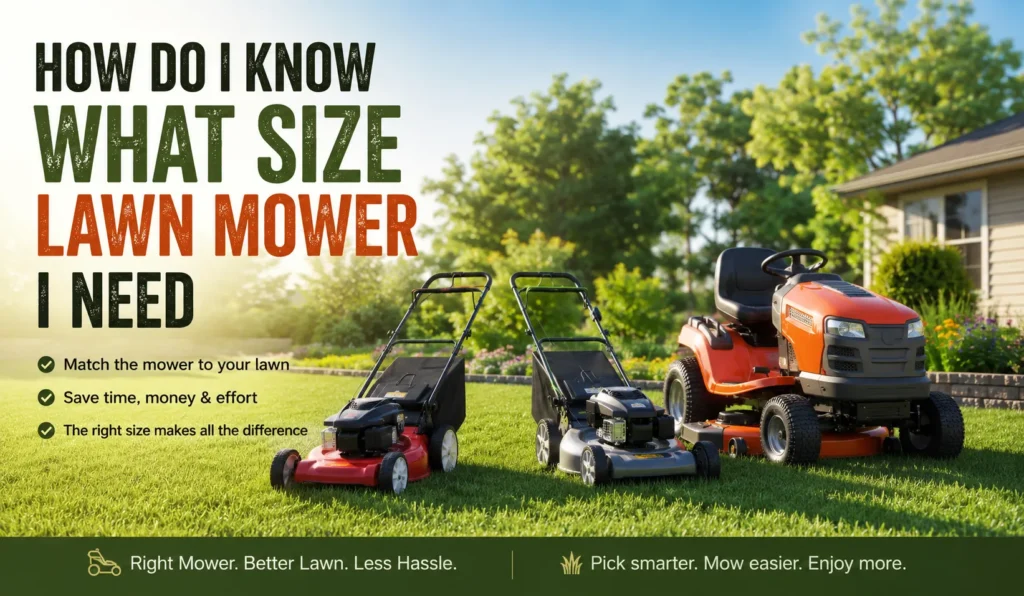
- What size lawn mower do I need depends mostly on lawn size, yard shape, and storage space, not just acreage.
- Small yards under 1/4 acre do best with a push mower, deck width 20-22 inches.
- Mid-size yards (1/4 to 1/2 acre) usually want a self-propelled mower with a 21-30 inch deck.
- Large lawns over 1/2 acre often need a riding mower or zero-turn mower with a 42-60 inch deck.
- Bigger is not always better. A wide deck struggles in tight yards with lots of obstacles.
It was a Saturday morning in my old Ohio suburb. My neighbor Dave had just bought a 54-inch zero-turn mower for a yard the size of a postage stamp. He couldn’t turn it around without backing into his fence twice. I stood there with my coffee, trying not to laugh.
That’s the moment I really understood this question: what size lawn mower do I need? It’s not about buying the biggest machine you can afford. It’s about matching the mower to your actual yard.
I’ve spent years testing mowers on small city lots, half-acre suburban yards, and sprawling rural properties. I’ve made my own sizing mistakes too. This guide is for anyone standing in a hardware store aisle, overwhelmed, wondering if they need a push mower or something bigger.
Let’s walk through it together, honestly.
Why Mower Size Actually Matters More Than You Think
The right mower size saves you time, money, and frustration every single week. Get it wrong, and you’ll feel it every time you mow.
The Real Cost of Choosing Wrong
A mower that’s too big feels clumsy. You’ll scalp corners and crash into flower beds. I’ve done this myself, more than once, in a friend’s Texas ranch yard with a mower borrowed from a bigger property.
A mower that’s too small costs you time. A quarter-acre lawn with a tiny push mower can take an hour or more. Your arms will feel it the next day.
There’s also a real dollar cost. Riding mowers and zero-turn mowers cost thousands more than push mowers. Buying size you don’t need is money wasted. Buying too small means replacing your mower sooner, since underpowered engines wear out faster on bigger jobs.
It’s Not Just About Yard Size
Lawn size matters, but it’s not the whole story. Yard shape changes everything. A perfectly square half-acre lot mows fast. A half-acre lot full of trees, garden beds, and a winding path mows slow, no matter what mower you use.
Terrain matters too. Slopes change which mower is even safe to use. Storage space matters. A friend in a small Brooklyn backyard simply has no room for a riding mower, even if her lawn technically qualifies for one.
Who’s doing the mowing also matters. A self-propelled mower helps a lot if you have back problems or limited strength. Size isn’t a single number. It’s a mix of factors working together.
How to Measure Your Lawn (The Right Way)
You need your lawn’s square footage before you can pick a mower size. This takes ten minutes and it’s worth doing properly.
Quick Ways to Estimate Square Footage
The simplest method is pacing it out. Walk the length and width of your lawn in a straight line. Each normal adult step is about 2.5 feet.
Multiply length by width in feet. That gives you square footage for a basic rectangular yard.
You can also use satellite tools. Google Maps and several free lawn measurement apps let you trace your yard boundary on a map. They calculate square footage automatically.
Here’s a rough guide so you know what you’re working with:
- Under 6,000 square feet is a small yard, often a tenth of an acre or less.
- 6,000 to 10,000 square feet lands you close to a quarter acre.
- 10,000 to 20,000 square feet puts you around a half acre.
- Above 20,000 square feet, you’re likely dealing with a full acre or more.
Accounting for Yard Shape and Obstacles
Square footage alone doesn’t tell the whole story. An L-shaped yard mows slower than a square one, even at the same size.
Count your obstacles. Trees, garden beds, play sets, and fences all add mowing time. Each one forces you to slow down, lift the deck, or make extra turns.
I once measured a yard in a Georgia neighborhood that was technically small, under 5,000 square feet. But it had eleven trees and three garden beds. It took longer to mow than a plain half-acre lot down the street. Shape and obstacles change the math completely.
Matching Mower Size to Lawn Size
Once you know your square footage, matching mower size gets a lot simpler. Here’s how I’d break it down after years of testing.
Small Yards (Under 1/4 Acre)
A push mower with a 20 to 22 inch deck is usually the right call here. You’ll finish in 20 to 40 minutes without breaking a sweat.
Self-propelled models help if your yard has slopes or if pushing tires you out. The trade-off is a slightly higher price and more weight to store.
Small yards rarely need anything bigger. A friend in a small Brooklyn backyard uses a basic push mower and finishes before her coffee gets cold.
Mid-Size Yards (1/4 to 1/2 Acre)
This is where a self-propelled mower with a 21 to 30 inch deck starts to make real sense. You’ll cut mowing time significantly compared to a basic push mower.
Some homeowners at this size still choose a push mower, especially if the yard is flat and simple. It costs less and needs less maintenance.
The trade-off with self-propelled models is more moving parts. That means more things that can eventually break, and a bit more upkeep.
Large Lawns (1/2 Acre to 1+ Acre)
At this size, a riding mower or zero-turn mower usually makes sense. Deck widths from 42 to 60 inches cut mowing time from hours down to 30 or 40 minutes.
Zero-turn mowers turn on a dime, thanks to their turning radius design. That makes them great around obstacles, even on larger properties.
The trade-off is cost and storage. These machines need a shed or garage bay. They also cost several thousand dollars more than a push mower.
Compression Table for Yard Size vs. Deck Width
| Lawn Size | Recommended Mower Type | Deck Width |
|---|---|---|
| Under 1/4 acre | Push mower | 20-22 inches |
| 1/4 to 1/2 acre | Self-propelled mower | 21-30 inches |
| 1/2 to 1 acre | Riding mower | 30-42 inches |
| 1+ acre | Zero-turn mower | 42-60 inches |
Deck Width Explained in Plain English
Deck width is simply how wide a strip of grass your mower cuts in one pass. A wider deck covers more ground per pass.
What Deck Width Actually Means for Mowing Time
A 21-inch deck covers less ground than a 42-inch deck. On a half-acre lawn, that difference can mean an extra 30 minutes of mowing every week.
Do the math for your own yard. Wider decks mean fewer passes, and fewer passes mean less time under the sun.
But deck width isn’t free. Wider mowers need wider storage space and more turning room in your yard.
Wider Isn’t Always Better
I learned this the hard way testing a 50-inch riding mower in a yard with tight corners near Nashville. It could not get close enough to the fence line without leaving a visible strip of uncut grass.
A wide deck also struggles in yards with lots of trees or garden beds. You end up doing more trimming by hand to fix what the mower missed.
Match deck width to your yard’s tightest turn, not just its total square footage. That’s the real lesson here.
Other Factors That Affect the Right Size
Square footage and deck width are the starting point. But real yards have other quirks that change the right answer.
Yard Terrain and Slopes
Steep slopes change everything about mower choice. Riding mowers and zero-turn mowers can tip on slopes over 15 degrees, which is genuinely dangerous.
Push mowers and self-propelled mowers handle slopes more safely, since you control them on foot. If your yard has hills, don’t assume bigger is safer. Often it’s the opposite.
Storage Space You Actually Have
A riding mower needs a shed, garage, or covered space of its own. If you don’t have that room, a riding mower isn’t a realistic option, no matter how big your lawn is.
Push mowers and self-propelled mowers fold or store upright in a small shed or even a garage corner. This matters more than people expect when they’re shopping.
Who’s Doing the Mowing
If you have back issues or limited strength, a self-propelled mower removes a lot of the physical strain. It’s worth the extra cost for many homeowners.
If multiple people in your household mow, weight and ease of use matter more than raw power. A mower that’s easy for everyone to handle beats one that’s technically faster.
Compression Table for Every Mower Type
| Mower Type | Best For | Turning Radius | Typical Storage Need |
|---|---|---|---|
| Push mower | Small yards, tight spaces | Manual, very tight | Minimal, fits in a shed corner |
| Self-propelled | Mid-size yards, sloped areas | Manual, tight | Small shed or garage corner |
| Riding mower | Larger open yards | Moderate | Full garage bay or shed |
| Zero-turn mower | Large yards with obstacles | Extremely tight | Full garage bay or shed |
Common Mistakes People Make When Sizing a Mower
I’ve seen these mistakes over and over, in yards from Ohio to Texas. They’re easy to avoid once you know what to look for.
Buying Too Big for a Small Yard
Dave’s 54-inch zero-turn mower on his small lot is the classic version of this mistake. A big machine on a small lawn means constant three-point turns and scalped grass near fences.
It also means paying for power you’ll never use. Fuel costs and maintenance costs both scale with mower size.
Underestimating Obstacles and Tight Corners
People measure square footage, then forget to walk their actual mowing path. Trees, mailbox posts, and garden beds all cut into how much space a wide mower actually has to work with.
I’ve watched homeowners return a mower within a month because it simply couldn’t navigate their yard. Walk your mowing route before you buy, not after.
Pros and Cons Table by Mower Size Category
| Category | Pros | Cons |
|---|---|---|
| Push mower | Cheap, easy to store, simple to maintain | Tiring on larger yards, slower overall |
| Self-propelled | Less physical effort, handles slopes well | Heavier, more parts to maintain |
| Riding mower | Fast on open yards, comfortable to operate | Expensive, needs real storage space |
| Zero-turn mower | Extremely fast, tight turning radius | Highest cost, risky on slopes |
My Final Recommendation
Here’s my honest take after all these years. Most homeowners overthink deck width and underthink storage space and yard shape. Measure your actual yard, walk its corners, and be honest about where you’ll park the mower.
If you’re on the fence between two sizes, I’d lean smaller. A slightly smaller mower on a slightly bigger yard costs you a few extra minutes each week. A slightly bigger mower on a slightly smaller yard costs you constant frustration, and possibly a dented fence, like Dave’s.
Buy for the yard you actually have, not the yard you might have someday. That’s the whole secret.
Frequently Asked Questions
What size lawn mower do I need for a quarter-acre yard?
A push mower or self-propelled mower with a 20 to 22 inch deck works well for a quarter-acre yard. Most homeowners finish mowing in 30 to 45 minutes at this size.
How do I measure my lawn to pick the right mower size?
Pace out the length and width of your yard, then multiply them together. You can also trace your yard on Google Maps or a lawn measurement app for a faster estimate.
Is a riding mower worth it for a half-acre lawn?
A riding mower can work well on a half-acre lawn, especially if it’s open and flat. If storage space is tight or the yard has many obstacles, a self-propelled mower may be a better fit.
What is deck width and why does it matter?
Deck width is the width of grass a mower cuts in a single pass. A wider deck covers more ground per pass, cutting total mowing time, but it needs more turning room and storage space.
Do I need a zero-turn mower for a large yard?
Not always. Zero-turn mowers work best on large, open yards with a turning radius that helps around obstacles. If your large yard has tight corners or slopes, a riding mower may actually work better.
Can a push mower handle a sloped yard?
Yes, push mowers and self-propelled mowers are generally safer on slopes than riding or zero-turn mowers. Riding mowers can tip on slopes over 15 degrees, so foot-controlled mowers are the safer choice on hilly ground.