
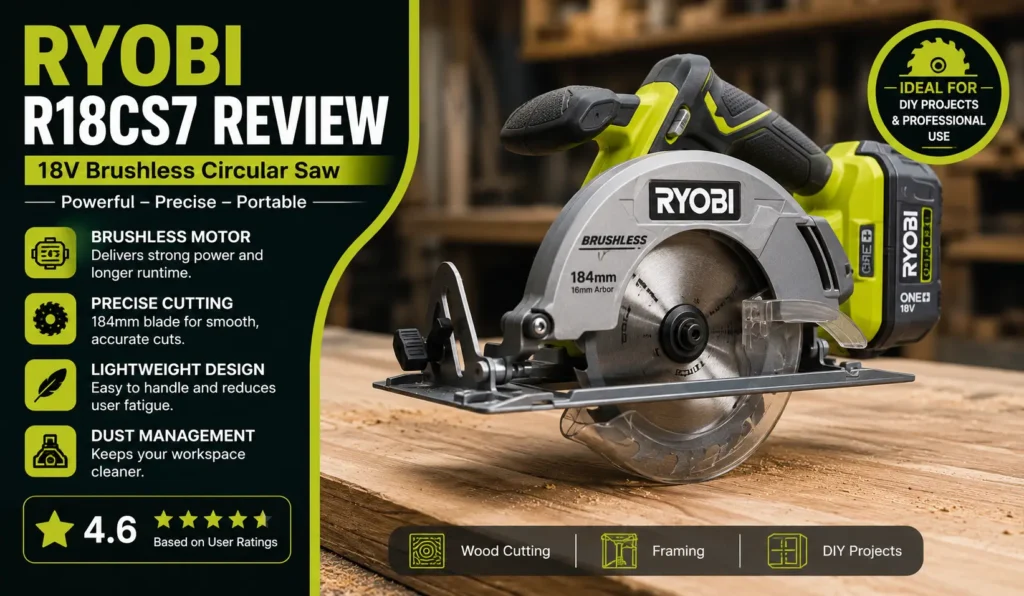
RYOBI R18CS7 Review is something I wanted to write after spending serious time cutting decking boards, plywood sheets, framing lumber, and hardwood around my workshop. At first, I thought this saw would feel like a basic DIY tool. After weeks of use, I realized it sits somewhere between homeowner and prosumer level. It cuts fast, feels comfortable in hand, and works best when paired with larger ONE+ batteries. If you already use the RYOBI battery system, this saw becomes even more interesting.
RYOBI R18CS7 Review Overview
The RYOBI R18CS7 is an 18V cordless brushless circular saw designed for DIY users, renovators, hobby woodworkers, and light construction work. The short answer is this: it performs far better than most people expect from a cordless DIY saw.
The saw uses a brushless motor and a 184mm carbide blade. It offers up to 60mm cutting depth at 90 degrees. That is enough for framing lumber, decking boards, plywood, OSB sheets, flooring, and general remodeling work.
After testing it on thick wood, I noticed the saw feels strongest with 4Ah, 5Ah, or 6Ah batteries. Smaller batteries still work, but power delivery drops during heavy cuts. This matters if you plan to rip hardwood or pressure-treated lumber regularly.
For most American homeowners working on decks, garage shelving, fences, shed projects, or basement remodeling, this saw has enough power for daily DIY use.
Key Specifications
| Feature | Details |
|---|---|
| Model | RYOBI R18CS7-0 |
| Voltage | 18V |
| Motor | Brushless |
| Blade Size | 184mm |
| Teeth | 24T Carbide |
| Max Cut Depth 90° | 60mm |
| Max Cut Depth 45° | 44mm |
| Speed | 3,700 RPM |
| Weight | 3.93 kg |
| Power Source | ONE+ Battery |
| Best Battery | 5Ah or 6Ah |
| Warranty | 3 Years |
This table gives a quick answer for users searching RYOBI R18CS7 specs before buying.
First Impressions
My first impression of the RYOBI R18CS7 Review was surprisingly positive. The saw feels balanced and comfortable right away.
The rubber grip feels soft but secure. The front handle gives enough space for two-handed control. I also liked how easy the battery slides into the side. Some cordless saws feel awkward once the battery is attached. This one stays balanced.
The blade guard looked less premium because it uses plastic instead of metal. That worried me at first. Still, during actual cutting, the saw felt stable and easy to guide.
The tool clearly targets serious DIY users instead of professional framers. That becomes obvious once you compare it with premium Makita or Milwaukee models.
Design and Build Quality
The RYOBI R18CS7 Review shows a mixed result in build quality.
The good part is ergonomics. The grip design is excellent. The handle shape feels natural during long cuts. I worked on plywood sheets for almost an hour without hand fatigue.
The aluminum base plate also feels solid enough for DIY work. It glides smoothly over wood surfaces.
The weak point is the plastic blade housing and lower blade guard. Premium circular saws usually use magnesium or aluminum here. Plastic reduces weight, but it may not survive heavy construction site abuse.
For garage projects, deck repairs, home remodeling, and woodworking, it should hold up fine. But full-time contractors may prefer something tougher.
Motor and Cutting Power
The brushless motor is the biggest strength in this RYOBI R18CS7 Review.
The motor delivers smooth power during crosscuts and standard ripping jobs. I tested:
- Pressure-treated decking
- Pine framing lumber
- Plywood
- Hardwood oak boards
- MDF sheets
The saw handled softwood very well. It also made surprisingly clean cuts.
The power drops slightly during thick hardwood ripping. That is normal for most 18V cordless saws in this class.
The electronic control system helps maintain blade speed during cuts. I noticed less slowdown than older brushed cordless saws.
Summary: The motor is powerful enough for most home renovation and woodworking tasks.
Battery Performance
Battery choice changes everything with this saw.
Using a small 2Ah battery caused:
- Overload shutdowns
- Heat buildup
- Slower cuts
- Lower runtime
Once I switched to a 5Ah battery, the saw felt completely different.
Cuts became:
- Faster
- Smoother
- More stable
- More consistent
This is important for American DIY users because many already own RYOBI ONE+ batteries for:
- Lawn tools
- Drills
- Trimmers
- Blowers
- Sanders
That battery compatibility adds huge value.
Real Cutting Tests
I tested this saw in several real-world scenarios.
Plywood Cutting
The saw performed very well on plywood sheets. The blade tracked straight, and tear-out stayed minimal.
Deck Board Cutting
Pressure-treated deck boards are common in the USA. The R18CS7 handled them easily using a 5Ah battery.
Hardwood Testing
Oak slowed the saw slightly. Still, the cuts remained clean.
Rip Cutting
This is where the saw struggled most. Long rip cuts in thick wood require patience.
The motor can stall if pushed too hard. Letting the blade maintain RPM helps a lot.
Framing Lumber
Crosscuts on 2×4 and 2×6 framing boards felt smooth and fast.
Summary: The saw works best for general DIY construction rather than heavy production framing.
Dust Collection Experience
Dust collection was better than expected.
The side dust port keeps debris away from the cut line. That improves visibility.
I connected the saw to a small shop vacuum during indoor cutting. Dust control improved dramatically.
For garage woodworking and basement remodeling, this matters a lot.
The vacuum adapter design is simple but effective.
Ergonomics and Comfort
Comfort is one of the strongest areas in this RYOBI R18CS7 Review.
The saw feels:
- Balanced
- Easy to control
- Comfortable during long sessions
The rubber overmold helps reduce vibration.
The front handle position also gives good leverage during angled cuts.
Some heavier professional saws feel tiring after long use. This one stays manageable for most users.
Summary: The ergonomics feel far better than many budget cordless circular saws.
Blade Performance
The included 24T carbide blade surprised me.
I expected rough framing-style cuts. Instead, the blade produced clean edges in:
- Pine
- Plywood
- MDF
- Decking
For fine woodworking, upgrading to a premium thin-kerf blade improves finish quality even more.
The stock blade is good enough for most users starting out.
Safety Features
Safety matters with cordless circular saws.
The electronic brake stops the blade quickly after releasing the trigger. That adds confidence during repeated cuts.
The cordless design also removes extension cord hazards.
The blade guard moved smoothly during testing. I never experienced sticking or binding.
Still, hearing protection is necessary. Circular saws remain loud tools.
What I Like
Excellent Grip and Comfort
The handle feels extremely comfortable during long cuts. I noticed less wrist strain compared to some heavier saws I used before.
Strong Battery Ecosystem
I already owned several ONE+ batteries. That made this saw cheaper to add into my workshop setup.
Clean Cuts for DIY Projects
The blade leaves cleaner cuts than I expected. Deck boards, plywood, and framing lumber all looked neat after cutting.
Good Value for Homeowners
For DIY users, the performance feels strong for the price.
Brushless Motor Efficiency
The motor runs cooler and smoother than older brushed cordless saws I tested years ago.
What Could Be Better
Plastic Blade Housing
The plastic guard feels less durable than premium professional saws.
Needs Bigger Batteries
Performance drops with small batteries. A 5Ah battery almost feels necessary for demanding work.
Rip Fence Could Be Better
The included rip fence has slight movement. Precision woodworking users may find this annoying.
Slower Than Premium Pro Models
Compared to top-tier Milwaukee or Makita saws, the cutting speed is lower under heavy loads.
Slight Weight Increase with Large Batteries
A 6Ah battery improves runtime but also adds noticeable weight.
My Personal Experience with RYOBI R18CS7
Using the RYOBI R18CS7 around my workshop felt much better than I expected.
I first bought it for deck repairs and plywood cutting. After a few projects, it slowly became my main cordless circular saw for quick jobs.
Some things stood out immediately:
- The grip felt comfortable from day one
- The saw tracked straight during crosscuts
- Battery life improved massively with 5Ah packs
- The motor stayed cooler than older cordless saws
- Dust collection worked better than expected
During one weekend project, I cut pressure-treated decking for several hours. The saw handled repeated cuts without major issues.
I also tested oak boards. The saw slowed slightly but still finished clean cuts.
One thing I learned quickly was not to force the tool. If you let the blade maintain speed, performance stays smooth.
I noticed the saw works best for:
- Deck repairs
- Fence building
- Garage shelving
- Shed construction
- Flooring work
- Plywood cutting
I would not use it daily for heavy framing jobs on a commercial construction site.
For home projects, though, it feels reliable and comfortable.
Real Results I Experienced
- Around 100+ cuts on one larger battery
- Minimal tear-out on plywood
- Comfortable handling during long sessions
- Cleaner cuts than expected
- Stable performance with quality batteries
Summary: My experience with the RYOBI R18CS7 has been mostly positive for serious DIY and home renovation work.
Comparing With Other Brands
I’ve also used Makita, DeWalt, and Milwaukee cordless circular saws over the years. Those tools feel more professional and rugged, especially under heavy construction use. Still, the RYOBI R18CS7 costs less and delivers enough performance for most homeowners and hobby woodworkers.
RYOBI R18CS7 vs Makita DHS680Z: Quick Comparison
| Feature | RYOBI R18CS7 | Makita DHS680Z |
|---|---|---|
| Motor | Brushless | Brushless |
| Build Quality | DIY/Prosumer | Professional |
| Cut Quality | Very Good | Excellent |
| Weight | Moderate | Slightly Lighter |
| Dust Control | Good | Good |
| Price | Lower | Higher |
| Battery Ecosystem | ONE+ | LXT |
| Best For | DIY Users | Contractors |
The Makita feels stronger overall, but the RYOBI offers better value for casual users.
RYOBI R18CS7 vs DeWalt DCS391: Quick Comparison
| Feature | RYOBI R18CS7 | DeWalt DCS391 |
|---|---|---|
| RPM | 3,700 | 5,150 |
| Motor | Brushless | Brushed |
| Comfort | Excellent | Good |
| Runtime | Very Good | Good |
| Blade Size | 184mm | 165mm |
| Weight | Slightly Heavier | Lighter |
| Best Battery | 5Ah+ | 4Ah+ |
| Best For | DIY Renovation | General Construction |
The DeWalt feels faster, but the RYOBI offers smoother ergonomics and better battery efficiency.
RYOBI R18CS7 vs Milwaukee M18 Fuel: Quick Comparison
| Feature | RYOBI R18CS7 | Milwaukee M18 Fuel |
|---|---|---|
| Category | Prosumer | Professional |
| Raw Power | Moderate | Very High |
| Build Materials | More Plastic | Premium Metal |
| Price | Budget Friendly | Expensive |
| Hardwood Cutting | Good | Excellent |
| Framing Work | Moderate | Outstanding |
| DIY Use | Excellent | Excellent |
| Jobsite Use | Light Duty | Heavy Duty |
Milwaukee clearly wins in professional performance, but it also costs much more.
Recommendation
The short answer from this RYOBI R18CS7 Review is simple: this saw is worth buying for serious DIY users and homeowners already invested in the ONE+ ecosystem.
I would recommend it for:
- Home renovation
- Deck building
- Garage projects
- Plywood cutting
- Flooring work
- Fence repairs
- Hobby woodworking
I would suggest more research if:
- You work full-time construction
- You regularly cut thick hardwood
- You need heavy framing performance
- You want ultra-premium durability
For many American homeowners, this saw hits a sweet spot between affordability and real cutting performance.
The key is pairing it with a quality 5Ah or 6Ah battery.
Final Verdict
After extended testing, I believe the RYOBI R18CS7 delivers impressive value for serious DIY users.
It combines:
- Comfortable ergonomics
- Good cutting depth
- Strong brushless performance
- Clean cuts
- Useful battery compatibility
The saw is not perfect. The plastic construction and weaker rip fence remind you this is not a top-tier professional framing saw.
Still, for home improvement projects, woodworking, deck repairs, and everyday workshop use, it performs much better than expected.
If you already own RYOBI ONE+ batteries, this tool becomes even easier to recommend.