
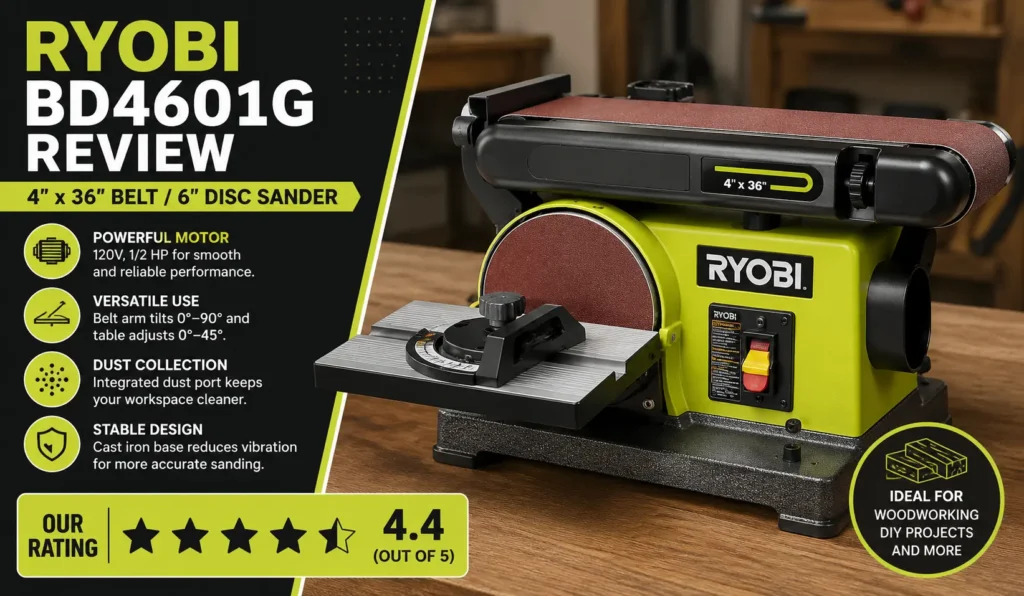
The first time I used the RYOBI BD4601G Bench Sander, I knew it was built for real DIY work. It is not a fancy industrial machine, but it solved many sanding problems in my garage shop fast. In this RYOBI BD4601G Review, I’ll share what worked well, what felt weak, and whether this belt and disc sander is still worth buying for home woodworking projects in the USA.
RYOBI BD4601G Review Overview
The RYOBI BD4601G Bench Sander is a combo sanding machine made for DIY users, hobby woodworkers, and small garage shops. It combines a 4-inch by 36-inch belt sander with a 6-inch disc sander in one compact unit. The simple answer is this: it works very well for light and medium woodworking jobs but is not designed for heavy commercial sanding.
This matters because many people in the USA want affordable shop tools that save space. This machine does exactly that. It gives decent power, stable sanding, and flexible positioning without taking over the whole workbench.
Key Features and Specifications
Here are the main specs that matter most in real-world use.
| Feature | Details |
|---|---|
| Belt Size | 4” x 36” |
| Disc Size | 6” |
| Motor Power | 0.5 HP |
| Voltage | 120V |
| Base Material | Cast Iron |
| Belt Position | Horizontal & Vertical |
| Table Tilt | 0°–45° |
| Dust Port | Yes |
| Weight | Around 41 lbs |
| Power Source | Corded Electric |
The most important feature is the cast iron base. It keeps the machine stable during sanding. That makes a big difference when shaping wood edges or flattening boards.
Why I Picked the RYOBI BD4601G
I wanted a sanding machine that could handle multiple jobs without costing a fortune. Many full-size professional sanders in the USA cost two or three times more. I did not need industrial performance. I needed something reliable for furniture projects, shelf work, trim shaping, and edge sanding.
This is why the RYOBI BD4601G stood out. It offered:
- Belt and disc sanding in one tool
- A compact footprint
- Adjustable sanding positions
- Enough power for hobby work
- A price most DIY users can justify
The simple answer is that this machine fits perfectly between cheap entry-level sanders and expensive professional models.
First Impressions After Unboxing
The first thing I noticed was the weight. This is not a lightweight plastic machine. The cast iron base gives it a solid feel right away.
That matters because vibration ruins sanding accuracy. A heavier base helps the machine stay planted while working on hardwood or thick trim pieces.
The packaging on mine looked rough, though. Some users in the USA reported similar issues online. Thankfully, the tool itself was fine.
Inside the box, I found:
- The bench sander
- Miter gauge
- Sanding belt
- Disc installed
- Work table
- Basic hardware
Setup took around 20 minutes.
Build Quality and Design
The overall build quality is better than I expected for the price. The base feels durable and strong. The motor runs smoother than many budget sanders I have tested.
Still, some parts clearly show cost-cutting.
For example:
- Some trim pieces are plastic
- The table adjustment system feels basic
- The belt angle adjustment needs an Allen key
This section matters because many buyers expect premium construction at a budget price. The truth is simple: the important parts feel solid, while smaller parts feel average.
Belt Sanding Performance
The belt sanding side is where I spent most of my time. It handled edge shaping, furniture sanding, and corner smoothing very well.
The adjustable belt position is extremely useful. I used both horizontal and vertical modes during projects.
The sanding belt tracks surprisingly well once adjusted correctly. The tracking knob is easy to use.
What impressed me most was how evenly it removed wood when I let the machine work naturally.
The biggest mistake people make is pushing too hard. This is not an industrial 2HP machine. If you force material aggressively into the belt, the motor slows down.
The short answer is this: light pressure gives the best results.
Disc Sanding Performance
The 6-inch sanding disc is helpful for small shaping jobs and angle sanding. I used it often for:
- Rounded corners
- Small trim work
- Furniture edges
- Quick bevel shaping
The adjustable work table helped improve consistency.
However, the disc area is smaller than professional shop machines. Large boards feel awkward here.
This section matters because buyers often expect the disc sander to replace larger stationary sanders. It works well for smaller tasks, not oversized woodworking panels.
Dust Collection Experience
Dust collection works better than expected once connected to a shop vacuum.
The built-in dust port fits many standard shop vac hoses in the USA without adapters. That is a nice bonus.
Without a vacuum attached, dust spreads everywhere fast. With proper suction, cleanup becomes much easier.
The simple answer is this: always use a shop vac with this machine.
Ease of Use for Beginners
One reason I would recommend this sander to many first-time woodworkers is its simplicity.
The controls are straightforward.
Changing belts is easy:
- Release the tension lever
- Remove the old belt
- Install the new one
- Adjust tracking
Even beginners can learn quickly.
This matters because complicated shop tools often scare new users. The RYOBI BD4601G keeps things simple and practical.
Safety and Stability
The cast iron base is one of the safest parts of this machine. It stays planted during normal sanding.
I still recommend bolting it to a workbench if possible. That improves stability even more.
The lockout power switch is another useful feature. It helps prevent accidental startup.
The machine also runs quieter than many cheaper belt sanders. The induction motor helps reduce harsh noise.
The simple takeaway is this: for hobby woodworking, the machine feels safe and predictable when used correctly.
Best Uses for This Sander
After months of use, I found this machine works best for:
- DIY woodworking
- Furniture repair
- Home improvement projects
- Edge rounding
- Shelf shaping
- Trim sanding
- Small craft work
- Cabinet touch-ups
It is especially useful for American garage workshops where space is limited.
The compact design makes it easier to fit beside table saws, drill presses, and miter saw stations.
What I Like
Solid Stability
The cast iron base feels much better than cheap lightweight sanders I used before. I could sand chair pieces and shelf edges without the machine shaking across the bench.
Flexible Sanding Positions
I really liked switching between horizontal and vertical belt positions. It made different woodworking jobs easier without needing another tool.
Good Value for DIY Users
This RYOBI BD4601G Review would not be honest if I ignored the price advantage. For home workshops in the USA, it offers strong value without entering professional price territory.
Easy Belt Changes
Changing belts takes very little time. I appreciated the quick tension release system during long sanding sessions.
Compact Workshop Footprint
My garage shop is not huge. This machine saved space by combining two sanding systems in one unit.
What Could Be Better
The Motor Can Bog Down
If I pushed wood too hard into the sanding belt, the motor slowed down. Users need patience and lighter pressure for best results.
Some Plastic Parts Feel Cheap
A few cosmetic parts do not match the strong cast iron base quality. I would prefer more metal components.
Belt Angle Adjustment Needs Tools
The vertical adjustment system uses an Allen bolt. A quick-release lever would make setup faster.
No Built-In Storage
There is nowhere to store the miter gauge or adjustment tools. That became annoying over time.
Packaging Quality Needs Improvement
Mine arrived safely, but the box looked rough. Some American buyers also reported damaged packaging online.
My Personal Experience with RYOBI BD4601G
Using the RYOBI BD4601G Bench Sander changed how fast I finish small woodworking projects. Before this machine, I relied mostly on handheld sanders. They worked, but shaping edges evenly took too long.
The biggest improvement was consistency. The sanding belt helped me create cleaner curves and smoother edges on furniture pieces. That made DIY projects look more professional.
I also noticed less fatigue. Holding a handheld sander for long periods gets tiring. A bench sander keeps the work stable while you guide the material carefully.
Here are a few real results I experienced:
- Rounded chair edges much faster
- Smoothed cabinet trim evenly
- Fixed rough plywood edges quickly
- Improved woodworking accuracy
- Reduced sanding time on small projects
- Helped shape decorative wood pieces
- Made repetitive sanding easier
- Worked well with pine and oak
- Stayed stable during long sessions
- Saved space in my garage shop
I also learned an important lesson quickly: this machine performs best when you stay patient. Heavy pressure reduces performance. Gentle pressure gives cleaner sanding results.
That is the biggest real-world tip I can share in this RYOBI BD4601G Review.
Comparing With Other Brands
I’ve also used WEN, RIDGID, and Grizzly sanding machines in different workshops over the years. Each brand has strengths depending on budget and project type. Some offer more power, while others focus on affordability or precision.
The RYOBI BD4601G sits in the middle. It gives better stability than many entry-level models but costs less than heavy-duty commercial machines.
RYOBI BD4601G vs WEN 6502T: Quick Comparison
| Feature | RYOBI BD4601G | WEN 6502T |
|---|---|---|
| Belt Size | 4” x 36” | 4” x 36” |
| Disc Size | 6” | 6” |
| Motor | 0.5 HP | 4.3 Amp |
| Base | Cast Iron | Cast Iron |
| Noise Level | Lower | Moderate |
| Stability | Very Good | Good |
| Beginner Friendly | Excellent | Excellent |
| Dust Port | Yes | Yes |
| Best For | DIY Furniture Work | General Hobby Use |
The simple answer is this: the RYOBI feels slightly smoother and more refined during use.
RYOBI BD4601G vs Grizzly H6070: Quick Comparison
| Feature | RYOBI BD4601G | Grizzly H6070 |
|---|---|---|
| Price | Lower | Higher |
| Weight | Moderate | Heavy |
| Workshop Type | Home Garage | Professional Shop |
| Power | Medium | Strong |
| Durability | Good | Excellent |
| Precision | Good | Better |
| Beginner Friendly | Yes | Moderate |
If you run a professional woodworking shop, the Grizzly makes more sense. For most home users, the RYOBI is easier to justify financially.
RYOBI BD4601G vs RIDGID EB4424: Quick Comparison
| Feature | RYOBI BD4601G | RIDGID EB4424 |
|---|---|---|
| Sanding Types | Belt + Disc | Oscillating Belt + Spindle |
| Versatility | High | Very High |
| Price Range | Lower | Higher |
| Space Saving | Good | Good |
| Precision Sanding | Moderate | Excellent |
| Ease of Use | Easy | Moderate |
| Best For | DIY Projects | Detailed Woodworking |
The RIDGID offers more advanced sanding flexibility. Still, the RYOBI remains simpler and more budget-friendly for casual users.
Recommendation
I would recommend the RYOBI BD4601G Bench Sander for:
- DIY woodworkers
- Beginner furniture builders
- Garage workshop owners
- Home improvement users
- Hobby carpenters
- Small craft makers
It works especially well for people in the USA who want affordable woodworking equipment without filling the entire garage with industrial machines.
I would suggest more research if:
- You run a commercial woodworking shop
- You sand hardwood daily
- You need industrial motor power
- You require precision production accuracy
From my experience, this sander performs best as a dependable home workshop tool rather than a heavy-duty production machine.
Final Verdict
After spending real time with this machine, I believe the RYOBI BD4601G Bench Sander delivers solid value for DIY woodworking.
It is not perfect. The motor has limits. Some parts feel basic. A few design choices could improve.
Still, it does many things right:
- Stable sanding
- Compact design
- Beginner-friendly setup
- Flexible belt positioning
- Good value for the price
The simple answer is this: if you want an affordable belt and disc sander for home projects, this machine is a smart choice.
FAQs for RYOBI BD4601G Review
Is the RYOBI BD4601G good for beginners?
Yes. The controls are simple, the setup is easy, and the machine works well for first-time DIY woodworkers and garage workshop users.
Can the RYOBI BD4601G sand hardwood?
Yes, but use light pressure. It handles oak and maple reasonably well for hobby projects, though it is not built for industrial hardwood production.
Does the RYOBI BD4601G come with dust collection?
Yes. It includes a dust port that works with many standard shop vac hoses used in the USA.
Is the RYOBI BD4601G powerful enough for furniture projects?
Yes. It works very well for chair edges, shelves, trim pieces, and small furniture repairs when used correctly.
Can the sanding belt move vertically?
Yes. The sanding arm adjusts from horizontal to vertical, which helps with edge work and different sanding angles.
Is the RYOBI BD4601G worth the price?
For DIY users and hobby woodworkers, yes. It offers strong value, good stability, and versatile sanding without professional-level pricing.