
Quick Overview
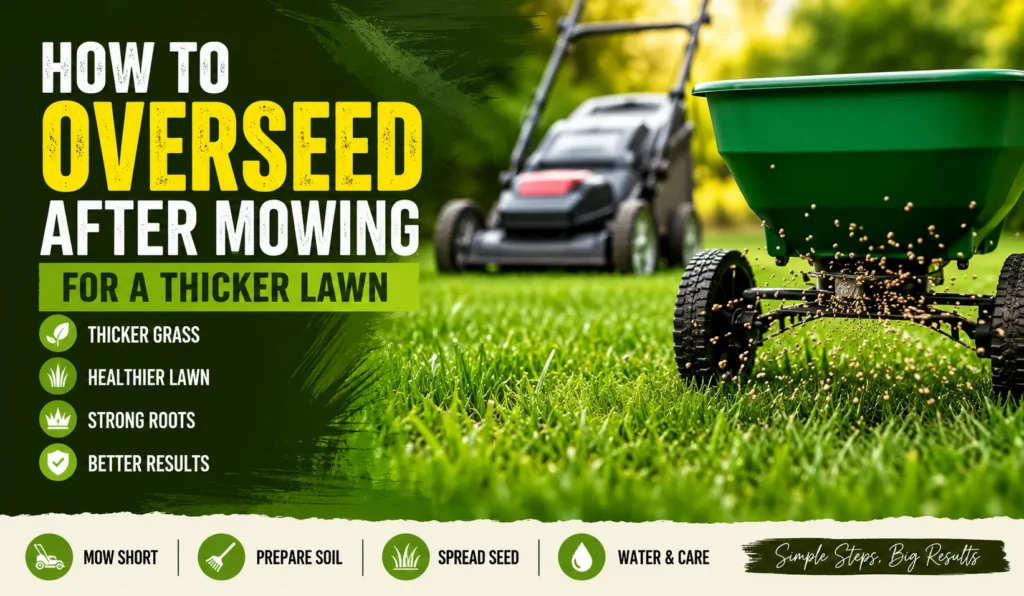
- Mow your lawn short (about 1.5 to 2 inches) before you overseed. This lets seed reach the soil.
- Rake or dethatch first. Bare soil is key for good seed-to-soil contact.
- Spread seed with a broadcast or drop spreader. Go over bare spots twice.
- Water lightly, twice a day, until seedlings show. Then water deeper and less often.
- Best times: early fall for cool-season grass, late spring for warm-season grass.
Last fall, I stood in my backyard and stared at my lawn. It looked sad. Thin patches. Bare dirt near the fence. My neighbor’s yard next door looked like a golf course. That was the moment I got serious about overseeding.
If you want a thicker lawn, you need to overseed after mowing. This one step makes a huge difference. Seed needs to touch soil, not sit on top of old grass and thatch.
I bought a bag of grass seed that same week. It sat in my garage for three days. Part of me thought seed alone would fix things. It didn’t. Once I finally mowed short and cleared the old grass first, everything changed.
This guide is for anyone with a patchy lawn. Maybe you just moved into a new house. Maybe your dog dug up a corner of the yard. Maybe your lawn just looks tired after a long summer. I’ve overseeded lawns in humid Florida summers, dry Arizona heat, and cool Midwest spring mornings. Here’s exactly how I do it, mistakes and all.
You don’t need to be a lawn expert to follow this guide. You just need a mower, a rake, some seed, and a bit of patience. I’ll walk you through every step in plain language. No jargon. No guesswork.
Why Mowing Before Overseeding Actually Matters
Mowing first clears the path for new seed. Tall grass blocks sunlight and blocks seed from reaching soil. Cut it short, and seed has a real shot at growing.
Think of your lawn like a crowded room. New seed needs space to land and grow. Tall grass fills that space and leaves nothing for young seedlings. A short, clean mow opens the room back up.
I learned this the hard way. My first attempt at overseeding, I skipped this step. I just tossed seed over grass that was four inches tall. Barely anything grew.
What Happens When You Skip This Step
Seed lands on top of grass blades instead of soil. It dries out fast. Birds eat a lot of it too. Within a week, most of my seed was gone. Only a few patches sprouted, and they were weak.
I remember checking that patch every morning. I felt hopeful at first. Then I felt frustrated. Nothing was growing where I needed it most. That failed attempt taught me more than any article I had read.
Mowing short removes that barrier. It also signals to the lawn that new growth is coming. Shorter grass means more light reaches the soil. More light means better germination.
Think about a plant trying to grow under a thick blanket. It struggles for light and air. Tall grass acts the same way toward new seedlings. Cut it down, and young grass has room to breathe.
The Science Behind Seed-to-Soil Contact
Grass seed needs three things to germinate: moisture, warmth, and contact with soil. Seed-to-soil contact means the seed touches dirt directly, not grass blades or thatch.
Think of it like planting a seed in a garden. You don’t toss it on top of mulch and expect a tomato plant. You press it into soil. Lawn seed works the same way.
Inside every grass seed is a tiny embryo and a small store of food. Once moisture reaches the seed coat, that stored food powers the first root and shoot. Without steady moisture from the soil, that process stalls or fails completely.
When seed touches soil, it can absorb moisture fast. Roots can push down right away. Seed sitting on thatch dries out in hours, not days. That’s why mowing short and clearing debris matters so much.
I like to press seed lightly into soil after I spread it. Some people use the back of a rake. Others walk over the lawn with flat shoes. Either way, that light pressure boosts seed-to-soil contact even more.
Soil compaction can also block good contact. Compacted soil is hard and packed tight. Water and seed struggle to get through it. If you walk on your lawn a lot, or park cars on the grass, your soil might be compacted. A core aerator can help loosen it before you overseed.
What You Need Before You Start
You don’t need fancy tools. A mower, a rake, some seed, and a way to water are enough. But the right seed for your grass type makes a big difference.
Before you buy anything, walk your lawn and take notes. How many bare patches do you see? How large are they? This helps you figure out how much seed to buy, and it saves you a second trip to the store.
Choosing the Right Grass Seed for Your Lawn Type
Pick seed that matches your current lawn. Mixing seed types can cause patchy color and texture. Check your grass type first, then buy matching seed.
Cool-season grasses grow best in the North. Think Minnesota, Michigan, or upstate New York. Common types include Kentucky bluegrass, tall fescue, and perennial ryegrass. Brands like Scotts and Jonathan Green sell strong cool-season blends.
Warm-season grasses grow best in the South. Think Florida, Texas, and the Gulf Coast. Common types include Bermuda, Zoysia, and St. Augustine. Pennington makes solid warm-season options too.
There’s also a middle zone called the transition zone. States like Tennessee, Kentucky, and parts of North Carolina sit here. Both grass types can grow in this zone, but neither type thrives perfectly. If you live here, talk to a local garden center about what works best on your street.
Seed bags list a germination rate on the label. Look for a rate of 85 percent or higher. A low germination rate means a lot of the seed in the bag won’t sprout at all, even with perfect care.
If you’re not sure what grass you have, take a photo to a local garden center. They can usually identify it fast.
I made this mistake once. I bought a warm-season blend for my Minnesota lawn, back when I lived there briefly for work. It never took root. The soil was too cold, and the grass type was wrong for the climate. That bag of seed was a waste of money.
Some seed bags also include a mix of types. A blend can add variety and disease resistance. But check the label closely. Make sure most of the mix matches your existing lawn. A small percentage of a different type is fine. A lawn that’s half one type and half another often looks uneven.
Price matters too, but don’t always chase the cheapest bag. Cheap seed sometimes includes filler seed or weed seed. Read the label. Look for a high percentage of pure seed and a low weed seed count.
Mower Settings and Tools You’ll Need
Set your mower blade to about 1.5 to 2 inches for most lawns. This is shorter than your normal mowing height. Bag the clippings instead of leaving them on the lawn.
You’ll also want a rake or a dethatching rake. A broadcast spreader helps for large areas. A hand spreader works fine for small patches or spot repairs.
Here’s a quick list of tools I use every time:
- Mower with a bagging attachment
- Metal rake or dethatching rake
- Broadcast or drop spreader
- Garden hose with a fine mist nozzle
- Starter fertilizer (optional but helpful)
A sharp mower blade also matters more than people think. A dull blade tears grass instead of cutting it. Torn grass turns brown at the tips and stresses the whole lawn. I sharpen my blade at least twice a year, more if I mow often.
If you don’t own a dethatching rake, many hardware stores rent power dethatchers by the day. For small lawns, a hand rake works fine. For larger lawns, a rented machine saves your back and saves time.
A soil test kit is another tool worth having. It tells you the pH of your soil and any nutrient gaps. Most grass grows best in soil with a pH between 6.0 and 7.0. If your soil is too acidic or too alkaline, seed struggles to take root no matter how well you follow the other steps.
You can find soil test kits at most garden centers for a low cost. Some county extension offices also offer soil testing services. This step isn’t required, but it can save you from repeating the same mistakes year after year.
Best Time of Year to Overseed (by Region)
Timing matters as much as technique. Cool-season grass grows best when you seed in early fall. Soil is still warm, but air temps are cooling down.
Warm-season grass grows best when you seed in late spring, once soil has warmed up. Seeding too early in cold soil wastes seed and time.
In Minnesota, I always aim for late August through mid-September. In Florida, late April through June works well for warm-season grass. In Arizona, timing depends a lot on rainfall, along with soil temperature.
Soil temperature matters more than the calendar date. Cool-season seed germinates best when soil sits between 50 and 65 degrees Fahrenheit. Warm-season seed prefers soil closer to 65 to 70 degrees. A simple soil thermometer costs very little and takes the guesswork out of timing.
Avoid seeding right before a heat wave or a hard freeze. Young grass seedlings are fragile. Extreme heat can scorch them. A sudden freeze can kill them before roots take hold. Check your local forecast for at least the next two weeks before you start.
Comparison Table for Cool-Season vs. Warm-Season Seed
| Feature | Cool-Season Grass | Warm-Season Grass |
|---|---|---|
| Best Seeding Time | Early fall | Late spring |
| Common Types | Bluegrass, fescue, ryegrass | Bermuda, Zoysia, St. Augustine |
| Ideal Regions | North, Midwest, Northeast | South, Southeast, Gulf Coast |
| Germination Time | 5 to 14 days | 10 to 30 days |
| Heat Tolerance | Low to moderate | High |
Step-by-Step: How I Overseed After Mowing
This is the exact process I follow every time. It’s simple, but each step matters. Skip one, and results suffer.
I usually set aside a full weekend morning for this. The steps themselves don’t take long, maybe two hours for an average yard. But rushing through any single step tends to hurt your results later.
I also check the weather forecast the night before. Calm, dry conditions make every step easier. Wind scatters seed. Rain compacts freshly raked soil. A calm morning is worth waiting for.
Step 1 — Mow Short and Bag the Clippings
Start by mowing your lawn shorter than usual. Aim for 1.5 to 2 inches. Bag the clippings so they don’t smother new seed.
This step clears the surface. It also cuts down on shade, which helps seed germinate faster. I always do this on a dry day, never right after rain.
Wet grass clogs the mower and clumps together. It also tears more easily than dry grass. If your lawn is damp from morning dew, wait a few hours before you start. A dry, sunny afternoon works best for this first step.
Check your mower’s bag before you begin. A full bag can spill clippings back onto the lawn. I empty mine every few passes on a large yard, just to be safe.
Step 2 — Rake or Dethatch the Soil
Next, rake the lawn hard. You want to pull up dead grass, thatch, and debris. This exposes bare soil for the seed to reach.
If your lawn has thick thatch, use a dethatching rake or rental machine. Thatch is a layer of dead organic matter between soil and grass. Too much thatch blocks water and seed from reaching roots.
I once skipped dethatching on a small side yard. Half the seed I spread just sat on the thatch layer. It never grew. Lesson learned.
To check for thatch, dig a small wedge of lawn with a trowel. Look at the layer between the green grass and the soil. If it’s thicker than half an inch, you likely need to dethatch before seeding.
Rake in different directions to pull up as much debris as you can. Bag up the thatch and old clippings just like you did with the mower clippings. Leaving them on the lawn defeats the purpose of clearing the surface.
A thin layer of thatch, less than half an inch, is actually normal and even helpful. It holds moisture and protects roots from temperature swings. The problem starts when that layer grows too thick and blocks water, air, and seed from reaching the soil below.
Some lawns build up thatch faster than others. Grass types that spread through runners, like Bermuda or Kentucky bluegrass, tend to thatch more than bunch-type grasses. If you have one of these grass types, plan to dethatch every year or two.
Step 3 — Spread the Seed Evenly
Use your spreader to apply seed at the rate listed on the bag. Go over the entire lawn once, then go over it again in a different direction.
This crisscross pattern gives more even coverage. Pay extra attention to bare or thin spots. Add a bit more seed there, but don’t dump it in piles.
For small patches, hand spreading works fine. Just try to spread seed as evenly as you can.
Check the seed bag for the right settings on your spreader. Most bags list a number or letter setting for common spreader brands. Using the wrong setting can waste seed or leave gaps.
After spreading, I like to add a thin layer of topsoil or compost over bare patches. This isn’t required, but it helps hold moisture and protects seed from birds. A light layer, about a quarter inch, is enough.
Step 4 — Water Without Washing Seed Away
Water lightly right after seeding. Aim for short bursts, not heavy watering. Heavy watering can wash seed into clumps or off your lawn entirely.
Water once or twice a day for the first two weeks. Keep the top inch of soil moist, not soggy. Once seedlings reach mowing height, cut back to deeper, less frequent watering.
A fine mist nozzle on your hose works well for this. I water for about 5 to 10 minutes each session, early morning and early evening.
Avoid watering in the middle of the day if you live somewhere hot. Water evaporates too fast under direct sun. Morning and evening watering gives seed more time to soak it up.
Keep foot traffic off the lawn during this stage. Kids, pets, and lawn chairs can all disturb new seedlings. I put up small stakes with string around freshly seeded patches as a simple reminder.
Comparison Table for Spreader Types
Not every yard needs the same spreader. Small yards do fine with a hand or drop spreader. Large yards move faster with a broadcast spreader.
| Spreader Type | Best For | Coverage Area | Ease of Use |
|---|---|---|---|
| Broadcast Spreader | Large lawns | Wide, fast coverage | Moderate |
| Drop Spreader | Precise edges, small yards | Narrow, controlled | Easy |
| Hand Spreader | Spot repairs, small patches | Very small areas | Very easy |
How Overseeding Performs in Real Conditions
Overseeding doesn’t work the same way everywhere. Climate changes everything, from timing to watering schedule. Here’s what I’ve seen firsthand in different parts of the country.
The core steps stay the same no matter where you live. Mow short, clear debris, spread seed, water carefully. What changes is how often you water and when you start.
Hot and Humid Climates (Florida, Texas, Southeast)
In Florida, heat and humidity speed up germination but also invite fungus. I water early in the morning to avoid leaving grass wet overnight. Wet grass overnight can lead to fungal problems fast.
Warm-season grass like St. Augustine or Bermuda handles this climate well. I’ve had good luck seeding in late spring, right before the rainy season kicks in. The humidity does a lot of the watering work for you.
Mosquitoes are a real problem here too. I remember standing in my backyard at dusk, watering a fresh patch of seed, getting eaten alive. Bug spray became part of my overseeding kit in Florida, right next to the rake and spreader.
Heavy afternoon storms can also wash seed away if you’re not careful. I try to seed a few days before a light rain, not right before a big storm. Checking the weekly forecast saves a lot of frustration here.
Shade is another factor in the Southeast. Tall trees and humid air can keep some lawn areas damp and shaded most of the day. St. Augustine grass handles shade better than Bermuda, so I lean toward it in yards with more tree cover.
Dry and Rocky Terrain (Southwest, Arizona)
Arizona is a different beast entirely. Soil dries out fast, sometimes within an hour of watering. I had to water more often here than anywhere else, sometimes three times a day.
Rocky soil also makes raking tough. I spent extra time breaking up compacted patches before I ever spread seed. Without that step, seed just bounced off the hard surface and blew away.
Wind is another challenge in the desert. A dry breeze can carry light grass seed clean off your lawn. I learned to seed early in the morning, when the air is usually calmer. I also pressed seed into the soil more firmly than I would in a humid climate.
The heat here is intense by midday. I moved all my watering to before 8 a.m. and after 6 p.m. Watering during peak sun in Phoenix summer felt almost pointless. Most of it evaporated before it ever reached the roots.
Cool Spring Mornings (Midwest, Northeast)
In Minnesota, spring mornings are cool and often damp with dew. This actually helps new seed stay moist longer. I still water by hand, but less often than in Arizona or Florida.
The smell of fresh-cut grass mixed with cool morning air is honestly one of my favorite parts of this whole process. It feels like the lawn is finally waking up.
Cool soil does slow things down. Germination can take closer to two weeks instead of one. Patience matters more here than in warmer climates. I remind myself that cool-season grass is built for this weather, even if it feels slow at first.
Fall seeding in the Midwest also comes with fewer weeds. Weed seeds struggle to compete with new grass once temperatures drop. That gives young seedlings a better shot at taking hold before winter arrives.
Comparison Table
Here’s a quick side-by-side look at how each region differs. Use this as a starting point, then adjust based on your own yard.
| Region | Watering Frequency | Main Challenge | Best Grass Type |
|---|---|---|---|
| Florida/Southeast | 1 to 2 times daily | Fungus risk from humidity | Warm-season |
| Arizona/Southwest | 2 to 3 times daily | Fast soil drying | Warm-season, drought-tolerant |
| Midwest/Northeast | 1 time daily | Cool soil slows germination | Cool-season |
Common Mistakes People Make When Overseeding
I’ve made most of these mistakes myself. Some cost me weeks of wasted time. Here are the two biggest ones I see over and over, both in my own yard and in yards I’ve helped friends with.
Mowing Too Late or Too Short Before Seeding
Waiting too long to mow before seeding leaves grass too tall. Seed can’t reach soil, and germination rates drop fast. On the other hand, cutting grass too short can stress your lawn and expose soil to too much heat.
The sweet spot is 1.5 to 2 inches for most lawns. Anything shorter risks scalping, which can stress roots and invite weeds.
I scalped a section of my lawn once, trying to get it “extra ready” for seed. The grass turned brown within days. It took weeks to recover, and it actually delayed my overseeding project instead of helping it.
Timing your mow close to your seeding day matters too. Don’t mow short and then wait two weeks to seed. By then, the grass has grown back and blocked the soil again. Mow, then seed within a day or two for best results.
Overwatering or Underwatering New Seed
This is the mistake I made most often. Too much water washes seed away or causes it to rot. Too little water lets seed dry out and die before it germinates.
I now set a phone reminder for watering times. It sounds simple, but it keeps me consistent. Consistency matters more than any single big watering session.
A simple test helps here. Press a finger into the soil about an inch deep. If it feels dry, water. If it still feels damp, wait a bit longer. This beats guessing every time.
Overwatering also invites fungus and disease, especially in humid climates like Florida. If you notice a slimy film or a moldy smell near your seeded patch, cut back on watering right away. Let the soil dry out a bit before you resume your normal schedule.
Pros and Cons Table
Overseeding has real upsides, but it also takes effort. Here’s an honest look at both sides, based on my own experience across three different climates.
| Pros | Cons |
|---|---|
| Thicker, fuller lawn within weeks | Takes daily attention for the first two weeks |
| Fills in bare or thin patches | Seed can wash away in heavy rain |
| Improves lawn’s resistance to weeds | Requires the right timing for your climate |
| Relatively low cost compared to sod | Foot traffic must be limited during germination |
| Works with most existing lawns | Results vary by soil quality and grass type |
My Final Recommendation
If you only remember one thing from this guide, remember this: mow short, clear debris, then seed. That order matters more than any brand of seed or fancy spreader you buy.
I’ve overseeded lawns in three very different climates now, and the core steps stay the same everywhere. What changes is timing and watering. Pay attention to your region, and adjust your schedule from there.
Don’t expect a perfect lawn after one round of seeding. My first year, I only filled in about half my bare patches. The second year, I filled in the rest. Overseeding is often a slow build, not a one-time fix.
Start small if you’re nervous. Pick one bare patch and try the full process there first. Once you see results, tackle the rest of the lawn with more confidence.
My backyard still isn’t as perfect as my neighbor’s. But it’s thicker than it’s ever been, and I know exactly what to fix next time. That’s honestly the best outcome overseeding can give you: steady, visible progress, one season at a time.
Frequently Asked Questions About Overseeding After Mowing
What is overseeding after mowing?
Overseeding after mowing means cutting your grass short, then spreading new seed over the existing lawn. Mowing first clears the way for seed to reach bare soil. This helps you fill in thin or bare patches without tearing up the whole yard.
How short should I mow before overseeding?
Most lawns do best at 1.5 to 2 inches before overseeding. This clears space for seed without stressing the grass roots.
How long does grass seed take to grow after overseeding?
Cool-season grass usually sprouts in 5 to 14 days. Warm-season grass can take 10 to 30 days, depending on soil temperature.
Can I overseed without mowing first?
You can, but results are usually weaker. Tall grass blocks seed from reaching soil, which lowers your germination rate.
How often should I water new grass seed?
Water lightly once or twice a day for the first two weeks. Once seedlings reach mowing height, switch to deeper, less frequent watering.
Do I need to dethatch before overseeding?
If your lawn has a thick thatch layer, yes. Thatch blocks seed from reaching soil, which hurts germination badly.
What is the best season to overseed my lawn?
Cool-season grass does best seeded in early fall. Warm-season grass does best seeded in late spring.
Can I mow my lawn while new seed is still growing?
Wait until new grass reaches about 3 inches tall before you mow it. Mowing too soon can pull up young seedlings by the roots.
Should I use starter fertilizer when I overseed?
Starter fertilizer can help new seedlings grow strong roots early on. It’s not required, but I use it on most of my overseeding projects.
Why did my grass seed fail to grow last time?
Common causes include seed sitting on thatch, wrong timing, or inconsistent watering. Going back through each step in this guide can help you spot what went wrong.