
Quick Overview
- A complete lawn care tool kit costs anywhere from $80 to $1,200, depending on yard size and how many tasks you handle yourself.
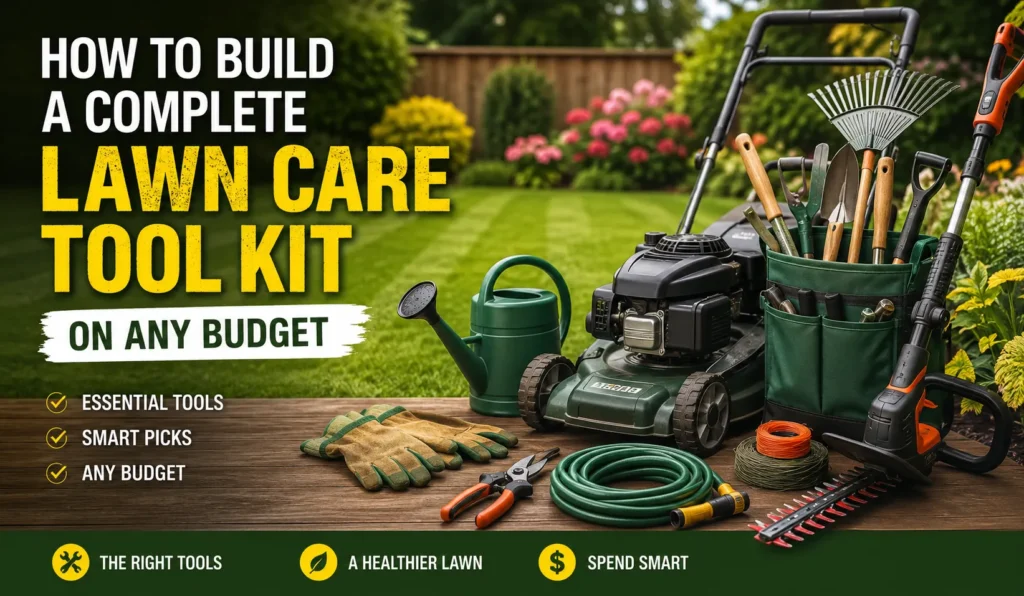
- The five core tools every yard needs are a mower, a trimmer, a rake, pruning shears, and a hose for watering.
- Battery-powered tools now match gas tools for small to mid-size yards, and they’re quieter and cheaper to maintain.
- Climate matters more than brand. Hot, humid yards in Texas need different gear than dry, rocky yards in Arizona.
- My pick for most homeowners is a mid-range kit between $150 and $400. It covers real needs without wasted spending.
I still remember standing in my first backyard in Ohio, holding a rusty hand-me-down rake and staring at a lawn that looked nothing like my neighbor’s. His grass had crisp, straight edges. Mine had dandelions taller than my dog. I owned exactly one tool: a push mower that jammed every ten feet. That was the day I realized a lawn care tool kit isn’t a luxury. It’s the difference between a yard you’re proud of and one you avoid looking at from the porch.
This guide is for anyone starting from zero, or anyone who inherited a garage full of mismatched tools and wants to actually build a kit on purpose. I’ve tested gear across three very different properties: a quarter-acre starter home in Ohio, a rental with almost no yard in Minnesota, and a half-acre property outside Austin, Texas, where the summer sun does not play around. Whatever your budget or climate, you’ll walk away knowing exactly what to buy, what to skip, and why.
Why Every Lawn Needs a Proper Tool Kit (Not Just a Mower)
A mower cuts grass. It does nothing for edges, weeds, leaves, hedges, or watering. A real lawn care tool kit covers all five of those jobs, not just one. Skip any of them and your lawn will show it within a month.
The Mistake Most New Homeowners Make
Most new homeowners buy a mower first and stop there. I did exactly this in Ohio. Three weeks later, my lawn edges looked shaggy and the flower beds were buried in leaves I had no tool to clear.
A mower handles maybe 40% of total lawn work. The rest is edging, trimming, raking, and basic plant care. Skipping those tools just delays the spending. You’ll buy them eventually, usually in a rush, usually at full price.
What “Complete” Actually Means
“Complete” doesn’t mean expensive. It means covering five jobs: cutting grass, trimming edges, clearing debris, pruning plants, and watering. A complete lawn care tool kit can do all five for under $150 if you choose carefully.
I’ve seen people spend $2,000 on a riding mower and still borrow a neighbor’s rake every fall. Completeness is about coverage, not cost.
What to Look for Before You Buy Anything
Before you buy a single tool, figure out your yard size and your power source preference. Those two factors decide almost everything else about what kit makes sense for you.
Matching Tools to Your Lawn Size
Yard size changes which tools actually make sense. A push mower is fine under a quarter acre. Anything bigger and you’ll want a self-propelled or riding mower.
My Minnesota rental had a yard the size of a parking spot. A corded electric mower handled it in eight minutes flat. My Texas property is ten times bigger, and that same mower would have taken an entire Saturday.
Here’s a rough guide I use when sizing a kit:
- Under 1/4 acre: push mower, hand trimmer, basic rake, hand pruners.
- 1/4 to 1/2 acre: self-propelled or battery mower, string trimmer, leaf blower, loppers.
- Over 1/2 acre: riding mower or zero-turn, gas or high-capacity battery trimmer, backpack blower.
Manual vs. Gas vs. Battery-Powered Tools
Manual tools are cheapest and need no maintenance, but they cost you time and sweat. Gas tools are the most powerful but loud, smelly, and need fuel, oil, and regular tune-ups. Battery tools sit in the middle now, and for most yards under half an acre, they’re the smart default in 2026.
I ran a gas trimmer for years in Ohio. It started reliably about half the time. Pulling that cord on a humid July morning, already sweating, was never fun. When I switched to an EGO battery trimmer, the difference was instant. No pull cord, no gas smell, no oil mixing.
Gas still wins for big properties or heavy daily use, because batteries eventually run out mid-job. On my half-acre in Texas, I keep two batteries charged so I never get stuck halfway through the yard.
Storage Space and Tool Durability
A small storage shed or garage corner is enough for a basic kit. Bigger kits with gas tools need more space, plus a spot to store fuel safely away from the house.
Durability matters more than price tag. A $40 rake with a metal head will outlast a $15 plastic one by years. I learned this the hard way after my first plastic rake cracked in one Ohio fall cleanup.
Look for metal or fiberglass handles on anything you’ll lean weight against, like rakes and loppers. Plastic handles crack in cold climates especially. My Minnesota neighbor lost two rakes in one winter because they sat outside and went brittle.
Compression Table: Tool Categories at a Glance
| Tool Category | Manual Option | Battery Option | Gas Option |
|---|---|---|---|
| Mowing | Reel push mower | Cordless battery mower | Gas push or riding mower |
| Trimming | Manual grass shears | Battery string trimmer | Gas string trimmer |
| Leaf clearing | Rake | Battery leaf blower | Gas backpack blower |
| Pruning | Hand pruning shears | Battery hedge trimmer | Gas hedge trimmer |
| Watering | Watering can | N/A | Hose reel with sprinkler |
The Essential Tools in My Kit (Tested and Ranked by Budget)
I built and rebuilt my lawn care tool kit three separate times, once per house. Below are the actual kits I’d recommend at each budget level, based on what worked and what I’d skip next time.
Best Budget Starter Kit (Under $150)
A budget kit under $150 covers the five essentials with manual or basic corded tools. This is what I used in my first Ohio apartment with a tiny patch of grass.
My starter list looked like this:
- Push reel mower (no gas, no battery, just blades): around $100
- Fiskars hand pruning shears: around $20
- Basic steel rake: around $15
- Garden hose with spray nozzle: around $15
The honest weakness here is labor. A reel mower works great on flat, small lawns, but it struggles with thick grass or anything over a quarter acre. I had grass clippings stuck to my shoes every single time. Still, for a tiny yard, this kit got the job done for under $150 total.
Best Mid-Range Kit ($150-$400)
A mid-range kit swaps manual tools for battery-powered ones and adds a string trimmer and leaf blower. This is the kit I’d recommend to most homeowners reading this guide.
My current mid-range setup, built for the Ohio house, included:
- Greenworks 40V cordless mower: around $250
- Ryobi 40V string trimmer: around $90
- Battery leaf blower (shared battery platform with the trimmer): around $80
- Fiskars bypass pruning shears: around $25
The trade-off here is battery compatibility. I picked Ryobi and Greenworks separately at first, which meant two chargers and two battery types cluttering my shed. If I rebuilt this kit today, I’d stick to one brand’s battery platform across every tool. It saves money and shelf space.
Best Premium Kit ($400+)
A premium kit adds a self-propelled or riding mower, a backpack blower, and commercial-grade hand tools built to last a decade. This is closer to what I run now on the half-acre in Texas.
My Texas kit includes:
- EGO Power+ self-propelled mower with brushless motor: around $450
- EGO backpack-style battery blower: around $300
- HART hedge trimmer: around $90
- Craftsman bypass loppers: around $35
- Hose reel cart with 100 feet of hose: around $80
The brushless motor on the EGO mower runs noticeably quieter and lasts longer than the brushed motor on my old mower. That’s a real upgrade, not just marketing. The weak point of this kit is upfront cost. You’re paying for convenience and runtime, not for cutting grass any better than a $250 mower does on a small lot.
Best Multi-Tool/Combo System
A combo system uses one motor head with swappable attachments for trimming, edging, and blowing. This saves storage space and money if you don’t need top performance in every category.
I tested a Ryobi Expand-It combo system for a season. One motor, three attachment heads: trimmer, edger, and blower. It worked fine for light yard work, but power dropped noticeably compared to dedicated tools. Switching attachments also took longer than I expected, about two minutes each time, which adds up if you’re doing a full yard routine.
Combo systems make the most sense for small yards or renters who don’t want three separate tools taking up shed space.
Best Kit for Small Urban Yards
Urban yards usually need less power and more compactness. A corded electric mower, manual shears, and a small rake cover most small lots under a few thousand square feet.
My Minnesota rental kit was about as small as it gets:
- Corded electric mower: around $120
- Manual hedge shears: around $20
- Small plastic rake: around $10
- Watering can: around $10
No gas, no batteries to charge, no shed needed. Total cost was under $170, and it handled that small yard with room to spare. The obvious limitation is the cord. You’re tied to an outlet, so anything beyond a small lot becomes impractical fast.
Compression Table: Kit Tiers Compared
| Kit Tier | Price Range | Power Type | Best For | Biggest Trade-off |
|---|---|---|---|---|
| Budget Starter | Under $150 | Manual | Tiny yards, renters | More physical labor |
| Mid-Range | $150-$400 | Battery | Most homeowners | Battery compatibility planning |
| Premium | $400+ | Battery or gas | Large properties | Higher upfront cost |
| Combo System | $150-$300 | Battery | Light, varied tasks | Lower power per tool |
| Urban Small-Yard | Under $200 | Corded electric | Small city lots | Limited by cord length |
How These Tools Perform in Real Conditions
Climate changes how lawn tools perform more than most buying guides admit. The same mower that works perfectly in Minnesota can struggle in Texas heat or Arizona dust.
Hot and Humid Climates (Florida, Texas, Southeast)
In hot, humid climates, battery tools run hot and lose runtime faster, so plan for at least one spare battery. Grass also grows faster in this heat, which means more frequent mowing and sharper blade wear.
My Texas summers push 100 degrees by July. My EGO mower battery, rated for 45 minutes, often gives me closer to 30 minutes once the afternoon heat kicks in. I now mow early in the morning, both for my own comfort and to keep the battery from overheating.
Humidity also speeds up rust on any tool with exposed metal. I wipe down my pruning shears after every use now, something I never bothered with in drier Ohio.
Dry and Rocky Terrain (Southwest, Arizona)
In dry, rocky terrain, string trimmers wear out line faster, and mower blades dull quicker from dust and grit. Battery life tends to last longer here since heat is dry rather than humid, but rocks are a real hazard.
A friend in Phoenix went through three trimmer spools in one season, compared to one spool lasting me an entire Ohio summer. Rocky soil also means you want a mower with a sturdy deck. A thin metal deck dents fast when it clips a hidden rock.
Thick Grass and Midwest Lawns
In thick, fast-growing Midwest grass, you need a mower with real torque, not just battery voltage. Underpowered mowers bog down and leave uneven cuts in dense turf.
My Ohio backyard had thick fescue that choked my old corded mower within minutes. The self-propelled Greenworks handled it fine, but I noticed the battery drained almost twice as fast in thick grass compared to my thinner Minnesota lawn. Midwest spring growth especially catches people off guard. Grass can grow two inches in a single warm, rainy week.
Compression Table: Climate Performance
| Climate | Main Challenge | Tool Adjustment Needed |
|---|---|---|
| Hot & Humid (TX, FL) | Battery overheating, rust | Spare batteries, wipe tools after use |
| Dry & Rocky (AZ, SW) | Trimmer line wear, blade dulling | Extra trimmer line, sturdy mower deck |
| Thick Grass (Midwest) | Battery drain, uneven cuts | Self-propelled mower, higher torque |
| Mild & Wet (PNW) | Rust, frequent mowing | Rust-resistant blades, regular sharpening |
Common Mistakes People Make When Building a Tool Kit
I’ve made both of these mistakes myself, so I’ll be direct about what they cost me in money and frustration.
Overspending on Tools You Rarely Use
A lot of people buy a hedge trimmer or edger they use twice a year, then let it sit in the shed collecting dust. I bought a dedicated lawn edger in my first year and used it exactly four times before switching back to my string trimmer’s edging mode.
Before buying a specialty tool, ask how often you’ll actually use it. If the answer is “a couple times a season,” renting or borrowing usually beats owning.
Ignoring Maintenance Costs
Gas tools need oil, spark plugs, and fuel stabilizer, and those costs add up fast. I spent close to $80 a year just maintaining my old gas trimmer before switching to battery power, where my only ongoing cost is electricity.
Battery tools aren’t free to maintain either. Batteries degrade over time and eventually need replacing, usually every three to five years depending on use. Budget for that replacement instead of being surprised by it.
My Final Recommendation
If you’re starting from nothing, don’t try to buy everything at once. I’d start with a mower and a pair of pruning shears, then add a trimmer and rake within your first month. That covers the basics without draining your savings in one trip to the hardware store.
For most homeowners, the mid-range kit between $150 and $400 is the sweet spot. It’s where I’ve spent most of my own money over the years, and it’s the kit I recommend to friends and neighbors who ask me where to start. Battery tools in this range now perform close to gas tools for yards under half an acre, without the gas smell, the pull cord, or the oil changes.
If you’ve got a bigger property like my place outside Austin, the premium kit earns its price tag in runtime and durability. Just go in knowing you’re paying for convenience, not for a dramatically better cut. And whatever budget you land on, match your battery platform across tools from day one. I wasted real money buying two incompatible battery systems before I learned that lesson the hard way.
Pros and Cons Table
| Kit Type | Pros | Cons |
|---|---|---|
| Budget Starter (Under $150) | Cheapest entry point, no maintenance costs, simple to use | More physical effort, struggles with bigger or thicker lawns |
| Mid-Range ($150-$400) | Good power-to-price ratio, battery convenience, covers most yards | Battery compatibility needs planning, moderate upfront cost |
| Premium ($400+) | Longer runtime, durable build, handles large properties well | High upfront cost, overkill for small yards |
| Combo System | Saves storage space, one battery platform, lower total cost | Less power per attachment, slower to switch tools |
| Urban Small-Yard | Very affordable, compact, low maintenance | Cord limits range, not suited to larger lots |
Frequently Asked Questions About Lawn Care Tool Kits
What is a complete lawn care tool kit?
A complete lawn care tool kit covers five core jobs: mowing, trimming edges, clearing leaves and debris, pruning plants, and watering. It doesn’t need to be expensive, just complete across all five tasks.
How much does it cost to build a lawn care tool kit?
A basic kit costs around $100 to $150 using manual tools. A mid-range battery-powered kit runs $150 to $400, and a premium kit for larger properties can exceed $400, sometimes reaching $1,200 with a riding mower included.
Is battery-powered or gas better for lawn tools?
Battery-powered tools work well for yards under half an acre and need far less maintenance than gas tools. Gas tools still offer more runtime and power for large properties or heavy daily use, but they require fuel, oil, and regular tune-ups.
What lawn tools do I actually need as a beginner?
A beginner needs a mower, a trimmer or edging tool, a rake, pruning shears, and a hose for watering. These five tools cover the majority of basic lawn care tasks.
How do I choose tools for my specific climate?
Match your tools to local growing conditions. Hot, humid climates need spare batteries and rust prevention, dry and rocky terrain wears down trimmer line and blades faster, and thick Midwest grass needs a mower with strong torque.