
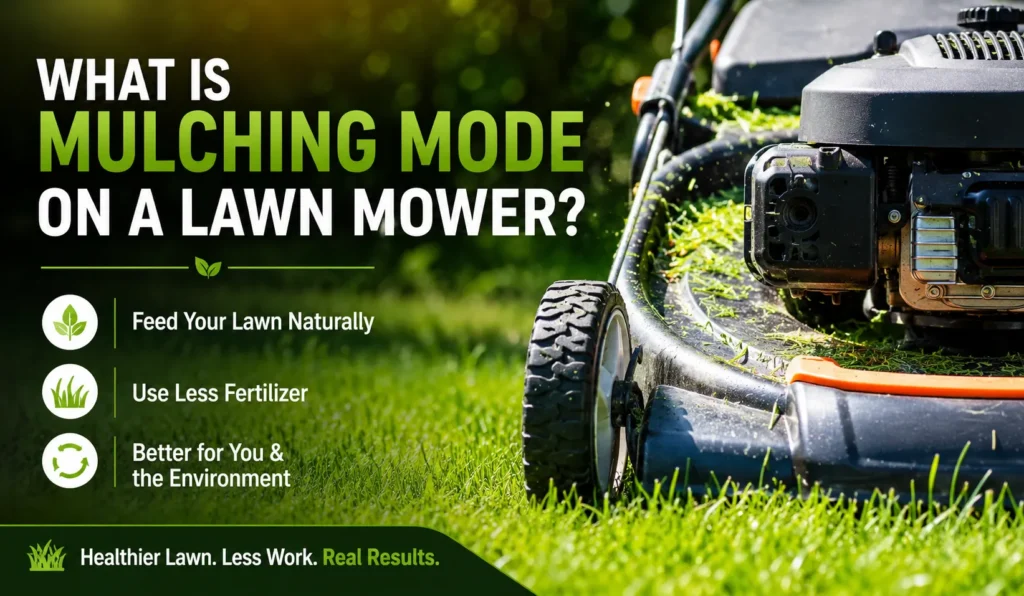
Quick Overview
- Mulching mode cuts grass into tiny pieces. It drops them back on the lawn instead of bagging them.
- Clippings hold real plant food. They can cut your fertilizer use almost in half over time (OSU Extension, 2024).
- It works best when you mow once a week. Follow the one-third rule for mowing height (OSU Extension, 2025).
- It struggles in wet grass. It also struggles in tall, overgrown grass.
- I still use mulching mode most weeks. I switch to bagging a few times a year when grass gets ahead of me.
Last Saturday, I mowed my front yard in Tampa. I didn’t bag a single clipping. My neighbor Dave leaned over the fence. He asked why his lawn looked patchy. Mine looked thick and green. The answer was mulching mode on a lawn mower. I switched to it three seasons ago. The change showed up fast.
This guide is for anyone who is not sure what “mulch” means. Maybe you just bought a new mower. Maybe you hate hauling bags to the curb. Maybe you just want a greener lawn. You may not want to buy more fertilizer. You might just want to know what that little lever on your mower actually does.
I have used mulching mode in three places. I tried it in hot, humid Florida. I tried it in dry Arizona heat. I tried it in cool Midwest spring mornings. Each place taught me something new about how clippings behave. Here is what I learned. I will share where it works. I will also share where it falls flat. I will be honest about the parts I did not love at first.
Why I Started Using Mulching Mode
I started using mulching mode for one reason. I hated bagging grass. Hauling heavy bags to the curb got old fast. It felt worse in July heat. My back was not a fan either, after a few summers of it.
A friend at work kept telling me to just flip the switch and try it. I put it off for a year. I figured my old habit was working fine. Looking back, I wish I had tried it sooner. The switch itself took about thirty seconds. The hard part was just deciding to do it.
What Mulching Mode Actually Does
Mulching mode keeps clippings inside the deck a bit longer. The blade cuts each blade of grass two or three times. By the time clippings drop, they are tiny. They sink into the lawn fast. Most clippings vanish within a day or two.
A normal cut works in a different way. One pass sends clippings out the side. Or they land straight in a bag. Mulching mode spins clippings under the deck first. Then it lets them go. The deck shape matters here. A mulching deck stays more closed. This traps air inside. The air keeps clippings spinning longer, which lets the blade pass over them again and again.
Think of it like a blender for grass. The deck is the blender cup. The blade is the blender blade. The lid stays mostly shut until the clippings are small enough to fall through. That image helped me understand the whole setup the first time someone explained it to me.
I noticed the change right away. My driveway stayed cleaner. No more grass trails from the bag to the trash can. It was a small win. But it added up over a full mowing season. By August, I had stopped thinking about clippings at all. The mower just handled it.
Does It Really Make a Difference for Your Lawn?
Yes, it does. But the change is slow. It is not instant.
Grass clippings hold real nutrients. They have nitrogen. They have phosphorus. They have potassium. These are the same nutrients in bagged fertilizer. Clippings hold up to 4 percent nitrogen by weight (Missouri University Extension, 2023). Clippings can cover up to 25 percent of your lawn’s yearly fertilizer needs (Missouri University Extension, 2023). That is a real number, not a guess from a salesperson.
I saw the color change first. My grass turned a deeper green. This took about three weeks after I switched. Growth picked up a little too. That meant mowing more often in peak spring weeks. I did not mind the extra mowing once I saw the color.
My fertilizer bag lasted almost twice as long that first year. I did not expect that. I thought mulching would help a little. I did not think it would cut my fertilizer use nearly in half. I checked my receipts the next spring just to be sure I was not imagining it.
How Mulching Mode Works (In Plain English)
The basics come down to two things. One is blade shape. The other is deck shape. Once you know both, the rest is easy.
The Blade and Deck Design Behind It
Mulching mowers use a curved blade. They also use a closed or part-closed deck. The blade has more cutting edge than a normal blade. Its curve pulls clippings up into the airflow. The deck traps that air inside. It traps the clippings too. The blade slices them again before they finally drop.
Some mowers come with a mulching blade already on. Others use a small plug. The plug blocks the side chute. This turns a normal mower into a mulching mower. Many battery mowers use a brushless motor. This motor spins the blade at a steady speed. It helps cut clippings down small, even on thick grass. A weaker motor can bog down in thick patches, so blade speed matters more than people expect.
Blade sharpness matters more in mulching mode. A dull blade tears grass. It does not slice it clean. Torn grass turns brown at the tip within a day. It looks rough from the street. I sharpen my blade every six to eight weeks. I do it more often if I hit a rock or root. A cheap blade file works fine for quick touch-ups between full sharpenings.
Mulching vs. Bagging vs. Side Discharge
Each mode treats clippings in a different way. Each one fits a different job.
Mulching cuts clippings small. It drops them back on the lawn. Bagging collects clippings in a bag. You can toss them or compost them. Side discharge shoots clippings out the side. These pieces are longer. They sit on top of the grass.
I use mulching most weeks during the growing season. I switch to bagging in early spring. The first cut of spring always comes in too long. I rarely use side discharge. I only use it when grass got away from me for two or three weeks. Each mode has its place, and I no longer think of one as the “right” setting for every mow.
Comparison Table for Cutting Modes
| Mode | Best For | Clipping Size | Lawn Health Impact |
|---|---|---|---|
| Mulching | Weekly mowing, healthy lawns | Very fine | Adds nitrogen, builds soil over time |
| Bagging | Long grass, lawn disease, fall leaves | Whole blades | Removes nutrients, avoids clumps |
| Side discharge | Overgrown grass, wet grass | Long strands | Neutral short term, can smother grass in piles |
When Mulching Mode Works Best
Mulching mode shines when you mow often. It also shines when you keep grass at the right height. Skip either step, and results drop fast.
Best Grass Types and Conditions
Mulching mode works well on most lawn grasses. That includes Bermuda, Zoysia, Kentucky bluegrass, St. Augustine, and fescue. I have mulched all five types across the three states I have lived in, and each one handled it well once I kept up with mowing.
It works best with the one-third rule. Never cut off more than one-third of the grass blade in one mow (OSU Extension, 2025). Mow once a week in the growing season. Clippings will stay short. They will disappear within a day or two.
Mowing height affects more than just looks. Cutting too short stresses the roots and weakens overall lawn health. Cutting at the right height, paired with mulching, keeps roots strong and soil moist. I check my deck height setting at the start of every season, since mowers can drift out of adjustment over time.
Thick, healthy lawns hide clippings better than thin ones. Thick grass hides fine clippings within hours. A thin lawn shows every clipping until it breaks down. That can look messy for a day. If your lawn already has bare patches, mulching alone will not fix that. You may still need to overseed those spots.
When You Should Skip It
Skip mulching mode when grass is wet. Skip it when grass is badly overgrown. Skip it when grass shows signs of disease.
Wet clippings clump together. They do not filter down to the soil. Overgrown grass, taller than four or five inches, makes clippings too long to break down fast. Sick lawns need clippings removed, not left behind. This stops disease from spreading into healthy grass (Missouri University Extension, 2023).
Decomposition is the whole point of mulching. Soil microbes break clippings down into nutrients the roots can use. That process needs short clippings, some air, and a bit of soil contact. Long, wet clumps block all three of those things. They just sit on top of the lawn instead of feeding it.
I learned this the hard way one July in Tampa. Rain kept me off the mower for a week. I mulched anyway once it dried out. I figured one missed week would not matter. The clumps smothered small patches of grass within days. I had to rake them out by hand to fix it. That patch took almost a month to fully bounce back.
Comparison Table for Mower Types (Gas, Electric, Battery-Powered)
A quick note before the table: I have run all three mower types listed below, on three different lawns, over three different years.
| Mower Type | Mulching Performance | Notes |
|---|---|---|
| Gas | Strong, steady blade speed | Best for thick or tall grass |
| Corded electric | Good on small, flat lawns | Limited by cord length |
| Battery-powered | Good to strong, depends on amp-hours | Quieter, a bit less power in thick patches |
Mulching Mode in Real Conditions
I tested mulching mode in three regions. Each one has very different weather. The results varied more than I expected.
Hot and Humid Climates (Florida, Texas, Southeast)
In Florida, mulching mode worked well most of the year. Humidity slowed down clipping breakdown, though.
St. Augustine and Bermuda grass grow fast in Tampa heat. I mowed twice a week in peak summer. Fresh-cut grass smell mixed with thick, wet air every time I opened the garage door. Mulched clippings broke down in a day when grass stayed short and dry. During rainy spells, clippings stayed damp longer. I had to rake them once or twice a month.
Heat changed my mowing height too. Taller grass shades the soil in summer. It holds water better. I raised my deck height by half an inch from spring to summer. That small change cut down on brown patches during the driest weeks of August.
Dry and Rocky Terrain (Southwest, Arizona)
In Phoenix, dry heat made clippings vanish fast.
Bermuda and zoysia grow slower in Arizona than in Florida. I mowed less often, sometimes every ten days. Dry air pulled water out of thin clippings within hours. Rocky or packed soil showed less benefit from mulching. Clippings could not soak into hard ground as well as they did in soft Florida soil.
Dust was the bigger surprise. Dry Arizona lawns kick up dust during mowing. It settled on my shoes. It settled on the mower deck too. I ended up hosing off the deck after almost every mow, something I never had to do back in Florida.
Thick, Fast-Growing Midwest Lawns
Minnesota’s spring growth spurt pushed mulching mode to its limit.
Cool-season grass like Kentucky bluegrass grows fast in spring. Some weeks it needs a cut every four or five days. I once let five days pass during a busy week. I came back to grass too thick to mulch clean. The mower bogged down under the load. Clippings clumped on top of the lawn. They did not sink in like before.
The cool air felt very different from Florida or Arizona. Dew sat heavy on the grass some mornings. It stayed wet until almost ten o’clock. That pushed my mowing time later in the day. I had to learn to plan my Saturday around the dew instead of around my own schedule.
Comparison Table
| Climate | Mulching Performance | Key Challenge |
|---|---|---|
| Hot, humid (Florida) | Strong most of the year | Rain slows clipping breakdown |
| Dry, hot (Arizona) | Strong, fast breakdown | Hard soil limits nutrient soak-in |
| Cool, wet (Midwest spring) | Strong if mowed often | Fast growth outpaces a slow mowing schedule |
Common Mistakes People Make With Mulching Mode
Most mulching problems come down to bad timing. The mower is rarely the real problem. I made both mistakes below before I learned this.
Mowing Grass Too Long Between Cuts
Waiting too long between mows is the biggest mistake. It is the one I made most often early on.
Long grass makes long clippings. Long clippings clump up. They do not filter down to the soil. This is why the one-third rule exists. If your grass gets away from you, bag that one cut. Go back to mulching the next week. Wait until your grass height is back under control. Trying to force mulching mode on tall grass just makes more work later.
Using It in Wet or Overgrown Grass
Wet grass is the second most common mistake. It is an easy one to fall into.
Morning dew leaves grass damp. So does rain. So does sprinkler runoff. Damp clippings stick together in clumps. They do not spread evenly. Wait a few hours for the lawn to dry before you mow. Or just skip mowing that day if rain is coming. A few extra hours of patience saves a lot of raking later.
My Final Take
I have used mulching mode for three growing seasons now. I have used it in three very different climates. I trust it more than I expected to at the start. My fertilizer bill dropped. My lawn held its color longer between rains. I stopped hauling bags to the curb every single week.
It is not perfect, though. Mulching mode punishes a missed mow more than bagging does. One skipped week in thick Midwest grass undid weeks of slow progress in a single afternoon. I had to get more strict about my mowing schedule, not less. That surprised me at first, since I expected mulching to mean less work overall.
Mow weekly. Keep your blade sharp. Mulching mode will likely help your lawn over a full season. If your schedule is shaky, keep a bagging attachment close by. I keep mine in the garage for exactly that reason. I still pull it out three or four times a year, usually right after a trip or a stretch of bad weather.
Looking back at three seasons of testing, the biggest shift was in my own habits, not the mower. I check the weather before I mow now. I check grass height before I start the engine. Mulching mode rewards that small bit of planning, and it punishes skipping it.
Pros and Cons Table
| Pros | Cons |
|---|---|
| Returns nitrogen and other nutrients to the soil | Struggles with wet or overgrown grass |
| Cuts fertilizer costs over a full season | Needs steady, frequent mowing to work well |
| No bagging or hauling clippings to the curb | Needs a sharp blade to avoid torn grass |
| Cuts down on yard waste at the landfill | Can clump in thick, fast-growing lawns |
| Works on most common grass types | Less useful on packed or rocky soil |
Frequently Asked Questions About Mulching Mode
What is mulching mode on a lawn mower?
Mulching mode cuts grass into small pieces. It drops them back on the lawn instead of bagging or tossing them out the side. The curved blade and closed deck cut each clipping more than once before it drops.
Does mulching mode cause thatch buildup?
No. Research from University of Minnesota Extension shows clippings do not add to thatch buildup (University of Minnesota Extension, 2024). Thatch comes from dead stems and roots. It does not come from surface clippings.
How often should I mow when using mulching mode?
Mow about once a week in the growing season. The one-third rule keeps clippings short. Short clippings break down fast and do not clump (OSU Extension, 2025).
Can I use mulching mode on wet grass?
You can, but it is not a great idea. Wet clippings clump together. Clumps can smother the grass below them. Wait until the lawn dries out before you mow, if you can.
Is mulching mode better than bagging clippings?
For weekly mowing on a healthy lawn, yes. Mulching feeds the soil and saves time at the curb. Bagging still works better for the first cut of spring. It also works better for sick lawns or grass that got very overgrown.
Do I need a special mower for mulching mode?
Most mowers built in the last ten years have a mulching option. Some have it built in. Some use a separate plug. Check your mower’s manual for a mulching blade or plug before you buy anything extra.