
Quick Overview
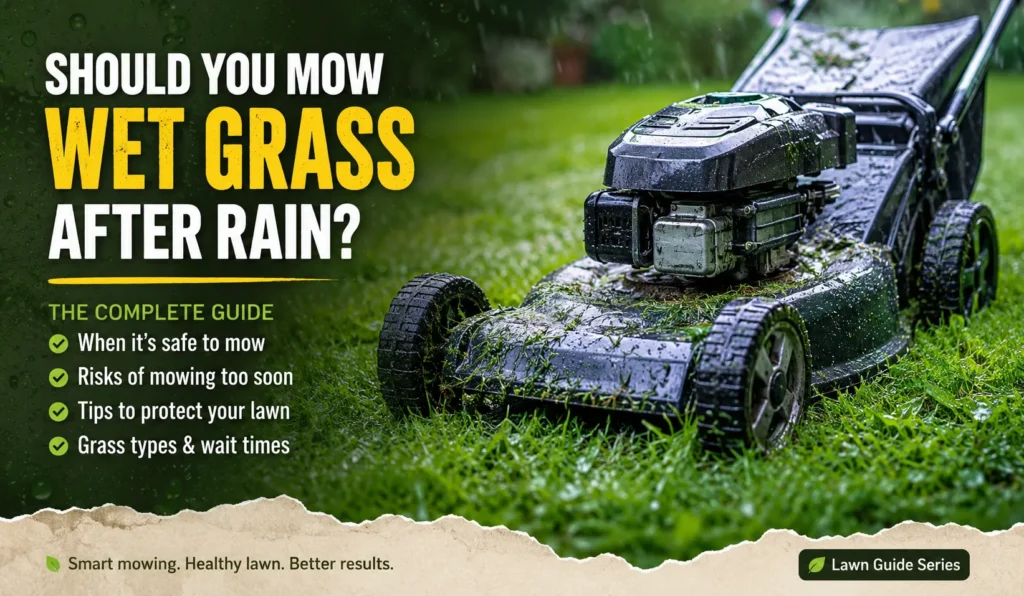
- Mowing wet grass after rain can tear roots, spread lawn disease, and clog your mower blades with clumps.
- Wait at least 2 hours after light rain and 24 hours after a heavy downpour before mowing.
- Bermuda and Zoysia dry faster than Fescue or Bluegrass – your grass type changes the wait time.
- If you must mow wet grass, raise the cutting height and go slow.
- The risk is real but not always catastrophic – context matters more than a hard rule.
It was a Sunday afternoon in late July. I was in my Florida backyard, staring at grass that had gone two weeks without a cut. A storm had rolled through the night before – a classic Florida summer dump, an inch of rain in under an hour. By noon the sky was clear and the sun was cooking everything dry. The grass looked fine. A little shiny, sure. But I had time. The mower was ready. So I went for it.
By the third pass, clumps of wet grass were clogging the discharge chute. By the fifth, I was leaving tire ruts across my St. Augustine lawn. By the time I finished, it looked worse than before I started. Mowing after rain sounds harmless. It really isn’t.
This guide is for homeowners who’ve made that same call and regretted it – and for anyone wondering if waiting is actually worth it. I’ll give you the honest version, not the warning-label version.
Why Mowing Wet Grass Is Trickier Than It Looks
Most people assume wet grass is just a minor inconvenience. It’s not. Wet conditions change how your mower performs and how your lawn responds in ways that aren’t obvious until the damage is done.
What Wet Grass Actually Does to Your Mower
Wet grass blades bend instead of standing upright. Your mower blade needs the grass to stand straight to cut cleanly. When it’s wet, the blade pushes grass over instead of slicing it. You get a torn cut, not a clean one.
Wet clippings don’t discharge well. They stick together and pack into the deck. On a push mower this means stopping every few passes to clear the chute. On a riding mower it means uneven cuts and motor strain. I’ve unclogged a mower deck more times than I can count after trying to rush a wet-grass job.
The underside of your deck takes a beating too. Clippings stick to the metal and break down into a paste that causes rust. Skip cleanup after mowing wet, and you’ll be dealing with corroded deck bolts and stained housing by the end of the season.
What It Does to Your Lawn
The lawn itself is more vulnerable when it’s wet. Grass plants are heavy with water weight, so they lean. You end up scalping leaning grass and missing upright patches in the same row.
Soil compaction is the bigger problem. Wet soil compresses under weight – your mower, your feet, even the wheels on a light push model. Walk a wet lawn and you’ll feel it – your shoes sink slightly, leave prints. A riding mower on saturated clay soil can leave ruts that take weeks to recover.
Wet conditions also make it easy to spread lawn disease. Fungal spores love moisture and move easily through wet clippings. Drag those clippings across a stressed lawn, and you can spread brown patch or dollar spot to sections that were healthy.
How Long Should You Wait After Rain?
The answer isn’t the same for every storm. “Wait until it dries” is too vague to be useful. Here’s how I actually think about it.
Light Drizzle vs. Heavy Downpour – Not the Same Wait
A light drizzle for 20 minutes is very different from an hour of hard rain. After a drizzle, surface moisture can evaporate in 1 to 2 hours on a warm, sunny day. The soil underneath probably didn’t absorb much extra water. You’re mostly waiting for grass blades to dry off, not for soil to drain.
After a heavy downpour – more than half an inch – the soil is saturated. Even if the grass blades look dry, the ground underneath is soft. That’s when compaction and rutting happen. After a storm like that, I give it a full day. Twenty-four hours is the floor, not the ceiling, if you have clay soil or poor drainage.
How to Tell If Your Grass Is Ready to Mow
The grass-blade test: run your hand across the top of the grass. If your palm comes away wet, wait. If it comes away dry or just slightly cool, you’re probably okay.
The soil test: step on a patch of lawn, then step off and look at it. If it springs back quickly, the soil is in decent shape. If it holds a footprint, it’s still too soft. I use this test every time after rain in my Iowa yard – the clay soil there holds water for days even when the surface looks fine.
The clipping test: grab a handful of grass and squeeze it. If water runs out, wait. If it feels slightly cool and damp but no water runs, you’re close to ready.
Does Grass Type Change the Answer?
Yes, and it matters. Warm-season grasses like Bermuda and Zoysia have a tight, stiff blade and tend to shed water fast. They also recover from compaction better because they spread sideways and fill in damaged spots.
Cool-season grasses like Tall Fescue and Kentucky Bluegrass have broad, soft blades. They hold water longer and lie flat when wet. They’re also slower to recover from soil damage. If you have Fescue in the Midwest or a Pacific Northwest blend, add time to your wait.
Wait Time by Rain Type, Grass Type, and Condition
| Condition | Warm-Season Grass | Cool-Season Grass |
|---|---|---|
| Light drizzle, sunny day | 1-2 hours | 2-3 hours |
| Moderate rain (under 0.5 in) | 2-4 hours | 4-6 hours |
| Heavy downpour (0.5 in or more) | 12-24 hours | 24-48 hours |
| Clay soil, any rain | Add 12 hours | Add 24 hours |
| Sandy soil, any rain | Subtract 2-4 hours | Subtract 2-4 hours |
The Real Risks of Mowing Too Soon
Some risks show up right away. Others show up weeks later and you have no idea mowing caused them.
Lawn Damage You Might Not Notice Right Away
Torn grass blades look fine at first. A day or two later, the cut ends turn brown or yellow. This is called tip burn. The damage goes beyond appearance – torn tissue is an entry point for fungal disease. Brown patch spreads through damaged tissue fast, and a warm, wet lawn is exactly the setting it needs.
Soil compaction from mowing too soon shows up slowly too. You might not see the ruts until the grass in those areas starts thinning out over several weeks. Compacted soil can’t drain well, which means those spots stay wet longer and stay vulnerable to disease.
Root disturbance is real. Wet grass plants pull out of soft soil more easily than dry ones. If your mower has any scalping action or you’re mowing low, you can pull roots out of saturated ground. That kills the plant, not just the blade.
Mower Damage That Adds Up Over Time
Blade clogging is the most immediate problem. Wet clippings pack under the deck and create imbalance. A dense enough clump can briefly stall a smaller mower motor.
The bigger cost is long-term. Wet grass paste on the deck corrodes faster than dry grass dust. Mow wet regularly and skip cleanup, and you’ll see rust on the underside of your deck within one season. Deck scrapers and wash ports exist for a reason – use them.
Blade dulling is also faster in wet conditions. The blade works harder to cut bent, heavy grass. A dull blade gives you a torn, brown cut and makes the next mow harder.
Safety Risks Most People Overlook
Wet grass is slippery. This sounds obvious, but it’s easy to forget mid-job. Push mowing on a slope with wet grass underfoot is a real slip hazard. Falls near a running blade are serious.
Riding mowers on wet slopes can slide sideways. Even a slight grade can cause loss of traction on wet turf. Manufacturers warn against operating riding mowers on wet slopes (Husqvarna Safety Manual, 2023).
Wet clumps also clog discharge chutes suddenly. When that happens, some people reach in to clear it without shutting the mower off. Don’t.
Risk Level by Condition
| Situation | Lawn Risk | Mower Risk | Safety Risk |
|---|---|---|---|
| Light drizzle, flat lawn, sandy soil | Low | Low | Low |
| Heavy rain, clay soil, any grade | High | Medium | Medium |
| Wet slope, any mower type | Medium | Medium | High |
| Saturated soil, riding mower | High | High | Medium |
| Standing water present | Don’t mow | Don’t mow | Don’t mow |
When You Absolutely Have to Mow Wet Grass
Sometimes you don’t have a choice. Grass grows fast in spring. You’re heading out of town. The rain hasn’t stopped in a week and the yard looks like a field. Here’s how to do less damage.
Tips to Minimize Damage If You Can’t Wait
Raise the cutting height first. This is the single most important change. Cutting less grass means less clogging, less weight being pulled, and less scalping on uneven wet ground. If you normally mow at 3 inches, go to 3.5 or 4 for a wet-grass pass.
Mow slowly. This isn’t the time to cover ground fast. Slow passes give the blade time to cut cleanly and give the chute time to clear between clumps.
Empty the bag more often, or switch to side discharge. Wet clippings in a bag get heavy fast and cut off airflow. Side discharge keeps clippings moving and reduces deck clogging.
After you finish, rinse the underside of the deck with a hose. Let it dry before putting the mower away. This takes five minutes and extends deck life by years.
Best Mower Settings for Wet Conditions
- Cutting height: One notch higher than your normal setting
- Speed: 20-30% slower than your normal pace
- Blade engagement: Engage the blades before entering the wet section, not mid-turn
- Turns: Wide turns instead of sharp pivots – pivots tear wet turf easily
- Overlap: Reduce overlapping passes to avoid double-compacting wet soil
Which Mower Types Handle Wet Grass Better
Walk-behind push mowers do the least damage. Less weight, smaller footprint. If you have a small yard, a push mower is the right call after rain.
Battery-powered mowers handle wet grass about the same as gas mowers from a lawn-damage standpoint. The motor type doesn’t change compaction risk. But battery decks tend to be lighter, which helps a little.
Riding mowers do the most damage in wet conditions. The weight alone – 400 to 800 pounds for most residential models – compresses wet soil badly. If you have a riding mower, wait longer than you think you need to.
Robotic mowers are a mixed case. Most are light enough to avoid compaction. But many manufacturers advise pausing them during rain and resuming only when the grass is dry. Check your model’s rain sensor settings.
Mower Type vs. Wet Grass Performance
| Mower Type | Weight | Soil Damage Risk | Deck Clog Risk | Best Action |
|---|---|---|---|---|
| Push reel mower | Very light | Very low | None | Can mow sooner |
| Walk-behind gas/electric | Light | Low-Medium | Medium | Wait 1-2 hours |
| Self-propelled walk-behind | Medium | Medium | Medium | Wait 2-4 hours |
| Riding mower (residential) | Heavy | High | Low-Medium | Wait 24 hours |
| Zero-turn mower | Heavy | High | Low | Wait 24 hours |
| Robotic mower | Very light | Very low | Low | Check manual |
How Different US Climates Change the Rules
The “wait before you mow” advice doesn’t mean the same thing in Oregon as it does in Texas. Climate changes how fast your lawn dries, how your soil drains, and how often the wet-grass problem comes up.
The Southeast (Florida, Georgia, Louisiana) – Where It Rains Almost Daily
Florida gets around 54 inches of rain per year, with afternoon storms nearly every day from June through September (NOAA Climate Data, 2023). Waiting 24 hours after every storm would mean never mowing during summer.
The saving grace is that Florida afternoons are hot and sunny. After a storm, a sandy-soil yard can dry in 2 to 3 hours if the sun comes out. Clay-heavy yards in Georgia take much longer.
The bigger concern in the Southeast isn’t wet mowing itself – it’s fungal disease. Brown patch and gray leaf spot spread fast in the heat and moisture. I try to mow in the morning before afternoon storms, not after them.
The Pacific Northwest – Damp Grass Is Just Tuesday
Western Oregon and Washington get rain from October through April with few dry breaks. Waiting for truly dry grass isn’t always realistic.
Most lawns out there are cool-season blends – Fescue, Bluegrass, Perennial Ryegrass. These grasses handle moisture better than you’d think. They also grow slowly in winter. You might only mow every 3 weeks from November through February.
The real concern is soil. Western Washington has heavy clay in many areas. Riding mower use from November through March on clay soil is a bad idea. Push mower at a high cut is the move. I’ve seen Oregon lawns that took an entire summer to recover from riding mower ruts made during a wet March.
The Midwest – Spring Mud Season Is Real
Iowa, Illinois, Indiana – spring is a whole thing. Snowmelt plus April rain means lawns that are waterlogged for weeks. Soil ranges from sandy loam to heavy clay depending on where you are.
The grass grows fast in May, sometimes an inch a week. Waiting for perfect conditions isn’t always an option. What works in the Midwest: check the soil with your foot first. If it compresses under your weight, wait. If it holds firm, mow at a raised height with a walk-behind.
Riding mowers on Midwest clay in April and May leave ruts that are visible until July. The grass recovers, but the soil structure doesn’t always.
Climate Zone vs. Mowing Strategy
| Climate Zone | Main Challenge | Best Strategy |
|---|---|---|
| Southeast (FL, GA, LA) | Daily rain, high disease risk | Mow mornings before storms; watch for fungal spread |
| Pacific Northwest | Long wet season | Push mower at high cut; avoid riding mowers Oct-March |
| Midwest | Spring saturation, clay soil | Foot test first; ride only on firm ground |
| Southwest (AZ, NM, TX) | Rare but heavy rain events | Wait 12-24 hours; soil drains fast |
| Northeast | Variable; wet springs | 4-6 hour wait after moderate rain; longer on clay |
Common Mistakes Homeowners Make After It Rains
These are the two I see most often. Both are easy to fix once you know what to look for.
Mowing at the Wrong Height
The instinct after missing a mowing window is to cut short to “catch up.” This is the wrong call when grass is still wet.
Cutting low on wet grass means you’re pulling heavy, wet plants closer to the soil. The blade scalps more easily on uneven saturated ground. Short grass also dries out faster in the heat, which stresses a plant that’s already working hard.
Keep the one-third rule: never remove more than one-third of the blade height in a single mow (Purdue University Extension, 2022). If your grass is 6 inches tall, cut it to 4. Mow again in a few days, not a week later.
Skipping Cleanup After Mowing Wet Clippings
Wet clippings left on the lawn in thick clumps block sunlight and trap moisture underneath them. Those pockets are exactly where fungal disease starts. In a hot, humid climate like the Gulf Coast, a pile of wet clippings can cause yellowing in the grass underneath within 48 hours.
After mowing wet grass, rake or blow off any visible clumps. It takes 10 extra minutes and prevents a lot of recovery work. If you use a bagging attachment, empty it often so clippings don’t pack and get pushed back onto the lawn.
My Final Recommendation
If you can wait, wait. That’s the honest answer. Two hours after a light drizzle on sandy soil in summer is usually fine. Twenty-four hours after a heavy storm on clay is the real minimum, not a suggestion.
But I know life doesn’t always cooperate. If you’re a week behind and the grass is heading toward unmowable length, mow carefully. Raise the deck, slow down, and clean up afterward. The damage from one wet mowing, done with care, is manageable. The damage from letting grass grow too long is often worse.
The one situation where I won’t bend: slopes and riding mowers in wet conditions. The combination of weight, wet turf, and a grade is genuinely dangerous. I’ve seen riders slide on grades that seemed too gentle to matter. If your yard has any real slope and it’s been raining, wait.
Mowing Wet Grass vs. Waiting – Honest Trade-Offs
| Factor | Mowing Wet | Waiting |
|---|---|---|
| Lawn cut quality | Uneven, clumpy | Clean once dry |
| Lawn health risk | Medium to High | None |
| Disease spread risk | Higher | Lower |
| Mower wear | More | Less |
| Soil compaction | Higher | None |
| Safety on slopes | Lower | Higher |
| Cleanup needed | More | Less |
| Best case for mowing wet | Grass is dangerously long | Almost always wait |
Frequently Asked Questions About Mowing After Rain
How long after rain can you mow grass?
Wait at least 2 hours after light rain and 24 hours after heavy rain. The exact wait depends on your soil type and grass type. Clay soil takes longer to drain than sandy soil. Use the foot-press test – if your foot leaves a print, wait longer.
Is it bad to mow wet grass?
Yes, it can cause real damage. Wet grass leads to torn cuts, soil compaction, mower deck clogging, and faster spread of lawn disease. The damage ranges from minor to serious depending on how wet the conditions are and what type of soil you have.
What happens if you mow grass right after rain?
You’ll likely get a ragged cut, clumps of wet clippings on the lawn, and possible ruts or soil compaction. Grass blades bend when wet instead of standing upright, so the mower misses patches and scalps others. Wet clippings left in clumps can cause yellowing and fungal growth within 48 hours.
Can wet grass damage a lawn mower?
Yes. Wet clippings clog the deck and discharge chute, which strains the motor. Wet clippings also stick to metal and cause corrosion over time. Mowing wet regularly without cleaning the deck shortens deck life.
Does grass type affect how soon you can mow after rain?
Yes. Warm-season grasses like Bermuda and Zoysia dry faster and handle compaction better. Cool-season grasses like Fescue and Bluegrass stay wet longer and are more vulnerable to root damage in saturated soil. Add extra wait time for cool-season grasses in clay soils.
Can I mow if it’s just damp, not soaking wet?
Usually yes, with care. Damp grass that passes the hand-wipe test – your palm comes away dry – can be mowed at a raised height. The risk is much lower than mowing after a heavy rain. Slow your pace and clean the deck afterward.