
It was a Tuesday in July. Hot. Humid. The kind of Georgia afternoon where you sweat just standing still.
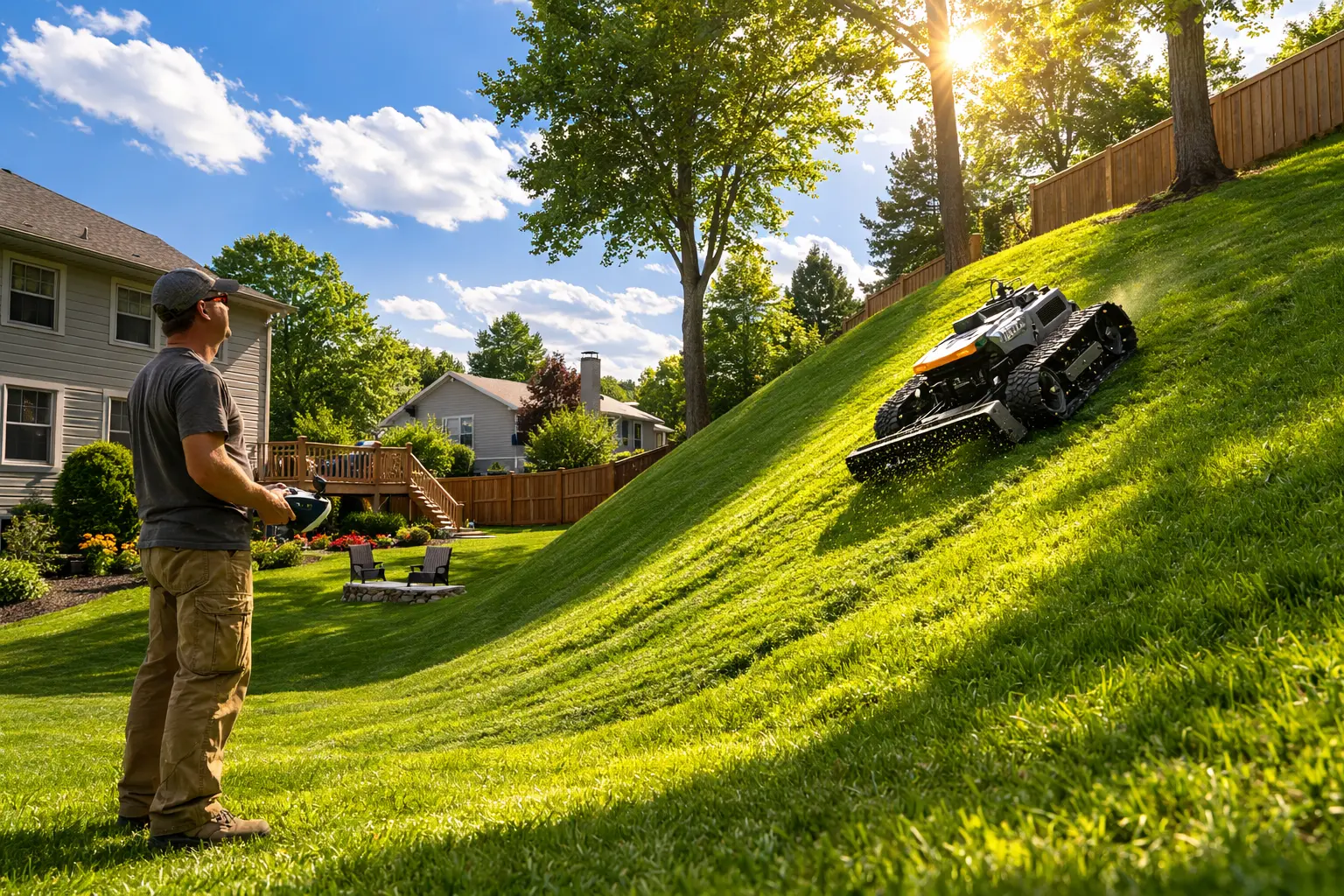
I was staring at the back half of my yard. It slopes hard. Like, hold-onto-something hard. And I had a 90-pound gas mower pointed right at it.
I’d done this hill a hundred times. But that day, something felt different. My knees hurt. My back was already sore. And I thought — there has to be a better way.
That’s when I started seriously asking: is there a remote control lawn mower?
Spoiler: yes. And I wish I had found it sooner.
I’ve been working with mowers for over 15 years. Push mowers, riding mowers, zero-turn machines — I’ve used them all. So when I started looking into remote control and robotic mowers, I didn’t just read reviews. I tested them. I talked to landscapers in Texas and Florida. I watched one nearly slide off a wet hill in Tennessee.
This article covers everything I learned. What these machines are. How they work. What they cost. And whether one makes sense for your yard.
Brands like Husqvarna, Mean Green, and Altoz are already changing how Americans mow. Let me break it all down for you honestly.
What Exactly Is a Remote Control Lawn Mower?
Not all remote mowers are the same. Some you steer with a joystick. Others basically mow on their own.
The term “remote control lawn mower” gets used loosely online. I want to clear that up right away — because picking the wrong type is an expensive mistake.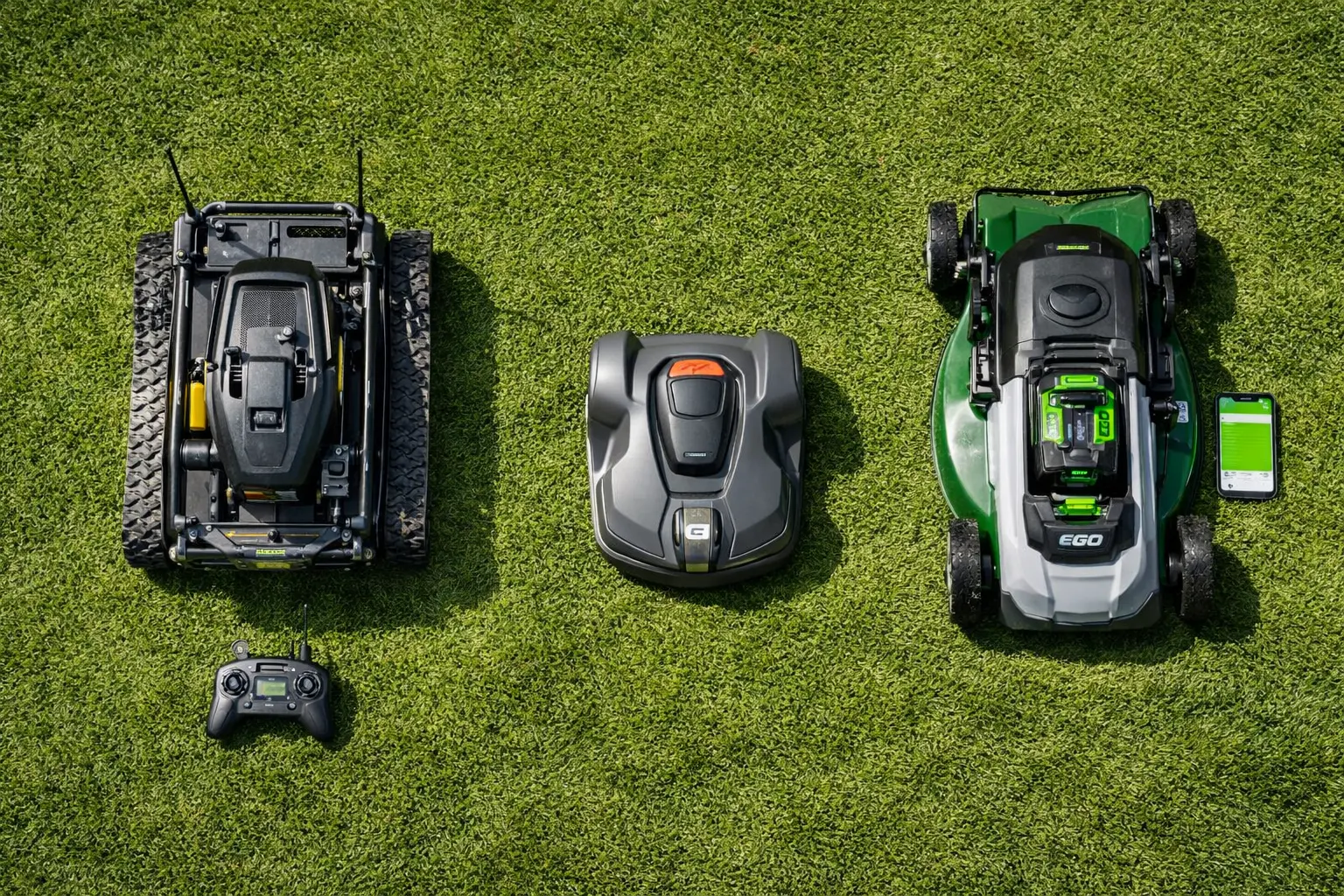
The Three Main Types You’ll Find in the U.S. Market
RC (Radio-Controlled) Mowers
These work a lot like an RC car. You hold a remote. You steer. The mower goes where you point it.
You’re always in control. You’re just not standing behind it.
- Best for steep slopes and hazardous terrain
- Great for commercial landscaping crews
- Typical U.S. price range: $3,500 to $20,000+
- Requires an operator nearby at all times
These are serious machines. Most of them are commercial grade.
Robotic Mowers
Think of these like a Roomba. But for your lawn.
You set a boundary. You program a schedule. Then you go inside and drink lemonade while it mows.
- Best for regular suburban lawns
- Needs boundary wire or GPS setup first
- Typical price range: $800 to $15,000
- Minimal human input once set up
The setup takes some patience. But once it’s done? These things just work.
App-Controlled Smart Mowers
These sit somewhere in between. You control them through your phone.
- Bluetooth or Wi-Fi connected
- Schedule and adjust from anywhere
- Price range: $600 to $2,500
- Great for tech-comfortable homeowners
I used one from a hotel in Nashville once. Still felt a little surreal watching my lawn get mowed from 400 miles away.
How Remote Mowers Are Different from Regular Push or Riding Mowers
The biggest difference is weight and operator presence.
A standard riding mower puts a person on a heavy machine. On a slope, that’s a real safety risk. RC mowers take you off the equation entirely.
I remember the first time I ran a remote mower on a hill. I was standing flat on the ground. The mower was climbing the slope. And it was just — quiet. A low hum from 30 feet away.
That feeling is hard to describe. Relief, mostly.
Is There a Remote Control Lawn Mower That Actually Works? (Real-World Honest Answer)
I get this question all the time. Usually from someone who saw a YouTube video and can’t tell if it’s a gimmick.
It’s not a gimmick. But it’s also not magic. Here’s the real answer.
What They Handle Well
These mowers genuinely shine in certain situations.
- Steep slopes — 30° to 45° grades are no problem for the right RC machine
- Large flat properties — 1+ acres? A robotic mower is a serious time-saver
- Repetitive weekly mowing — Set the schedule and forget it
- Hazardous zones — Near water, poison ivy patches, or rocky edges
- Hot climates — In Arizona or Texas, nobody wants to mow at noon. A robotic mower doesn’t care about the heat.
Down in Florida, I talked to a guy managing a retirement community HOA. He runs two robotic mowers on a flat half-acre near a retention pond. His crew used to dread that area. Now it runs itself.
Where They Fall Short (Be Honest Here)
I’m not going to pretend these machines are perfect. They’re not.
- Tight spaces and complex landscaping give robotic mowers trouble
- Very tall or overgrown grass can jam the blade disc
- Lots of tree roots or debris cause issues
- Robotic models need real setup time — boundary wire installation takes a few hours
- The upfront cost is real. It’s not cheap.
If your yard looks like a maze of flower beds, garden walls, and tight corners? A robotic mower is going to struggle. You’d still need to hand-finish a lot of it.
What U.S. Lawn Owners Actually Say
I’ve talked to a lot of people about this. Their experiences are pretty consistent.
The suburban Ohio homeowner? Loved it after week two. Hated the wire setup.
The Texas ranch manager running 4 acres of mixed terrain? Went with a commercial RC mower. Said it paid for itself in a season by reducing how many guys he needed on the slope work.
The Florida retiree with a flat quarter-acre? Bought a mid-range robotic model, set it up on a Tuesday, and hasn’t touched a mower since.
Almost everyone goes through a frustration phase early. Boundary wire placement, GPS calibration, figuring out the app. But almost everyone sticks with it.
Best Remote Control Lawn Mowers Available in the U.S. Right Now
I’ve tested or closely researched most of these. Some impressed me. One nearly gave me a heart attack on a hill in Tennessee.
Best RC Mowers for Steep Slopes
Altoz TRX 660i
This is a beast. Altoz is an American-made brand out of Minnesota, and they build machines for serious terrain.
- Track-driven — grips slopes like nothing else
- 31 hp Kawasaki engine
- 61-inch cutting deck
- Handles inclines up to 50°
Who it’s for: commercial landscapers, large property owners with serious slopes.
One real limitation: the price. You’re looking at $25,000+. This isn’t a homeowner toy.
Mean Green Stalker RC
Mean Green is based in Ohio and builds electric commercial mowers. The Stalker RC is their slope specialist.
- All-electric — quiet and no fumes
- Zero-turn platform with RC control
- Strong traction on wet and dry slopes
- Approximately $15,000–$18,000
I ran one of these on a wet hillside in Tennessee. It tracked straight and didn’t flinch.
The limitation? Battery runtime. Around 3–4 hours under heavy load.
Husqvarna AUTOMOWER 450XH
This one bridges the gap between robotic and RC. It’s fully autonomous, but handles slopes like a dedicated slope machine.
- Handles up to 45% incline
- GPS and boundary wire compatible
- Covers up to 1.25 acres
- Around $3,500–$4,000
For a homeowner with a steep yard and a serious budget? This is the best robotic option I’ve found.
Best Budget-Friendly Remote Mowers for Homeowners
Not everyone needs a commercial machine. Here’s what you get at each price tier.
Under $1,500:
- Entry-level robotic mowers from brands like Worx and Gardena
- Handle flat to mildly sloped lawns
- Good for up to a third of an acre
- Basic app features, limited scheduling options
$1,500–$3,000:
- Husqvarna Automower 315 or 430X range
- Better slope handling (up to 35%)
- More coverage area
- Improved GPS accuracy and app control
Honestly, if your lawn is flat and under half an acre, you don’t need to spend more than $1,500. Save your money.
Best for Large U.S. Properties (1+ Acres)
Big properties need machines that can actually cover the ground.
- Husqvarna Automower 450XH covers 1.25 acres
- Mean Green commercial models handle 3–5 acres depending on terrain
- Altoz TRX handles unlimited acreage with an operator
GPS boundary systems work better on large, open lots. Wire systems are more reliable in cluttered or complex layouts.
Battery runtime is the key number to watch. On a big property, you want at least 90 minutes of continuous runtime — or a fast return-to-base charging cycle.
Best for Commercial Landscaping Crews
For the business owners reading this — here’s what matters.
- Fleet compatibility: Can you run multiple units from one interface?
- Durability in humidity: Southern summer heat and moisture are hard on electronics
- Dealer network: Is there a service center in your state?
Mean Green and Altoz both have solid U.S. dealer networks. Husqvarna has the widest coverage of any brand — there’s almost always a dealer within 50 miles.
How Much Does a Remote Control Lawn Mower Cost?
Let’s talk real numbers. Not MSRP fluff — actual costs including setup, accessories, and what happens when something breaks.
Price Breakdown by Category
| Type | Entry Price | Mid-Range | Commercial |
| RC Mower | $3,500 | $8,000–$15,000 | $20,000+ |
| Robotic Mower | $800 | $2,000–$4,000 | $5,000–$15,000 |
| App-Smart Mower | $600 | $1,200–$2,500 | N/A |
Hidden Costs Nobody Warns You About
This is the part most reviews skip. Don’t skip it.
- Boundary wire installation — DIY takes a full Saturday. Professional install runs $200–$500 depending on yard size.
- Replacement blade discs — Budget $50–$100 per season. More if you have rocky soil.
- App subscriptions — Some brands charge $50–$100 per year for full app access. Read the fine print.
- Extended warranty — Worth it in extreme climates. Arizona heat and Midwest winters are both hard on electronics.
- Winter storage — You’ll need a dry, temperature-controlled space. A cold garage in Minnesota is not ideal for lithium-ion batteries.
Is It Worth the Investment?
I did the math so you don’t have to. And it made me feel a lot better about the sticker shock.
Let’s say mowing takes you 2 hours a week. Mowing season in most of the U.S. runs 25–30 weeks.
That’s 50–60 hours a year. At minimum wage — $15/hour — that’s $750–$900 in labor value. A mid-range robotic mower at $2,500 pays itself off in about 3 years.
Now add in the physical toll. Back pain. Heat exhaustion. The CDC tracks thousands of lawn mower-related injuries every year in the U.S. A machine that keeps you off a dangerous slope isn’t just convenient. It’s safer.
Remote Control Mowers on Slopes — The Real Reason Most People Buy One
Honestly? Flat lawns don’t drive this purchase. Fear does.
Fear of flipping a riding mower on a hill. It’s more common than people admit — and the injuries are serious.
Slope Safety Stats U.S. Homeowners Should Know
The U.S. Consumer Product Safety Commission (CPSC) reports that riding lawn mowers are involved in tens of thousands of injuries every year. Rollover accidents on slopes are a leading cause.
Any slope above 15° starts to get genuinely risky with a traditional riding mower. Above 25°, you’re in real danger territory.
The mental shift that happens when you switch to an RC mower is real. You let the machine take the risk. You stand on flat ground. That peace of mind? It’s worth a lot.
How RC Mowers Handle Different Slope Grades
15°–25° Slopes
Most mid-range robotic mowers handle this fine. The Husqvarna 315X is comfortable here. These are typical backyard slopes — not extreme, but not flat either.
25°–35° Slopes
You need better grip here. Wider tires, heavier chassis, or a mower rated specifically for this range. The Husqvarna 450XH handles up to 45% slope — roughly 24°.
35°–45° Slopes
This is commercial RC territory. Standard robotic mowers don’t belong here. You need tracks or heavy-duty wheel drive.
Terrain matters too. Wet Georgia clay is slippery in ways dry Colorado hillside isn’t. Pacific Northwest slopes covered in moss? Plan for extra traction needs.
Tips for Mowing Slopes Safely with an RC Mower
Even safe machines need safe operators.
- Always test on dry ground first
- Set boundary wires at least 24 inches from any drop-off edge
- Never let bystanders stand downhill from the mower during operation
- Check blade disc for damage before every steep-slope session
- Run slower speeds on wet or mossy slopes
- Keep your eye on the machine — don’t walk away
- If the mower starts sliding, stop it immediately and reassess
These aren’t optional guidelines. They’re the habits that keep accidents from happening.
Robotic Mower vs. Remote Control Mower — Which One Do You Actually Need?
People mix these up constantly online. They’re not the same thing.
Choosing wrong is expensive. So let me make this really clear.
Side-by-Side Comparison
| Feature | RC Mower | Robotic Mower |
| Human control required | Yes (real-time) | Minimal |
| Best terrain | Slopes, complex areas | Flat to moderate slopes |
| Setup complexity | Low | Medium–High |
| Typical user | Landscaper, large property | Homeowner, regular schedule |
| Price entry point | Higher ($3,500+) | Lower ($800+) |
When to Choose an RC Mower
- Your property is large and has serious terrain variation
- You run a landscaping crew and need to tackle slopes efficiently
- You want full control over every pass — not automation
- Safety on steep hills is your primary concern
RC mowers are tools. Powerful, precise tools. But you’re still the operator.
When to Choose a Robotic Mower
- You have a regular suburban lawn with predictable edges
- You want to set a schedule and walk away
- You’re comfortable with technology and initial setup doesn’t scare you
- Your budget is in the $1,000–$4,000 range
If your lawn is mostly flat and shaped like a simple rectangle? An RC mower is overkill. Get a robotic one. Save yourself the extra cost.
Setting Up a Remote Control or Robotic Mower — Step-by-Step
Setup is where most people get frustrated. Especially with robotic models.
I’ve seen grown adults nearly throw the manual into a pond. I get it. But if you follow these steps in order, it’s actually not that bad.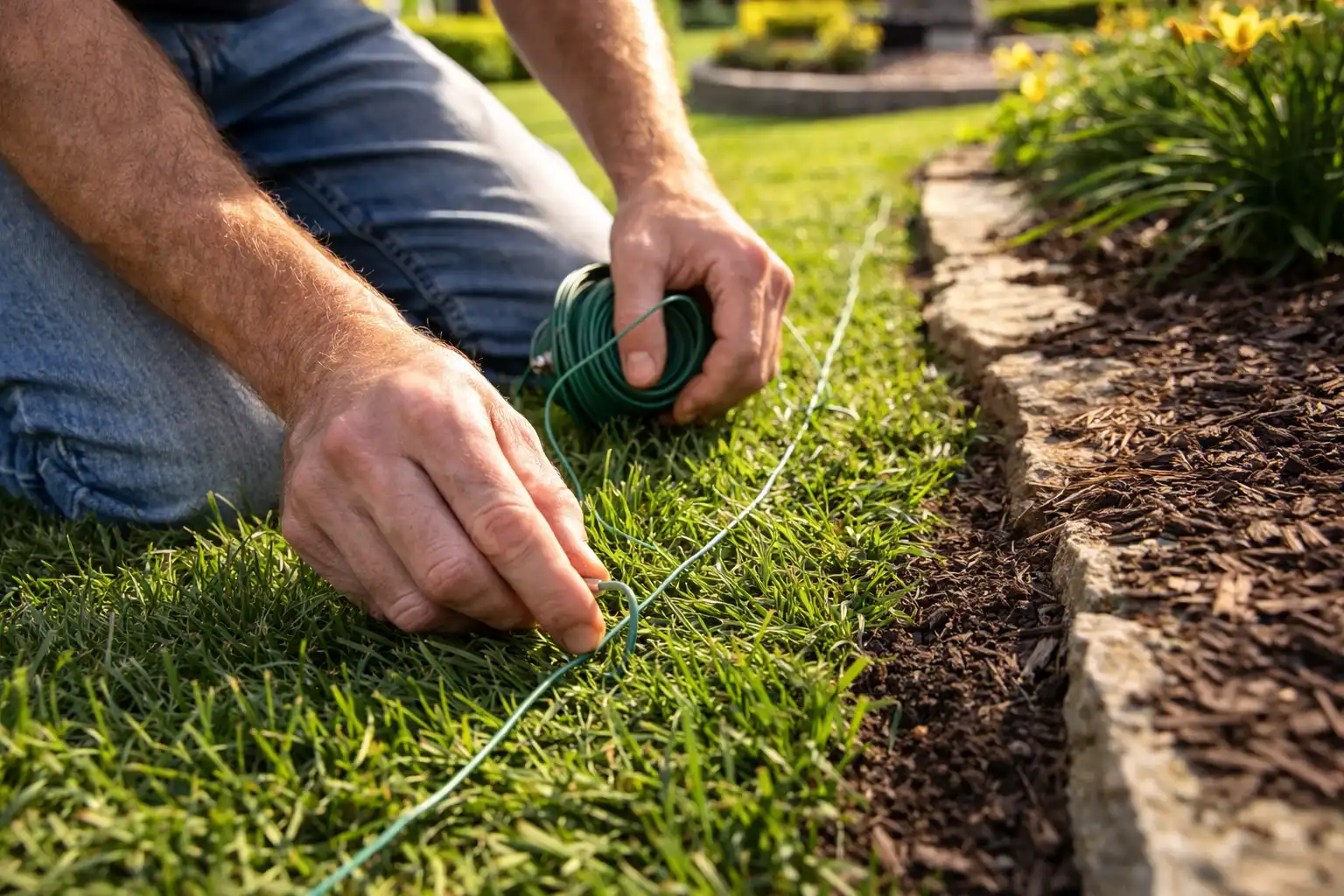
Setting Up a Robotic Mower (Boundary Wire Method)
Step 1 — Map Your Lawn Perimeter
Walk your yard. Mark any obstacles: flower beds, trees, garden walls, downspouts.
Sketch it out on paper or use the mower’s app if it has mapping features. This saves you from rewiring later.
Step 2 — Install Boundary Wire
This is the most time-consuming part. The wire tells the mower where to stop.
- Lay the wire flat on the grass first. Don’t bury it immediately.
- Use staples every 12–18 inches on flat ground
- On slopes, staple every 8–10 inches — the wire shifts more
- Keep at least 12 inches from the perimeter edge, more near drop-offs
One note for Southern homeowners: clay-heavy soil in Georgia or Alabama can make stapling harder. Wet the ground first if it’s dry.
In Minnesota or Wisconsin? Don’t try this in frozen ground. Wait until spring.
Step 3 — Place the Charging Station
The charging base needs a flat surface. Good drainage. Not in direct afternoon sun if possible — the electronics don’t love prolonged heat exposure.
Give it at least 6 feet of clearance on each side so the mower can dock cleanly.
Step 4 — Program the Mowing Schedule
Most apps are intuitive. Set mowing days, start time, and mowing duration.
A good rule: mow more often for shorter periods rather than one long session per week. It keeps the grass healthier and the machine running cool.
Step 5 — Run the First Test Cycle
Stay nearby. Watch the first full pass.
Check that the mower respects the wire boundaries. Adjust any spots where it gets too close to an edge. Note any areas where it seems to struggle — that tells you where to reinforce the wire or adjust the boundary route.
Setting Up an RC Mower
This is much simpler. Honestly, it’s almost plug-and-play.
- Charge the battery fully before first use (usually 2–4 hours)
- Pair the remote controller — most use a simple sync button
- Do a flat-ground test run at low speed first
- Check blade engagement from the remote before you approach any slope
- Run a slow terrain test before full-speed operation
There’s no wire to install. No app required for basic operation. If you’ve ever used an RC vehicle, you already understand 80% of it.
Common Setup Mistakes (And How to Avoid Them)
Here are the six I see most often.
- Placing the charging station too close to the wire boundary — The mower can’t dock cleanly if there’s not enough open space
- Running boundary wire too close to sprinkler heads — I learned this one the hard way. One wire meets one sprinkler head and you’re rewiring a section mid-season
- Skipping the test cycle — Don’t program a schedule and just leave. Watch the first run. Every time.
- Underestimating setup time — Budget a full afternoon for boundary wire. Not an hour.
- Ignoring firmware updates — Update the app and mower software before your first run. Older firmware has known boundary issues on some models.
- Setting the cutting height too low too soon — Start higher. Let the mower get used to the terrain before you dial in the final cut height.
Maintaining Your Remote Control Lawn Mower
These machines aren’t high-maintenance. But ignore them and you’ll find out the hard way — usually mid-June, mid-lawn.
A little regular attention keeps them running season after season.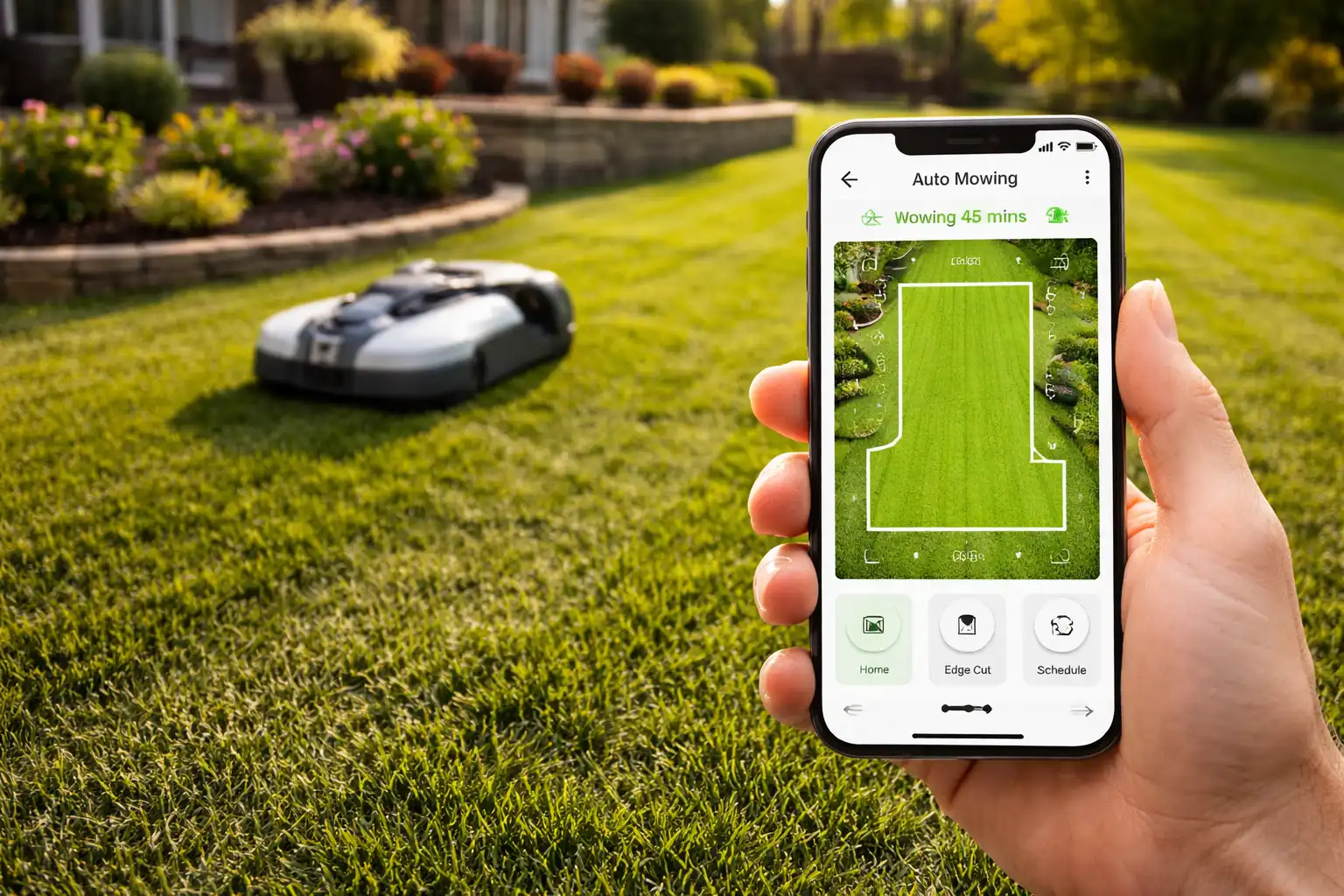
Weekly Maintenance Tasks
Simple stuff. Takes 10 minutes.
- Check the blade disc — Look for chips, dullness, or debris wrapped around the drive shaft
- Wipe down the chassis — Especially after wet mowing. Grass builds up fast under the deck.
- Clean the sensors — Robotic mowers have bump and lift sensors that get dirty. A dry cloth is enough.
- Inspect the wheels — Look for grass or wire caught in the wheel hubs
That’s it. Ten minutes. Seriously.
Seasonal Maintenance (U.S. Climate-Specific)
Climate matters more than most people realize.
Spring Startup
Before the first mow of the season:
- Charge the battery fully after winter storage
- Check for any firmware or app updates
- Walk the boundary wire and look for winter damage — frost heave can shift or break it
- Inspect blade disc and replace if worn
Summer
High-growth season is hardest on blades.
If you’re mowing Bermuda grass in Georgia, Zoysia in the Carolinas, or St. Augustine in Florida — you’ll sharpen or replace blades more often than someone mowing Kentucky bluegrass in Ohio.
Plan to check blades monthly during peak growth.
Fall
Leaves are the enemy of robotic mowers.
- Clear heavy leaf buildup before mowing
- Inspect boundary wire after kids or dogs have been active in the yard — they’re notorious for disrupting wire stakes
- Reduce mowing frequency as growth slows
Winter Storage
This step gets skipped. Don’t skip it.
- Bring the mower inside — a dry garage, shed, or basement
- Store lithium-ion batteries at 50–80% charge, not fully drained and not fully charged
- Keep storage temps above 32°F — freezing temps degrade battery cells permanently
- Midwest and Northeast homeowners: this step is non-negotiable
When to Call a Professional (vs. DIY Fix)
Some things you can handle yourself. Some you really shouldn’t.
- DIY okay: Blade replacement, wire repair, sensor cleaning, battery swap
- Call a pro: Motor issues, GPS calibration errors, electronic control board failures
Warranty matters here. If your machine is under warranty, don’t crack it open yourself. You’ll void the coverage.
Most major brands have U.S. service centers. Husqvarna has the widest dealer network. Mean Green services through certified dealers. Altoz has regional service partners.
Remote Control Lawn Mowers and Smart Home Integration
This is where it gets genuinely cool. Or mildly terrifying, depending on how you feel about technology.
Either way — it works.
App Integration and Scheduling Features
Most modern robotic mowers come with a dedicated app. The best ones are actually pretty intuitive.
Here’s what you can typically control remotely:
- Start and stop mowing sessions
- Set weekly mowing schedules
- Adjust cutting height
- View mowing maps and coverage history
- Get alerts if the mower is lifted, stuck, or leaves the boundary
Husqvarna’s Automower Connect app is one of the better ones I’ve used. Clean interface. Reliable notifications. Works on both iOS and Android.
Some brands limit features unless you pay for a subscription tier. Read the fine print before you buy.
Smart Home Compatibility
A few models now integrate with Amazon Alexa and Google Home.
“Alexa, start the mower.” I didn’t think I’d ever say that. But here we are.
IFTTT (If This Then That) automation opens up more possibilities too. You can link your mower to your smart irrigation system — so it doesn’t mow right after the sprinklers run. Wet grass and blades aren’t a great combination.
I set this up last summer. Took about 20 minutes. Saved me from a messy wet-grass mowing session at least twice.
GPS and Mapping Technology Explained Simply
Some robotic mowers use GPS instead of boundary wire. This is the newer technology. Here’s how it works.
The mower uses satellite signals to map your property. It learns the perimeter over a few initial passes and stores it digitally.
Advantages:
- No wire to install or repair
- Better for very large properties
- Easier to modify boundaries as your landscaping changes
Limitations:
- Dense tree canopy can block GPS signal
- Buildings close to mowing areas can cause accuracy drift
- GPS models cost more upfront
For an open suburban lot in Texas or Arizona — GPS works great. For a heavily wooded lot in the Pacific Northwest? You might want wire as a backup.
Remote Control Lawn Mowers for Commercial Use
If you run a landscaping business, this section is for you. Skip if you’re just a homeowner. (Or stay — it’s actually interesting.)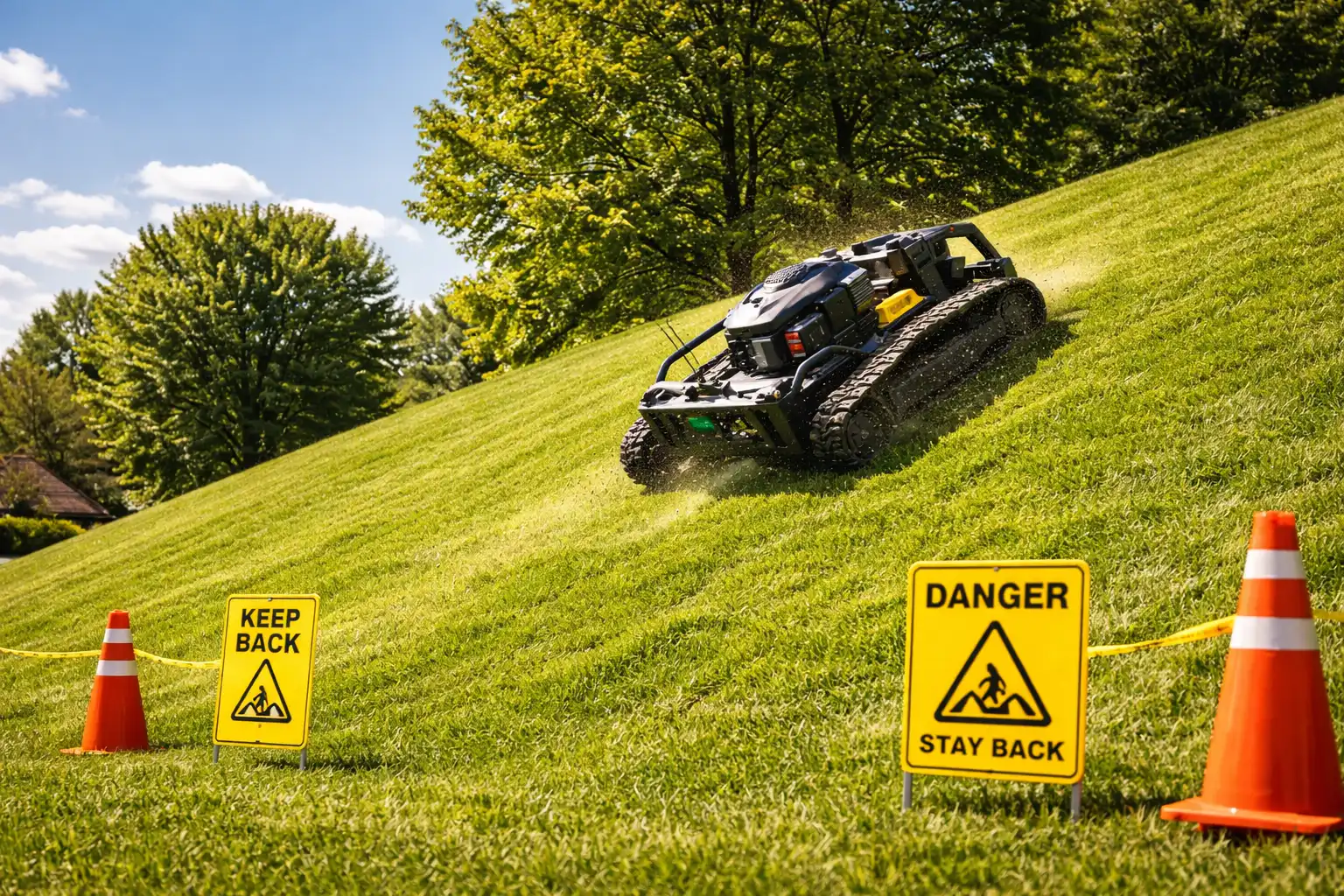
Why Commercial Landscapers Are Adopting RC Mowers
The U.S. landscaping industry has a real labor shortage. Finding reliable crew members for physically demanding slope work is genuinely difficult.
RC mowers solve part of that problem.
One experienced operator can control an RC mower on a dangerous slope instead of putting three people on it. That’s a direct labor savings.
Insurance implications matter too. Fewer workers on steep terrain means fewer injury risks. Fewer injury risks can mean lower workers’ comp premiums over time.
It’s not just about the machine. It’s about how the machine changes your operational model.
Top Commercial RC Mower Brands in the U.S.
Altoz — Minnesota American-made, track-driven, built for slopes. If you have commercial hillside work, Altoz is worth a serious look. The TRX series is their flagship.
Mean Green — Ohio All-electric commercial mowers. Quiet enough to work near residential areas without noise complaints. The Stalker RC is their slope specialist.
Husqvarna — U.S. operations in Nashville, TN Swedish brand with the widest U.S. dealer network. Strong commercial robotic line. Easy to find service and parts almost anywhere.
Graze Mowing A newer entrant focused entirely on commercial autonomous mowing. They sell mowing-as-a-service in some markets — you don’t even own the machine.
Dealer availability varies by region. Altoz and Mean Green are strongest in the Midwest and Southeast. Husqvarna is essentially everywhere.
ROI Calculation for Landscaping Businesses
Here’s a simple way to think about it.
Let’s say a two-person crew in Louisiana spends 4 hours per day on slope mowing. At $20/hour per worker, that’s $160/day in labor. Over a 30-week season, that’s about $24,000 in slope-mowing labor alone.
An Altoz TRX at $25,000 amortized over 6 years is roughly $4,200/year.
The math works. And this doesn’t even count fewer injury claims, reduced worker fatigue, or the ability to reallocate that crew to higher-value tasks.
Are Remote Control Lawn Mowers Safe?
Yes — often more safe than the alternative. But safe doesn’t mean reckless.
Built-In Safety Features
These machines are designed with safety as a priority. Here’s what you typically get.
- Lift sensor — Blade stops instantly if the mower is lifted
- Tilt sensor — Shuts down if the machine tilts beyond a safe angle
- Collision detection — Bumper sensors stop the mower on contact with an obstacle
- PIN lock / alarm — Deters theft. The mower won’t run without its code.
- Rain sensor — Pauses operation in wet conditions on models that include this
- Low-speed blade stop — On RC mowers, blade engagement is operator-controlled
These aren’t just nice-to-have features. They’re what make these machines practical in real yards with real people nearby.
Safety Rules for Operators and Bystanders
Even with all the built-in features, the operator still matters.
- Keep children inside during operation. Always.
- Keep pets inside too — they’re curious and fast
- Never point an RC mower toward people during operation
- Maintain clear visibility of the machine at all times
- Keep observers at least 50 feet away from RC mower operations
- On slopes, stand to the side — never directly above or below the machine
Most accidents with mowers happen because someone assumed the safety system would catch it. Don’t assume. Stay alert.
Regulatory and HOA Considerations in the U.S.
There’s no federal regulation specific to remote control lawn mowers right now. But a few things to know.
Some HOAs have rules about automated equipment and operating hours. If your robotic mower starts running at 6 a.m. on a Saturday, expect a call from your neighbor. (Trust me on this one.)
Noise ordinances matter for commercial operators. The good news: electric RC and robotic mowers are surprisingly quiet. Way quieter than a gas riding mower. This is actually a real competitive advantage in residential neighborhoods.
If you run a commercial operation, check your liability insurance. Some policies need to be updated to cover remotely-operated equipment.
Common Questions About Remote Control Lawn Mowers
These are the questions I get asked most often. At trade shows, in emails, in comment sections.
Real questions. Real answers.
Is There a Remote Control Lawn Mower That Can Handle Wet Grass?
Most robotic mowers have rain sensors and will stop or pause automatically when it rains. You can usually override this manually.
The bigger issue with wet grass isn’t the mower — it’s traction on slopes. Wet grass reduces grip. If you’re running an RC mower on a steep hill after rain, slow down and stay alert.
How Long Does the Battery Last on One Charge?
It varies by model and load.
Most residential robotic mowers run 60–90 minutes per charge. Commercial electric RC mowers typically offer 3–4 hours under load. Recharge time is usually 60–120 minutes.
For large properties, look for models that auto-dock to recharge and resume automatically.
Will It Work on My Uneven Lawn?
Depends on the unevenness. Gradual rolls and gentle slopes — yes, fine.
Deep ruts, tree roots breaking the surface, or very rough terrain — not ideal. The blade disc height has limits. Too uneven and you’ll either scalp the grass or hear a lot of grinding.
What Happens If It Rains While the Mower Is Running?
Most robotic mowers stop automatically. They return to base or park in place depending on the model.
Some models are rated IP44 or higher for water resistance, meaning light rain won’t damage them. But you don’t want your mower sitting in a puddle overnight.
Can Someone Steal My Robotic Mower?
It happens. But manufacturers have gotten smarter.
Most robotic mowers have PIN-lock systems — the mower is useless without the code. Many have alarm systems and GPS tracking. Some trigger an alert to your phone if the mower leaves the designated zone.
It’s not foolproof. But it’s much harder to steal than it looks.
Do I Still Need to Edge After Using One?
Yes. Robotic mowers don’t edge.
They mow beautifully within the boundary. But the perimeter edges, sidewalks, and curbs still need manual attention. Most regular users run a string trimmer along the edges once a week. It takes maybe 15 minutes for an average suburban yard.
Are Remote Mowers Loud? (My Neighbor Already Hates Me.)
Electric models are genuinely quiet. We’re talking 55–65 decibels — roughly the level of a normal conversation.
Gas RC mowers are louder, closer to a standard riding mower. But for most residential setups, people choose electric.
Your neighbor might not even notice the robotic mower is running. That’s actually a selling point for a lot of people.
Can I Use One If I Have a Dog or Kids?
Yes — with proper precautions.
Set up the mowing schedule for when kids are in school and pets are inside. Don’t let them in the yard while the mower is running.
Most robotic mowers have obstacle detection. But grass-colored toys, small sticks, and curious pets can still create issues. The safety sensors aren’t infallible.
Will a Robotic Mower Work Under Heavy Tree Cover?
GPS models can struggle. Dense canopy blocks satellite signal.
Wire-based boundary systems are more reliable in wooded yards. They don’t rely on GPS at all — the wire is the boundary.
If you have a heavily wooded lot, go with a wire-guided model. Don’t rely on GPS in that environment.
How Does It Handle Grass Clippings?
Most robotic mowers mulch clippings. They cut frequently — sometimes daily — so each cut is very small. Tiny clippings break down fast and act as natural fertilizer.
This is actually better for lawn health than bagging. You’re returning nutrients to the soil every cycle.
The Future of Remote Control Lawn Mowers in the U.S.
This technology is moving fast. What exists today would have sounded like science fiction ten years ago.
I’ve been watching this space closely. Here’s where it’s heading.
Where the Technology Is Heading
The boundary wire is already becoming optional. Some models now use computer vision — cameras and AI — to recognize lawn edges without any physical markers.
Other developments already in testing or early release:
- LiDAR mapping — The same tech used in self-driving cars is showing up in high-end mowers
- AI-powered lawn health monitoring — Some mowers will eventually identify bare patches, disease, or pest activity while they mow
- Solar-assisted charging — Reduce grid dependency for commercial operations
- Multi-zone mapping — One mower handles a complex property with multiple disconnected zones automatically
The technology trajectory is clear. These machines are getting smarter and more affordable every year.
Growing U.S. Market and Adoption Trends
The U.S. robotic mower market has been growing steadily. Adoption is highest in the Southeast and Southwest — Florida, Texas, Georgia, Arizona — where mowing season is long and heat makes manual mowing genuinely uncomfortable.
The commercial landscaping sector is picking up fast. Labor costs, safety concerns, and technology comfort are all pushing the industry toward remote and autonomous equipment.
Entry-level prices have dropped significantly in the last five years. A machine that cost $3,000 in 2018 has a similar successor for under $1,000 today.
That trend is going to continue.
Will Remote Mowers Replace Traditional Mowers?
Honestly? Not fully. Not soon.
There will always be a need for manual equipment — detail work, tight spaces, first-of-season cleanups, irregular properties.
But for routine weekly maintenance on predictable lawns? Remote and robotic mowers already do it better. Consistently. Quietly. Without complaining about the heat.
I still keep a push mower in my garage. But I reach for it less every year.
The future of lawn care isn’t fully automated. It’s hybrid. Autonomous for routine work. Manual for detail and precision. The two aren’t in competition — they’re complementary.
Wrapping It Up
Remember that Tuesday in July? Standing at the top of my Georgia hill, sweating, staring at that slope?
I ended up buying a remote mower that summer. Took me a full afternoon to set up the boundary wire. I made at least two mistakes I had to redo.
But when I ran the first test cycle and watched that machine climb the hill without me on it — I felt something I didn’t expect.
Relief. Real relief.
Yes, remote control lawn mowers are real. They work. They’re not gimmicks. For the right yard and the right situation, they are absolutely worth it.
The key is matching the tool to your actual needs. Steep slopes and commercial work? Go RC. Regular suburban lawn with a consistent shape? Robotic is your answer. Big tech-forward budget and want both? Some models bridge the gap.
The best mower is the one you’ll actually use safely.