

I’ll be honest with you.
The first time I saw a zero turn mower up close, I thought it was overkill. I was standing in my backyard in Georgia one sticky July morning. The grass was way past due. My old riding mower had died — again. And my neighbor Mark just glided past his whole half-acre in under 20 minutes. Spun in place around his oak tree like it was nothing. Didn’t even get off the seat.
I stood there sweating through my shirt, watching him finish his lawn before I even started mine.
That was the moment I got serious about zero turns.
But then I checked the price tags. And I had a lot of questions.
So how much does a zero turn lawn mower cost, really? The short answer is anywhere from $1,500 to over $20,000. That’s a wild range, I know. But here’s the thing — that range makes total sense once you know what you’re paying for.
I’ve spent years testing and using these machines. I’ve mowed flat suburban yards in Ohio. I’ve pushed zero turns through thick, wet fescue in Tennessee. I’ve watched guys in Florida run commercial units six days a week in brutal heat. And I’ve seen people make every mistake in the book — overbuy, underbuy, skip maintenance, and regret every choice.
So I’m going to walk you through every price range. I’ll tell you what you get, what you give up, and what actually matters. No fluff. No brand deals. Just the honest stuff I wish someone had told me before I spent my first dollar.
Let’s get into it.
What Is a Zero Turn Mower — And Why Does It Cost More Than a Regular Rider?
Zero turn mowers aren’t just fancy riding mowers. They work in a completely different way. And once you understand how, the price gap makes total sense.
How Zero Turn Technology Works
A standard riding mower has one drive system. You steer with a wheel, just like a car.
A zero turn has two. Each rear wheel has its own hydraulic motor. You control them with two lap bars — one per hand. Push both forward and you go straight. Pull one back while pushing the other forward and you spin. Push one harder and you turn that way.
It sounds simple. But the feel of it the first time is something else. You pull the right bar back slightly, and the mower pivots around a point on the ground with zero radius. Hence the name.
That’s the magic — and it’s also where the cost comes from. Two separate hydrostatic transmissions cost more to build than one axle-and-gear setup. The frame has to be stronger to handle those forces. The whole machine is engineered differently.
It cuts your mowing time by 30 to 50 percent compared to a standard garden tractor. That’s not marketing. That’s the math of not having to do three-point turns around every tree and garden bed.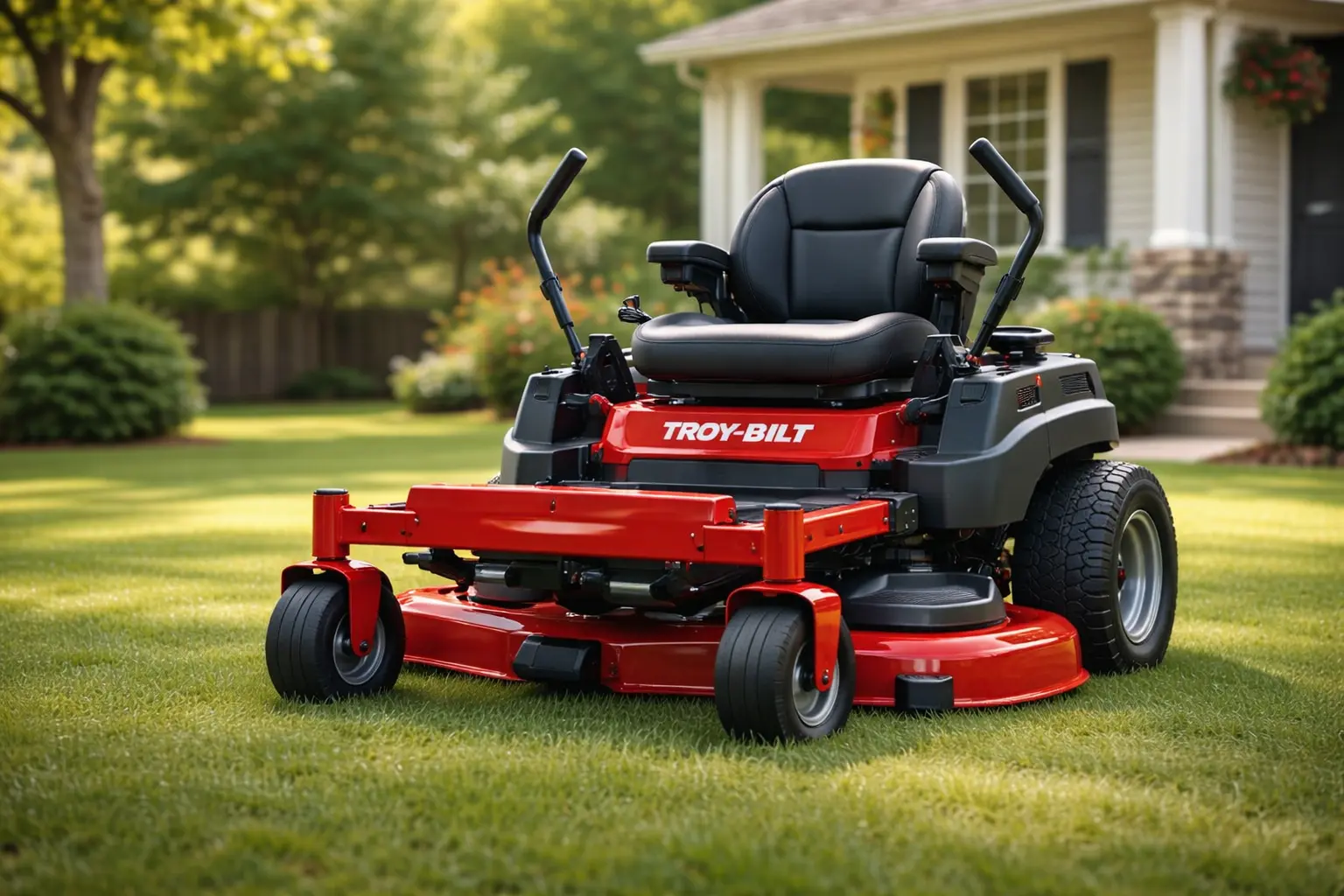
Zero Turn vs. Riding Mower — Where the Price Difference Comes From
Here’s a rough comparison at the same deck size:
- A 48″ riding mower: $1,800–$2,500
- A 48″ zero turn: $2,800–$4,000
That $1,000–$1,500 gap comes from the dual hydrostatic system, the heavier frame, and the fabricated deck you start to see at mid-range zero turns. Riding mowers are simpler machines. They’re great. But they’re not built the same way.
Brands like Husqvarna and Cub Cadet make both. The same company, different engineering goals.
Is a Zero Turn Actually Worth It for Your Yard?
Here’s my honest take.
If your yard is under a half-acre, a standard rider is probably enough. Zero turns shine on bigger properties with lots of obstacles — trees, flower beds, fence posts, gardens.
One thing people don’t always mention: zero turns are not great on steep slopes. They’re designed for flat to gently rolling ground. If you’ve got a serious hill on your property — more than 15 degrees — you’ll want to think twice. A tractor or walk-behind is safer there.
But for most American homeowners with a standard suburban lot? Once you go zero turn, it’s hard to go back.
Zero Turn Lawn Mower Cost by Price Range — Every Tier Explained
Here’s the part you came for. I’ll walk through every price tier — what you get, what you give up, and who each one is built for.
Entry-Level Zero Turn Mowers ($1,500–$3,000)
This is where most first-time buyers start. And there’s nothing wrong with that.
What You Get at This Price
At this tier you’re looking at:
- Cutting decks between 42″ and 46″ wide
- Engines in the 18–22 HP range, usually Briggs & Stratton or basic Kawasaki FR models
- Stamped steel decks — formed from a single sheet of metal
- Simple lap bar controls that get the job done
- Ground speeds around 5–6 MPH
- Common models: Troy-Bilt Mustang 46, Husqvarna Z142, Cub Cadet ZT1 42
The Troy-Bilt Mustang is sold at Home Depot locations across the country. Easy to buy, easy to find parts. That matters.
Who This Tier Is Right For
This tier works well for:
- Homeowners with flat yards under one acre
- First-time zero turn buyers who want to try before going bigger
- Folks in the Midwest or Southeast with clean, open lawns
- Anyone mowing twice a month or less
And honestly? If your yard is mostly weeds held together by dirt — this is plenty of mower.
Real Limitations to Know Before You Buy
I want to be straight with you here.
Stamped decks bend and rust faster. If you live in Florida, Louisiana, or along the Gulf Coast, that humidity will shorten the life of a stamped deck. These machines aren’t built for heavy or daily mowing. Expect the engine to start struggling if you push it hard week after week.
Warranty coverage at this tier is typically 2–3 years. After that, you’re on your own. Parts availability varies a lot by brand.
Mid-Range Zero Turn Mowers ($3,000–$5,500)
This is the sweet spot. Most American homeowners land here — and for good reason.
The Sweet Spot for Most Homeowners
At this price you get:
- Decks from 48″ to 54″ wide
- Engines of 22–25 HP — Kawasaki FR and FS series, Kohler 7000, Briggs Commercial
- Fabricated decks start showing up here — thicker, welded steel
- Ground speed climbs to 7–8 MPH
- Better seats with padding, armrests, and high backs
- Common models: John Deere Z345M, Ariens IKON XD, Ferris IS600Z, Husqvarna Z254F
I tested a Husqvarna Z254F on a 1.5-acre property in rural Tennessee last spring. The grass was thick spring fescue — the kind that can bog down a smaller machine. That mower chewed through it without missing a beat. Smooth cut, clean lines, no drama.
Features That Justify the Upgrade
The big jump here is the fabricated deck.
Here’s the difference. A stamped deck is pressed from one flat sheet of metal. Imagine folding cardboard — it works, but there are limits. A fabricated deck is welded together from multiple pieces of heavier steel. It’s thicker. Stronger. More resistant to impact.
Think about what your mower hits in a typical pass — roots, hidden rocks, hard patches of dirt. A fabricated deck shrugs those off. A stamped deck dents and weakens over time.
You also get bigger fuel tanks at this tier. More fuel means longer runtime before you stop and refuel. On a 1.5-acre lot, that actually matters on a hot Saturday afternoon.
Midwest and Southern Buyers — Why This Range Dominates
If you’re in Texas, Oklahoma, or the Carolinas with one to two acres of Bermuda or Zoysia grass — this is your range. These grasses are dense and tough. They need a mower that doesn’t choke.
Northern buyers in Ohio, Indiana, or Illinois with a two-acre lot mowing through spring and fall — this range handles it with ease and stores cleanly over winter.
Premium Residential Zero Turn Mowers ($5,500–$8,000)
This tier blurs the line between home use and professional quality.
Built Like Commercial, Priced for Home Use
Here’s what you get:
- Decks from 54″ to 60″
- Engines in the 25–30 HP range — Kawasaki FX series, Kohler Command Pro
- Heavy fabricated decks with anti-scalp rollers
- Suspension seating — this is the big one at this tier
- Ground speed up to 10 MPH
- Common models: Toro TimeCutter MyRIDE, Bad Boy Maverick, Ferris IS2100Z, John Deere Z515E
Who Needs to Spend This Much
You belong in this range if:
- Your property is 2 to 4 acres
- You mow weekly and want it done fast
- You’ve already bought a cheaper mower and regretted it
- You do light semi-commercial work — small hobby farms, HOA lots
I’ve talked to a lot of homeowners who bought a $2,000 machine, replaced it in three years, bought a $3,500 machine, replaced that in four years, and then finally bought a $6,500 Ferris that they’re still running eight years later.
Sometimes the cheap choice is the expensive choice over time.
Suspension and Comfort — The Feature Most Buyers Underestimate
Here’s something nobody warns you about enough.
Riding a flat-seat zero turn for two or three hours straight — on bumpy ground, over tree roots, across uneven terrain — does a number on your lower back. After four hours on a basic seat, you feel it the next morning.
Ferris makes an independent suspension system that changed the game. Each wheel absorbs bumps on its own. The seat stays level while the deck follows the ground. It feels completely different. If you have any back issues at all, this feature is worth more than the price bump.
The Toro TimeCutter MyRIDE does something similar with a suspended operator platform. If you’re in the Plains states where the ground is rough and uneven, this matters a lot.
Commercial Zero Turn Mowers ($8,000–$20,000+)
This is where the machines get serious.
What “Commercial Grade” Actually Means
Commercial doesn’t just mean expensive. It means built for daily punishment.
At this tier you get:
- Heavy fabricated decks in 7-gauge steel and above
- Engines from 27 to 38 HP — Kawasaki FX850, Kohler EFI, Vanguard
- Hydrostatic transmissions built for 8 to 10 hours of use per day
- Cutting widths of 60″ to 72″
- Ground speeds of 12 to 15 MPH
- Brands: Hustler Super Z, Scag Turf Tiger, Dixie Chopper, Gravely Pro-Turn, Walker
These machines don’t look dramatically different from a premium residential unit. But the internals are in a different league.
Landscaping Professionals and Large Property Owners
This tier is for:
- Landscaping crews in warm states running mowers five or six days a week
- Golf courses and sports fields
- Municipal grounds maintenance
- Farms in the Plains states with 10 or more acres to manage
In Florida and Texas, landscaping crews run these machines in brutal heat and humidity all year long. A residential unit would fall apart in that environment. A commercial Scag or Hustler is built to take it.
The Math That Justifies the Price for Pros
Here’s how to think about it.
A residential mower lasts roughly 500 to 800 engine hours. A commercial machine lasts 2,000 to 5,000 hours or more with proper care. If you’re running a mower 1,200 hours a year — which is realistic for a busy landscaping business — a residential unit is gone in under a year.
Spread the cost of a $12,000 commercial mower across 5,000 hours of work, and the per-hour cost is actually lower than a cheap machine that quits early.
Also worth knowing if you run a lawn care business: the IRS Section 179 deduction lets you write off the full purchase price of qualifying equipment in the year you buy it. That can turn a $10,000 mower into a much smaller out-of-pocket cost. Talk to your accountant.
What Features Actually Drive the Cost of a Zero Turn Mower?
Two zero turns can look almost identical on a dealer’s floor and cost $3,000 apart. Here’s exactly why.
Engine Size and Brand — The Biggest Price Driver
The engine is the heart of the machine. It’s also the biggest cost driver.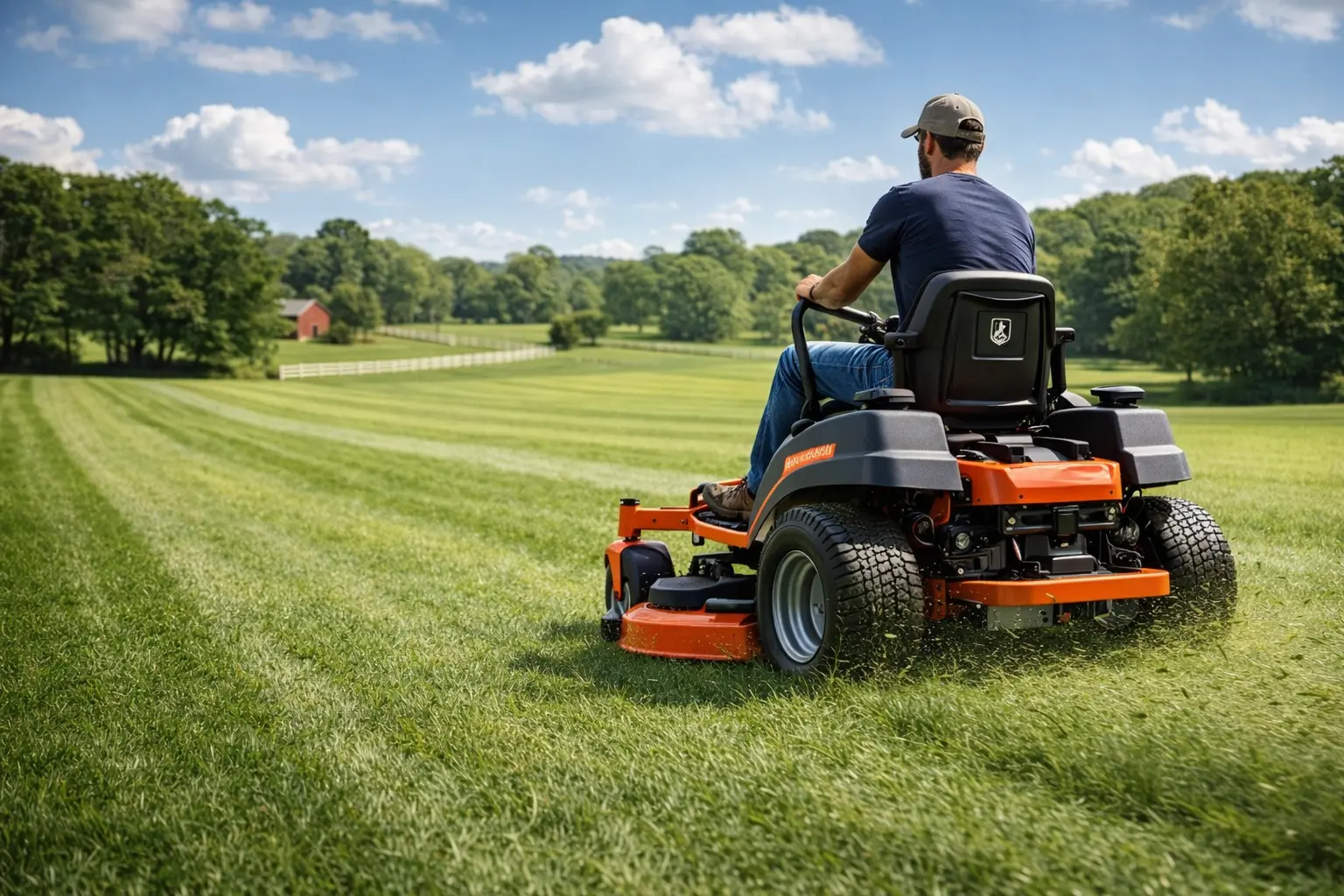
Horsepower vs. Torque — What You Actually Need
Most people focus on horsepower. That’s not wrong, but torque matters just as much.
Torque is the pulling force. It’s what keeps the blades spinning at full speed when you hit thick, wet grass. A high-HP engine with low torque will bog down in heavy cutting. A torque-rich engine stays steady.
Here’s a rough engine hierarchy from a cost standpoint:
- Briggs & Stratton OHV: affordable, fine for light residential use
- Kohler 7000 Series: solid mid-range, good reliability
- Kawasaki FR Series: step up in quality, smoother power delivery
- Kawasaki FX Series: semi-commercial territory, strong torque
- Vanguard EFI: top-tier fuel efficiency, premium cost
Match the engine to your deck size and your terrain. A 25 HP Kawasaki FX on a 60″ deck on flat ground is a different conversation than a 19 HP Briggs on a 42″ deck. Both can be right for their situation.
Gas vs. Electric Zero Turn Mowers
Electric zero turns are real now. Brands like EGO, Greenworks, and Mean Green make them.
The honest truth in 2025: electric is better than it was, but it’s not there yet for most large-lot owners.
- Electric zero turns cost $500 to $2,000 more than comparable gas models
- Most cover 1 to 2 acres per charge today
- Charging time varies from 30 minutes to a few hours depending on the model
Who electric makes sense for right now: homeowners in California dealing with strict emissions rules, people with solar setups, and riders in quiet suburban neighborhoods with noise restrictions. For large lots or commercial use — gas still dominates. That will change. But not yet.
Cutting Deck Size and Construction
Stamped vs. Fabricated Decks — Don’t Skip This Section
A stamped deck is formed from one flat sheet of steel, then bent and pressed into shape. It’s lighter and cheaper. It works fine for occasional mowing on a clean, flat yard.
A fabricated deck is welded from multiple pieces of heavier steel. It costs more to make, weighs more, and lasts significantly longer under real-world conditions.
In humid states like Mississippi or coastal Georgia, a stamped deck starts to show rust at the welds within a few seasons. A fabricated deck holds up far better. The upgrade cost is typically $400 to $800 added to the machine price. For most buyers doing more than occasional mowing, it’s worth it.
Deck Width and Mowing Efficiency
Here’s a simple guide:
- 42″ deck: Fine for up to 1/3 acre, good for tight spaces and narrow gates
- 48″–52″ deck: The homeowner sweet spot for 1/2 to 1.5 acres
- 54″–60″ deck: Best for 2 acres and up
- 60″+ deck: Makes sense for 3+ acres or commercial use
Wider isn’t always better. A 60″ deck on a property full of trees and garden beds is a headache. Match the deck to the space, not just the acreage.
Transmission Type and Drive System
Hydrostatic Transmission Quality Tiers
The transmission is the second most important thing to evaluate. It’s also the most common costly failure on cheap machines.
- Entry level: Integrated transaxles like Tuff Torq K46 or Hydro-Gear EZT — fine for light residential, not built for heavy weekly use
- Mid-range: Hydro-Gear ZT Series — much more reliable, handles regular mowing well
- Commercial: Hydro-Gear ZT-5400 and Parker commercial wheel motors — built for daily professional use
A failed Tuff Torq transaxle on a $1,800 mower can cost $600 to $900 to replace. At that point, you’ve spent mid-range money on a budget machine. Buy the right tier the first time.
Comfort, Controls, and Technology Add-Ons
Features That Add Cost — And Whether They’re Worth It
Not every feature is worth the price bump. Here’s my honest take:
Worth it:
- Suspension seating: Adds $200–$600. If you mow 2+ hours at a time, your back will thank you
- Anti-scalp rollers: Protect the deck on uneven ground, standard on mid-range and up
- High-back padded seat: Should be standard everywhere — check this on entry-level machines before buying
Nice but not essential:
- LED headlights: Helpful for early morning or late evening mowing
- Hour meter: Tells you when to service — free on some machines
- USB port: Useful on long mowing sessions if you wear headphones
And yes, a cup holder sounds silly. But on a 90-degree Texas afternoon two hours into a mow, you’ll be glad it’s there.
Hidden Costs of Owning a Zero Turn Mower — What the Sticker Price Doesn’t Tell You
The machine price is just the beginning. Here’s everything else that will cost you money — and how to plan for it honestly.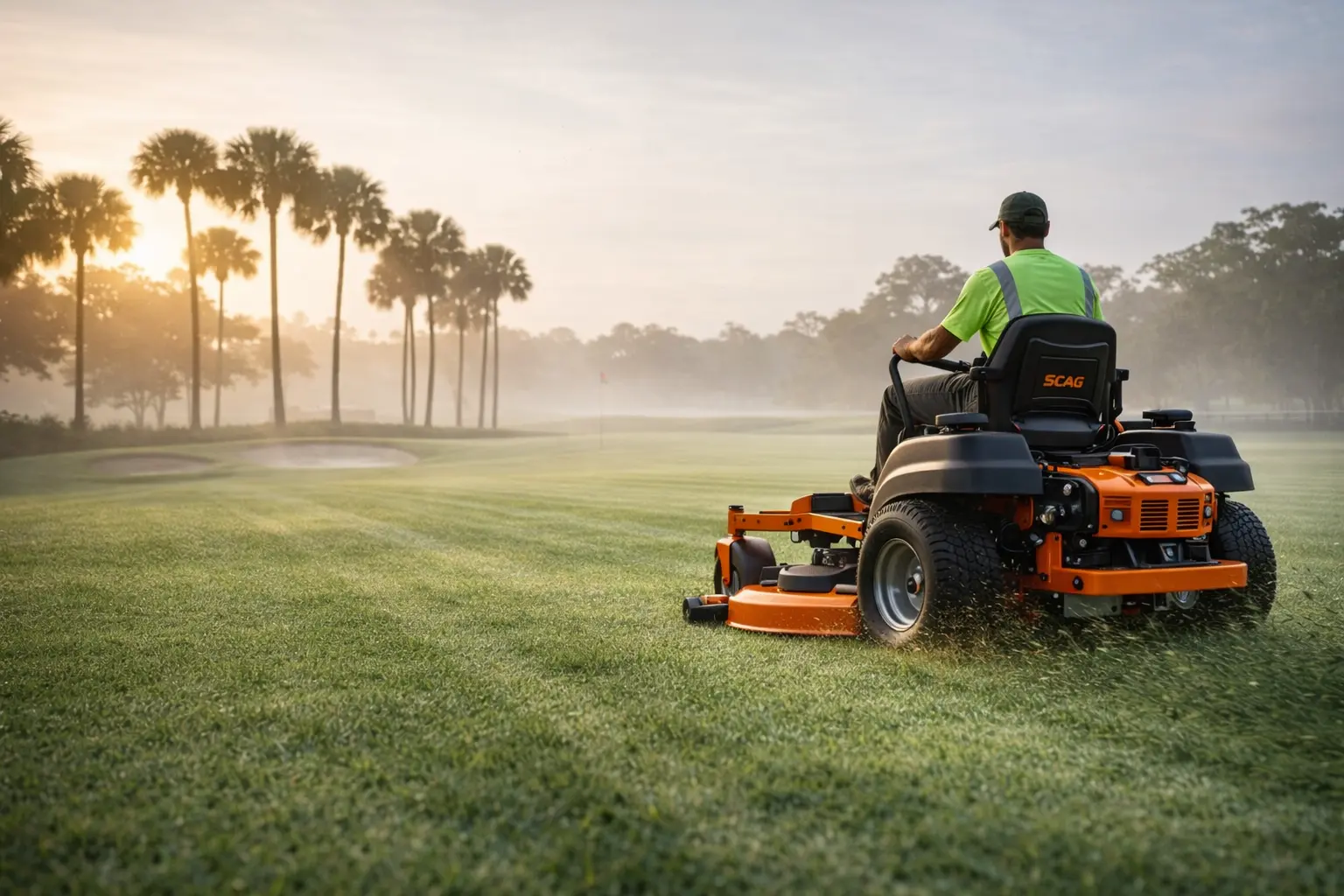
Routine Maintenance Costs Per Year
Annual maintenance for a residential zero turn includes:
- Oil changes every 50–100 hours: $30–$60 per year DIY
- Air filter and spark plugs: $25–$45 per year
- Blade sharpening or replacement: $20–$80 per season
- Belt replacements every 1 to 3 seasons: $50–$120 per belt
- Annual dealer tune-up: $100–$200 depending on your region
Here’s the single most common mistake I see homeowners make: skipping blade sharpening. Dull blades don’t cut — they tear. Torn grass goes brown at the tips and is far more vulnerable to disease and drought stress. It’s a $20 fix that prevents a $200 lawn treatment. Sharpen your blades at least once per season. Twice if you mow a lot.
Fuel and Storage Costs
Fuel Consumption Reality
Most residential zero turns use 0.6 to 1.5 gallons of gas per hour. Mow 20 times a year at 1.5 hours per session. At current fuel prices, that’s roughly $60 to $180 in gas per season.
Don’t forget the ethanol issue. Most pump gas in the U.S. contains ethanol. Ethanol attracts moisture, gums up carburetors, and causes fuel system problems — especially after the mower sits over winter. Use a fuel stabilizer. It costs a few dollars. It can save you hundreds in carburetor repairs.
Storage and Winterization Costs
If you’re in Minnesota, Wisconsin, Michigan, or anywhere that gets hard winters — your mower is going to sit for 4 to 5 months.
- You need a covered, dry space — moisture and UV destroy decks fast
- A basic garden shed runs $300–$800 as a one-time cost
- A winterization service at a dealer in northern states costs $75–$125
- Battery tender for electric models in cold climates: $30–$50
Accessories and Attachments
Here’s what people commonly add after buying:
- Mulch kits: $50–$120, chops clippings fine and feeds them back into the lawn
- Bagging systems: $200–$500 depending on capacity — great for leaf cleanup in fall
- Yard cart / tow hitch: $50–$150, useful for hauling mulch or topsoil
If you’re in New England or the upper Midwest where fall leaf cleanup is a real chore, a bagging system turns a two-day job into a one-afternoon job.
Repair and Warranty Considerations
Standard residential warranty: 2–3 years, varies by brand. John Deere and Husqvarna tend to have the strongest dealer networks in the U.S., which matters when you need a part fast.
Extended dealer warranties are almost always overpriced for homeowners. Save the money. Put it in a small maintenance fund instead.
Here’s something to think about: the best warranty in the world means nothing if the nearest authorized dealer is 90 miles away. Before buying any brand, check dealer availability in your area. Rural buyers especially — this matters more than the brand name on the hood.
Best Zero Turn Mower Brands — Ranked by Value at Each Price Point
I’ve worked around most of these brands. Here’s my honest take — no sponsorships, no fluff.
Best Entry-Level Brands Under $3,000
- Husqvarna Z142 / Z154: Widely available nationwide, solid dealer support, easy to find parts
- Troy-Bilt Mustang 46: Budget-friendly, sold at Home Depot, good for simple suburban yards
- Cub Cadet ZT1 Series: Better build quality than most in this range, consistently rated well by homeowners in the Midwest
Best Mid-Range Brands ($3,000–$5,500)
- John Deere Z345M / Z345R: Excellent dealer network, strong resale value, trusted in agricultural states like Iowa and Kansas
- Ariens IKON XD: An underrated brand — fabricated deck at mid-range prices, strong performer in the Midwest
- Ferris IS600Z: Best ride quality in its class thanks to independent suspension
- Bad Boy MZ Magnum: Surprisingly good value, especially for Southern buyers — thick decks and a solid warranty
Best Premium Residential Brands ($5,500–$8,000)
- Toro TimeCutter MyRIDE: Best-in-class suspension for homeowners, consistent cut quality
- Ferris IS2100Z: Steps into semi-commercial territory, worth every dollar for 2+ acre properties
- Hustler Raptor XDX: Fast, tough, and punches above its price — popular in Texas and Oklahoma
Best Commercial Brands ($8,000+)
- Scag Power Equipment: Industry standard for professional landscapers. Built to run for decades.
- Hustler Super Z: Among the fastest commercial mowers available. Dominant in warm-weather states.
- Gravely Pro-Turn: Excellent for large acreage, strong dealer presence across the Plains states
- Walker Mowers: Known for a pristine, precise cut on fine turf — the choice for golf courses and high-end residential contracts
Where to Buy a Zero Turn Mower — And How to Get the Best Price
Knowing where to shop can save you hundreds. Sometimes more.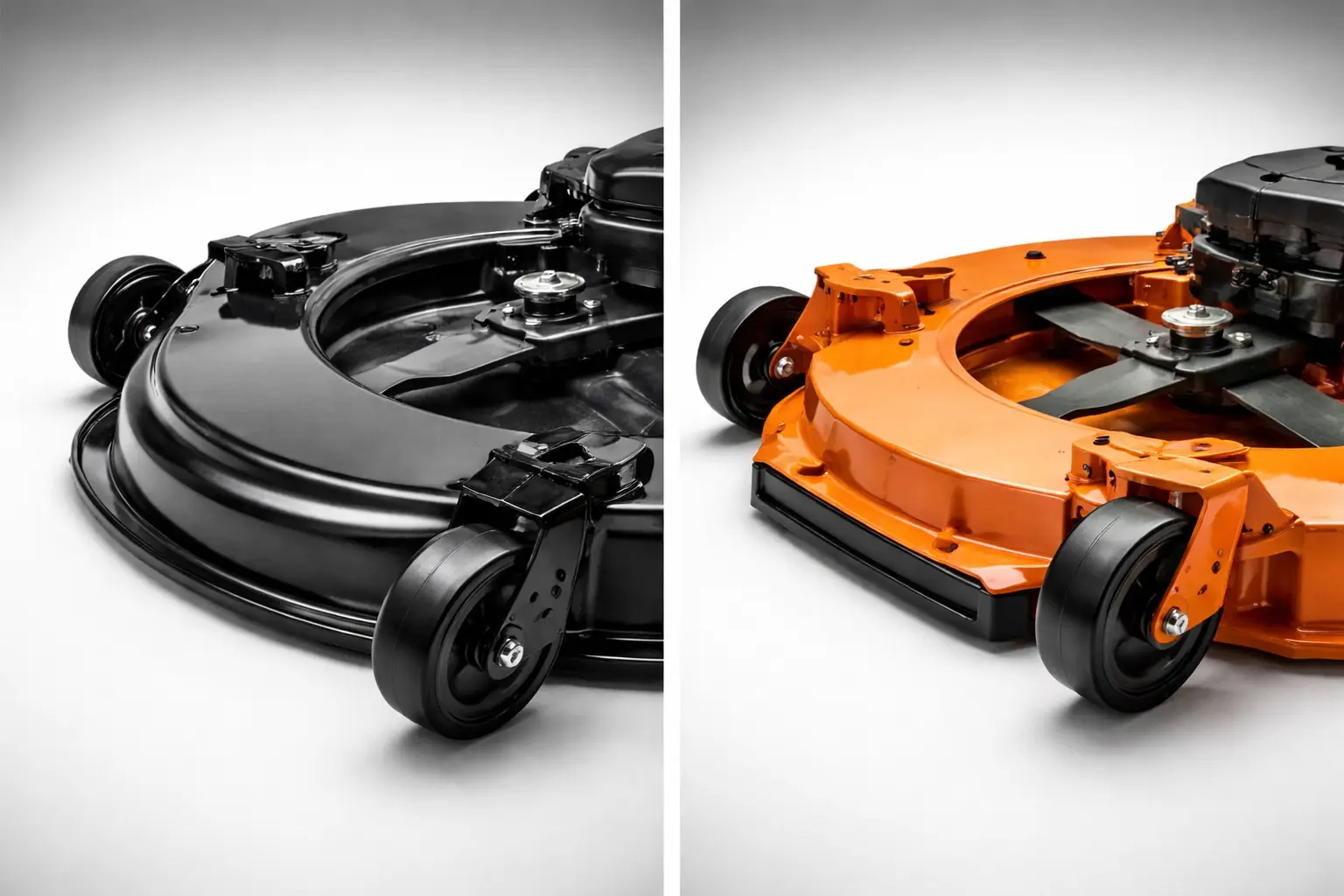
Buying New vs. Used Zero Turn Mowers
Buying New — Pros, Cons, and Best Times to Buy
The main reason to buy new is the warranty. You know exactly what you’re getting and you’re covered if something goes wrong in the first few years.
The best time to buy a new zero turn is late summer to early fall — August through October. Dealers are clearing inventory before winter. Discounts of $200 to $600 are common. Sometimes more.
Spring is the worst time to buy. Demand peaks, prices are full, and inventory is picked over. If you can plan ahead, buy in September. You’ll save real money.
Buying Used — What to Look For and Avoid
Used zero turns can be excellent value — or a money pit. Here’s how to tell the difference.
The most important thing to check: engine hours. Under 200 hours is like new. 200–600 is used but solid with maintenance records. Over 800 hours — inspect carefully, especially on residential-grade machines.
Check these things before you hand over money:
- Blade engagement clutch condition — a common failure point
- Deck underside for cracked welds, deep rust, or bent spindle housings
- Lap bar response — sluggish or jerky movement means worn hydraulic pumps
- Any smoke on startup — could be normal condensation or could mean engine trouble
Red flags to walk away from:
- No service records at all
- Rust spreading from spindle housings
- Seller won’t let you start and test it
- Price seems too good to be true on a well-known brand
Dealer vs. Big Box Store vs. Online
Local dealers (John Deere, Husqvarna, Toro, Ferris): The price is higher. The relationship is worth it. They set the machine up before delivery, handle warranty claims, and know your specific model. For anything over $4,000, use a local dealer.
Home Depot / Lowe’s / Tractor Supply: Great for entry-level machines in the $1,500–$2,500 range. Convenient to buy. Limited service support after the sale — keep that in mind.
Online (Northern Tool, Mowers Direct): Competitive pricing. But large equipment can arrive damaged. Read the return and damage policies carefully before clicking buy.
Financing and Leasing Options
Most major brands offer 0% APR promotional financing — typically 12 to 24 months. Husqvarna, John Deere, and Cub Cadet all run these regularly.
My honest advice: don’t finance anything you wouldn’t comfortably pay off within 18 months. A mower isn’t a mortgage. If the payments stress you out, buy down a tier.
How to Choose the Right Zero Turn Mower for Your Budget and Yard
All the numbers in the world don’t help if you pick the wrong machine. Here’s a simple framework.
The 4-Question Framework Before You Buy
Question 1 — How Big Is Your Property?
This is the foundation. Everything else follows from here.
- Under 1/2 acre: $1,500–$2,500, 42″–46″ deck
- 1/2 to 1 acre: $2,500–$4,000, 46″–52″ deck
- 1–2.5 acres: $4,000–$6,500, 52″–60″ deck
- 5 acres and up: $6,500–$12,000+, 60″+ deck or commercial grade
Question 2 — How Often Will You Mow?
Once a week or less in a seasonal climate — residential grade is fine. You’ll get years of reliable service.
Year-round mowing in Florida, South Texas, or along the Gulf Coast is a different story. You’re asking the machine to work 10 to 12 months a year. That’s when you move up to prosumer or commercial-grade equipment.
If you’re in Minnesota or Wisconsin — you mow maybe 25 times a year. A solid mid-range machine with proper winterization will serve you a very long time.
Question 3 — What’s Your Terrain Like?
- Flat and open: Any zero turn works
- Moderate slopes up to 15 degrees: Look for machines with a low center of gravity — Ferris and Scag are good here
- Steep terrain: Honestly, a zero turn is not the right tool. Consider a walk-behind or compact tractor instead
A zero turn on a steep slope in wet conditions is genuinely dangerous. I’m not saying that to scare you. I’m saying it because I’ve seen what happens. Please don’t ignore terrain when you’re choosing a machine.
Question 4 — What’s Your Long-Term Budget?
Think in five-year total cost of ownership, not just the sticker price.
A $1,800 unit that you replace in three years cost you $600 per year of ownership — plus the hassle of shopping again. A $4,500 unit that runs reliably for 10 years costs $450 per year. The cheap choice often costs more per year. Not always. But often enough to run the math before you decide.
Red Flags When Shopping — Don’t Ignore These
- Deck size advertised without mentioning construction type — always ask: stamped or fabricated?
- HP numbers without a named engine brand — “21 HP engine” with no brand is often a low-quality clone
- No local dealer support — if you can’t get parts within a reasonable distance, you’re stranded mid-season
- Suspiciously light weight on a so-called “commercial” machine — weight is a rough proxy for steel thickness
- Brand new “liquidation” deals from unknown online retailers — this is a real scam space in the outdoor equipment market
Zero Turn Mower Cost FAQ
How Much Does a Zero Turn Lawn Mower Cost on Average?
For residential use: the average price is $3,500–$5,000. For commercial use: expect $9,000–$14,000. The lowest reliable entry point is around $1,500 for light residential work.
Is a zero turn mower worth the money?
Yes — if your yard is a half-acre or more and you value your time. No — if you have a small, obstacle-filled yard where a standard mower gets it done just fine. The time savings across one mowing season often make the upgrade feel obvious in hindsight.
What is the cheapest reliable zero turn mower?
The Husqvarna Z142 (around $1,799–$2,199 depending on retailer) is a solid, widely available option. The Troy-Bilt Mustang 46 (often $1,599–$1,799 at Home Depot) is another dependable entry choice. The Cub Cadet ZT1 42E is an electric option starting near $2,999.
How long does a zero turn mower last?
Residential grade: 8–12 years with proper care — roughly 400–800 engine hours. Commercial grade: 15–25 years or 2,000–5,000+ engine hours. The biggest factors are how often you change the oil and whether the machine lives in dry storage or sits in the elements.
Are commercial zero turns worth it for homeowners?
Rarely. Unless you have four or more acres, or you mow weekly in a hot, humid climate year-round, commercial durability is more than you’ll ever need. Put that $4,000+ price difference into a high-quality mid-range unit and a solid maintenance routine. You’ll get the same result.
Do zero turn mowers hold their value?
Commercial brands hold value extremely well. A used Scag or Hustler at 3 years often sells for 50 to 60 percent of its original price. Budget residential brands depreciate faster — expect 25 to 35 percent of value remaining after 3 to 4 years. Keeping service records makes a meaningful difference when it’s time to resell.
I started this thinking about Mark and his perfect lawn in Georgia. Watching him spin around that oak tree in the time it took me to fill my gas can.
Now I know exactly what he was probably running. And I know what it costs. I know which tier fits my property, my climate, and my schedule. I know which features actually matter and which ones just sound good on a sticker.
Here’s the truth about lawn care: the right tool doesn’t just save time. It changes how you feel about the whole thing. When mowing goes from a chore to something you actually finish before noon — that’s worth something real.
Pick the tier that fits your actual yard. Don’t overbuy for a half-acre. Don’t underbuy for two acres. Buy at the right time of year. Use a local dealer when you can. And whatever you choose — sharpen those blades every season.
Your lawn will look better for it. And so will your Saturday mornings.