
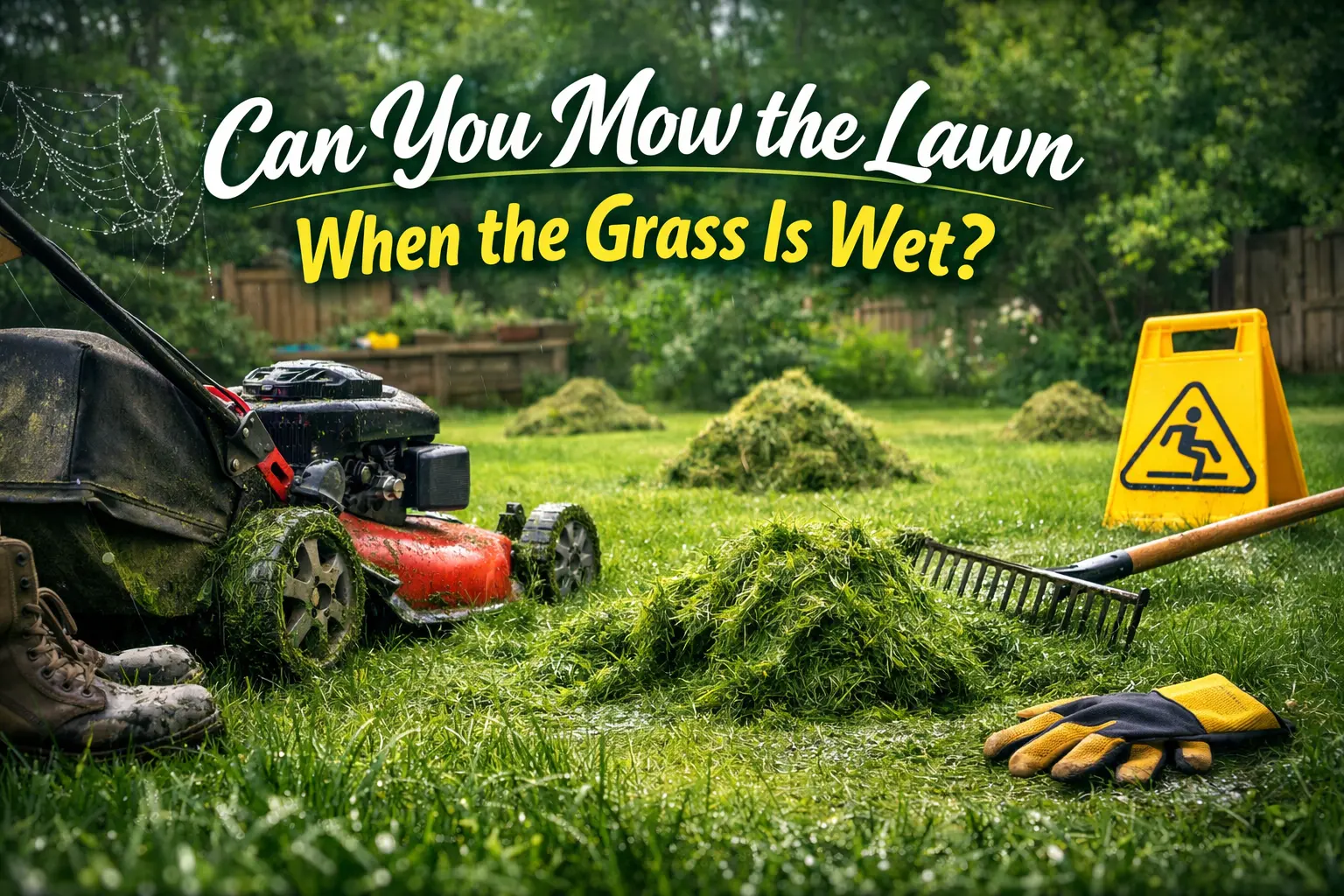
A Pro’s Honest Guide
I remember a Saturday last July. It was hot. The air was thick. I had a cookout planned for 5 PM. But my grass looked like a jungle.
I walked outside. My boots got soaked instantly. The morning dew was heavy. I knew better. I really did. But I dragged my mower out anyway.
Ten minutes later, I was covered in green sludge. My mower stalled twice. The lawn looked like a bad haircut.
If you are asking, “can you mow the lawn when the grass is wet,” I have been there. The short answer is no. You should wait.
But life is busy. Maybe you live in Seattle where it rains for weeks. Maybe you have an HOA letter in your mailbox.
I will walk you through the risks. I will share how to do it if you absolutely must. Let’s save your lawn and your sanity.
Should You Do It?
Here is the truth. It is not a strict “no,” but it is a very strong “you really shouldn’t.”
Most pros will tell you to wait. Dry grass cuts clean. Wet grass tears. It is that simple.
When grass is wet, it gets heavy. The blades bend down. Your mower blade passes over them. It shreds the tips instead of slicing them.
Think of it like cutting wet paper with dull scissors. It just rips.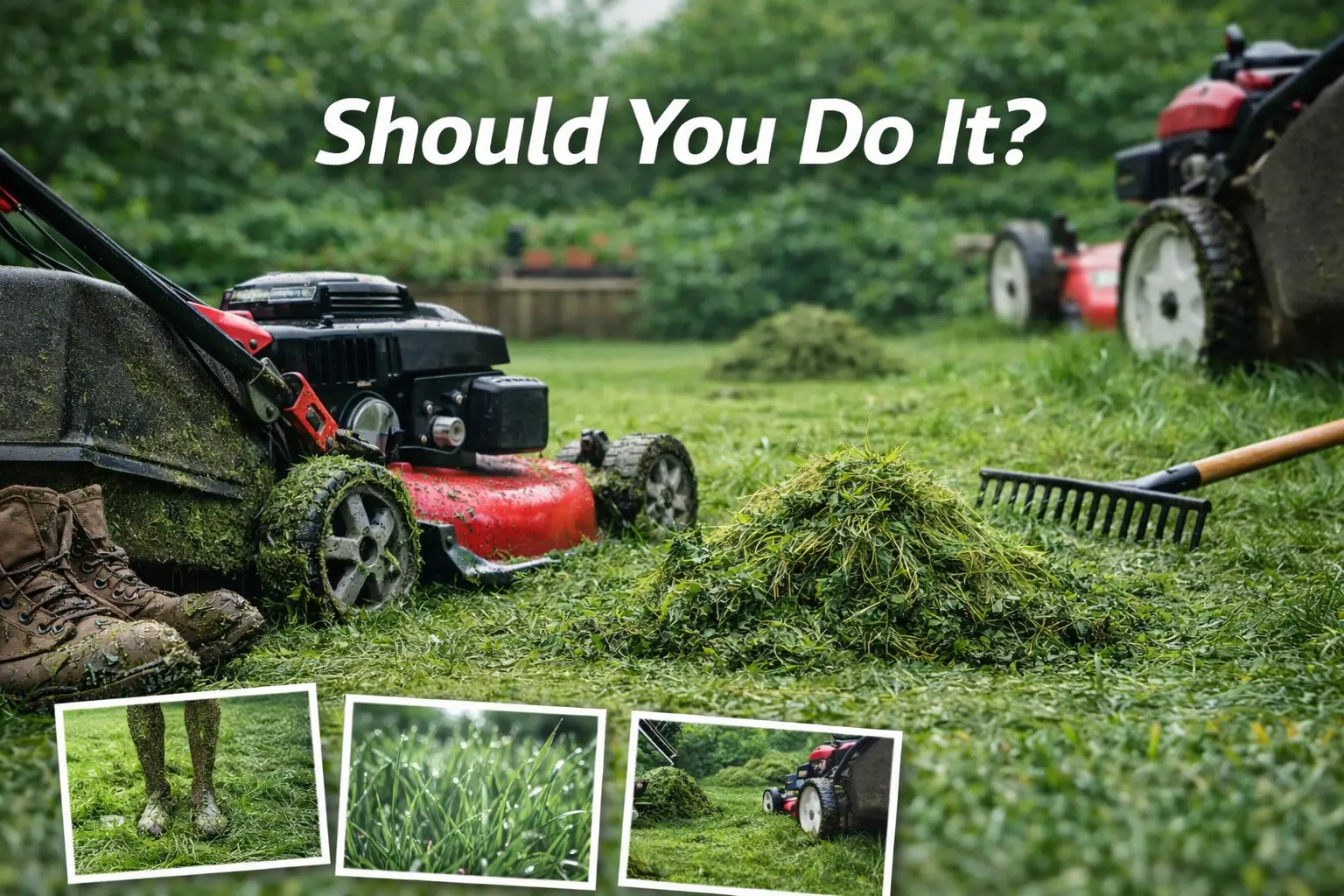
But I know the real world. Sometimes you work all week. Saturday is your only day. And Saturday is rainy.
If you mow wet grass, it takes longer. It is messy. It is hard on your machine.
- Wait if you can. Even a few hours of sun helps.
- Check the soil. If your boots squish, stop.
- Look at the forecast. Is wind coming? Wind dries grass fast.
The “Green Cement” Problem
Wet grass does not fly. It sticks. It turns into a thick, heavy paste that clogs everything.
We call this “clumping.” It is the biggest headache of wet mowing. Dry grass flies out of the chute. It scatters across the lawn.
Wet grass is sticky. It builds up under the deck. It forms a thick layer of green mush.
This mush blocks the airflow. Your mower needs air to lift the grass. Without air, the cut is bad.
Then, the clumps fall out. They land in piles on your lawn. We call these “haystacks.”
- They block the sun. The grass underneath can’t breathe.
- They rot. Wet clumps mold quickly.
- They look bad. Your yard looks messy, not manicured.
I once spent an hour raking wet clumps. The wet clumps were heavy, smelled sour, and were not worth the rush.
Your Mower’s Health: The Engine Strain
Your mower is a tool. It is tough. But wet grass is like asking it to chew through concrete.
Listen to your engine. When you hit a wet patch, what happens? The pitch drops. It growls.
That sound is stress. The engine is working double-time to spin that blade.
Wet grass is heavy. It creates drag. This heat builds up in the motor.
I have seen gas mowers stall out completely. The deck gets so packed, the blade can’t move.
- Gas mowers: The air filter can get damp. This chokes the engine.
- Electric mowers: Battery life drops fast. The motor uses more amps to push the blade.
- Belts and pulleys: On riding mowers, wet grass makes belts slip. You smell burning rubber.
I own a sturdy Honda. It is a beast. But even it struggles in soaking wet tall fescue.
The Risk of Rust and Corrosion
Water and metal do not mix. Grass juice is acidic. It is a recipe for a rusted deck.
Grass is mostly water. But it is also acidic. When you mow wet, you coat your mower in this acidic paste.
If you put the mower away like that, it rots. I have seen steel decks rust through in just a few seasons.
The wet clumps stick in the corners. They stay wet for days.
Rust starts silently. First, the paint bubbles. Then the metal flakes.
- Clean it fast. You have to scrape the deck immediately.
- It dries hard. If that green sludge dries, it turns to cement.
- Use a hose. Some mowers have wash ports. Use them.
I keep a plastic putty knife by my shed. It is perfect for scraping the deck.
Lawn Health: Tearing vs. Cutting
A clean cut heals fast. A jagged tear is an open wound. Disease loves an open wound.
Look closely at a blade of grass after a wet mow. The tip is usually white and frayed.
That is trauma. You didn’t cut the grass. You whipped it until it broke.
A clean cut seals up in hours. A frayed tip stays open. It loses water. It turns brown.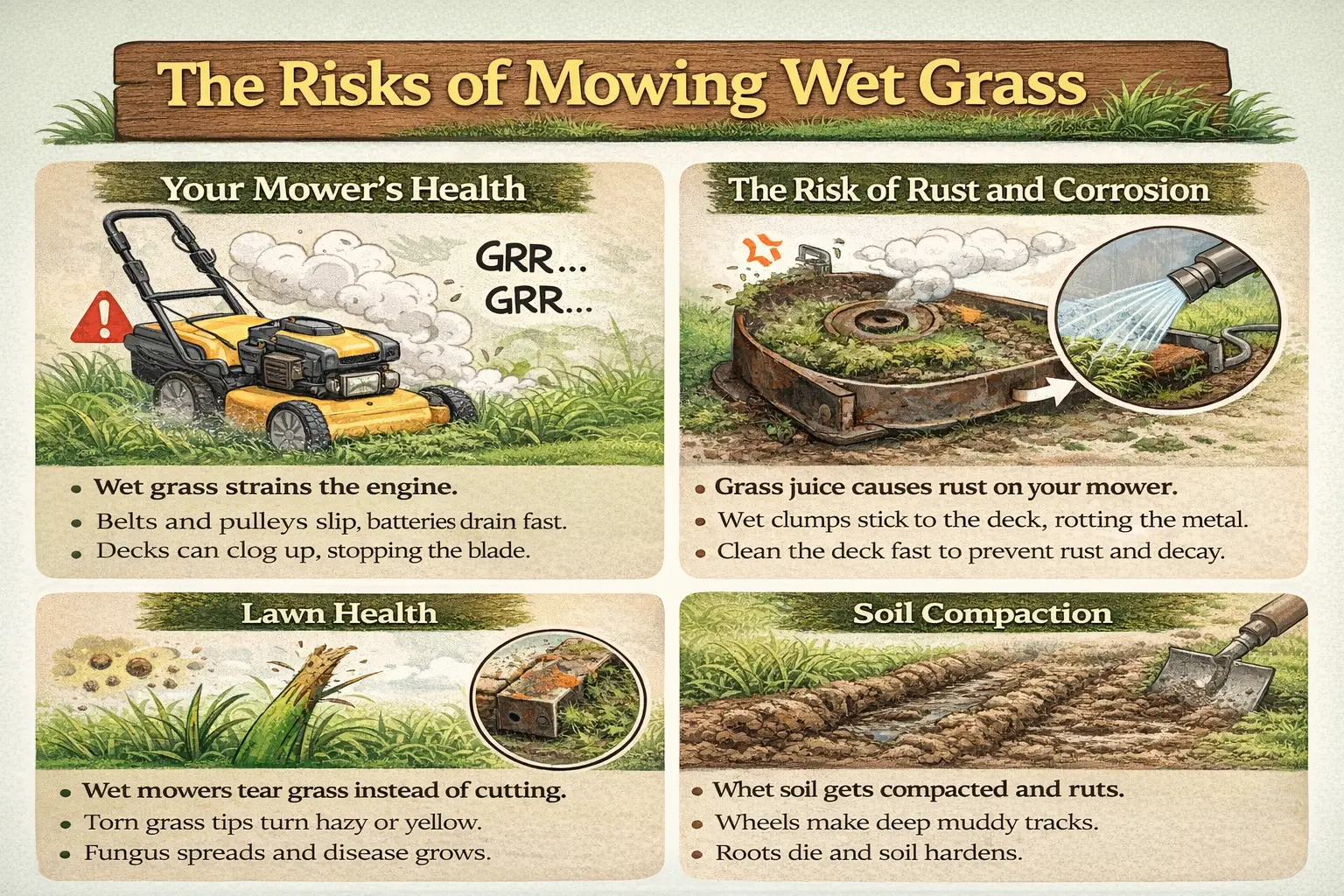
Two days later, your lawn looks hazy. It has a white or yellow cast. That is the dead tissue at the tips.
- Fungal spores: Wet mowers spread disease.
- Brown Patch: This fungus loves warm, wet lawns.
- Recovery time: Your grass stops growing to fix the wound.
I take pride in my lawn. Seeing those jagged tips hurts. It undoes months of hard work.
Soil Compaction and Rutting
Your lawn is not just grass. It is soil. Wet soil is soft. Your mower is heavy.
This is a big one. We often forget about the dirt.
When the ground is soaked, it loses strength. The weight of the mower presses down.
This pushes the air out of the soil. Roots need air. We call this compaction.
I have heavy clay soil in my backyard. If I mow when it is wet, I leave tracks.
- Wheel ruts: You can see exactly where I drove.
- Hardpan: The soil gets hard when it dries.
- Root damage: The wheels crush the shallow roots.
Fixing ruts is hard work. You have to aerate. You have to top dress. It is better to just wait.
Safety First: The Slip Factor
The fall happens fast, causes pain, and is never worth a broken ankle.
Wet grass is ice. That is the best way to describe it.
If your yard has any slope, be careful. I mean, really careful.
I have a small hill on the side of my house. One time, my feet went out. I slid right down.
My hand was still on the mower. That is dangerous. You could pull the mower over you.
- Wear cleats. Or at least boots with deep lugs.
- Go slow. Don’t rush.
- Watch the turn. Turning is when you slip.
If you have a riding mower, stay off hills. Period. Zero-turn mowers are terrible on wet slopes. They slide like sleds.
Projectile Hazards
Wet debris is heavy. It hits hard. And it sticks to things you don’t want it to.
Dry rocks might shoot out. But wet debris clumps together.
These heavy clumps can fly out at high speed. They hit with a thud.
Also, debris sticks to the tires. Then it flings off later.
I have had wet mulch fling up and hit me in the face. It is not pleasant.
- Wear glasses. Always protecting your eyes.
- Check the yard. Wet toys or hoses hide in the tall grass.
- Keep pets inside. My dog loves to chase the mower. Not on wet days.
If You Must Mow: The “How-To” Guide
Okay, you have no choice. The HOA is mad. The rain won’t stop. Here is how I do it safely.
Sometimes you have to break the rules. I get it.
If you must mow wet grass, change your technique. Don’t mow like normal.
First, check your gas. Or charge your batteries. You will use more power.
- Sharpen Your Blades This is rule number one. A sharp blade is vital. It slices. It doesn’t tear.
I keep a spare blade sharp. If it is a wet day, I swap them out. It takes five minutes.
- Raise the Deck Do not try to cut it short. Raise your mower as high as it goes.
You want to take a little off the top. Reduce the load on the engine.
- Less resistance: The blade spins faster.
- Better airflow: The grass moves out quicker.
- Less clumping: Smaller clippings don’t stick as much.
- Side Discharge Only Do not bag. The bag will rot. It will get too heavy.
Do not mulch. The mulch plug will clog instantly.
Open the side chute. Let the grass fly. It will look messy. That is okay.
- Move Slower Walk at half speed. Give the mower time to process the grass.
If you hear the engine bog down, stop. Back up. Let the RPMs come back up.
- Clean Up After When you are done, clean the mess. Rake the clumps. Clean the deck.
Regional Advice: The Humid South
In Florida or Georgia, “dry” is a relative term. The air is always heavy.
I have friends in Tampa. In the summer, it rains every day at 3 PM.
The grass is never truly bone dry. It is always a little damp.
The key here is timing. You have a small window.
- Wait for late morning. Let the sun burn off the dew.
- Beat the storm. Mow before the afternoon clouds roll in.
- Sharp blades: St. Augustine grass is thick. It is like rope when wet. Keep that blade sharp.
Regional Advice: The Pacific Northwest
Seattle rain is different. It is a constant drizzle. You can’t wait for a perfectly dry day.
If you live in Oregon or Washington, you have to mow damp grass. If you waited for dry, you would never mow.
The grass there is cool-season. Fescue and Rye. It grows fast in the rain.
- Mow higher. Keep the lawn a bit longer.
- Mow often. Don’t let it get out of control.
- Waterproof gear. Wear good boots. You will get wet.
Regional Advice: The Midwest
Spring in Ohio is wet. The snow melts. The rain falls. The mud is deep.
The danger here is the soil. It gets very soft in the spring.
You can sink in. I have seen riding mowers get stuck in the mud.
- Test the ground. Step on it. If water pools around your boot, don’t mow.
- Wait for wind. The Midwest is breezy. Wind dries the grass faster than the sun in April.
- Avoid the shade. Shady spots stay wet for days. Maybe skip them for a week.
The Best Equipment for Wet Grass
Not all mowers are equal. Some handle the slush better than others.
I have used a lot of mowers. Some choke instantly. Some power through.
Gas Power A strong gas engine is still king for wet grass. Look for torque. A 160cc engine is okay. A 190cc is better.
Honda engines are great. They keep the blade speed up even under load.
Electric Power Batteries have come a long way. My EGO mower is impressive.
But wet grass drains the battery. If you go electric, have two batteries. You will need them.
Deck Design You want a deep deck. A shallow deck traps grass. A deep dome lets air move.
Look for a “high lift” blade. It acts like a fan. It blows the wet grass out of the chute.
Post-Mow Care: Saving Your Lawn
You mowed it wet. Now what? You have some damage control to do.
Okay, the lawn is cut. But there are clumps everywhere.
Do not leave them. They will kill the grass underneath.
- Grab a rake. Spread the clumps out.
- Use a blower. If they aren’t too heavy, a leaf blower helps scatter them.
- Let them dry. Wait an hour. Once the clumps dry a bit, mow over them again (high setting) to mulch them.
Check for tracks. If you made ruts, try to push the soil back with your foot.
Cleaning Your Machine
This is the most important part. Do not skip this step.
Park the mower on the driveway. Not the grass.
Turn it off. Remove the spark plug wire. Safety first.
Tip it on its side. Keep the carburetor up (check your manual).
Look at that deck. It is packed green.
- Scrape it. Get all the big chunks off.
- Hose it. Spray it down.
- Dry it. I like to use a leaf blower to dry the metal.
- Spray lubricant. A little WD-40 or fluid film under the deck stops rust.
Signs of Trouble to Watch For
Keep an eye on the lawn for the next few days. Wet mowing can cause issues.
Walk the yard two days later. Look closely.
Yellow Spots If you see yellow patches, that might be from clumps you missed. Rake them now.
Frayed Tips Look at the grass blades. Are the tops white? That is from a dull blade.
Next time, sharpen the blade first.
Brown Circles This could be fungus. If you see circles expanding, you might need a fungicide.
Wet mowing spreads these spores. Catch it early.
Why Morning Dew is Tricky
It looks pretty, but dew is deceptive. It is wetter than you think.
I used to think morning was the best time. It is cool. The sun isn’t hot yet.
But dew is heavy. It sits right on the leaf.
When you cut dewy grass, the water acts like glue.
- Wait until 10 AM. Or 11 AM.
- Touch the grass. Run your hand over it. If your hand gets wet, wait.
- The shoe test. Walk ten steps. Look at your toes. Are they wet? Wait.
The “Holiday Weekend” Pressure
It is July 4th. The party is at 2 PM. It rained last night. What do you do?
This is the classic American dilemma. You want the yard to look nice for guests.
But a wet cut looks worse than a long lawn.
A wet cut is uneven. It has tire tracks. It has clumps.
A long, dry lawn looks green and lush.
- Trim the edges. Use your string trimmer. Clean edges make the whole yard look better.
- Mow high. If you must mow, leave it long. A tall, clean cut is better than a short, ragged one.
- Distract the guests. Put the focus on the grill. No one is looking at the grass height that closely.
String Trimmers: A Good Alternative
If the mower is a no-go, maybe the weed eater can save the day.
I have a small yard section that stays wet. It is in the shade.
I don’t even try to mow it anymore. I use my string trimmer.
- No wheels. No ruts in the mud.
- No deck. No clogging.
- Control. I can float the head over the wet grass.
It takes practice to get it level. But for small wet spots, it works great.
Hiring Pros: What Do They Do?
I have watched the commercial crews. They mow in the rain. How?
You see them on commercial properties. It is pouring. They are mowing.
How do they get away with it?
- Power. They have massive engines. 25 horsepower or more.
- High-lift blades. Their mowers generate huge airflow.
- Sharpening. They sharpen blades every day. Sometimes twice a day.
- They don’t care. To be honest, they just need to get the job done. They aren’t worried about the long-term health of that specific patch of grass like you are.
Don’t copy them just because they do it. They have different goals.
The Economics of Waiting
A new mower costs $500 to $1000. Waiting a day costs nothing.
Think about the cost.
If you mow wet, you wear out your belt. You dull your blade. You risk rusting the deck.
If you force the engine, you shorten its life.
Is it worth it?
I would rather have a slightly shaggy lawn for one more day.
My mower lasts longer. My grass stays healthier.
FAQs for Can You Mow the Lawn When the Grass Is Wet
Can you mow the lawn when the grass is wet?
Can you mow the lawn when the grass is wet? It tears the grass blades. This hurts your lawn health. Wet clumps clog the mower deck. It is best to wait for a dry day to cut.
Why is wet grass bad for my mower?
Wet grass blocks the mower chute. It leaves big clumps on the yard. These piles rot and kill the grass. Your lawn needs air and light to stay green and grow well.
Is it safe to cut wet grass on a hill?
Is it safe to mow wet grass? You might slip on the slick ground. Electric mowers can rust. Wet soil is soft and ruts easily. Stay safe and wait for the sun.
When is the best time to mow the lawn?
When is the best time to cut? Wait for the late morning sun. It dries the heavy dew. The grass stands up tall. A dry cut is clean and keeps your yard looking great.
How do I clean a mower after wet grass?
How do I clean a wet mower? Scrape the deck right away. Wet grass dries hard. Use a hose to wash it off. Rust forms fast on damp metal parts. Keep it clean.
Final Thoughts from a Pro
Gardening should be relaxing. Fighting a wet lawn is not relaxing. I love a fresh-cut lawn. The smell. The lines. It is satisfying. But mowing wet grass ruins the fun. It becomes a chore. A dirty, frustrating chore. So, can you mow the lawn when the grass is wet? Technically, yes. You can physically push the mower. But as a friend, I say wait. Pour another cup of coffee. Let the sun shine. Your lawn will thank you. Your mower will thank you. And your clean shoes will thank you. If you are stuck and have to do it, follow my tips. Sharp blades. High deck. Go slow. Good luck out there. Keep it green.