
I remember the first time I made this mistake. It was a Tuesday. I had just finished a long dinner rush at work, felt exhausted, and rushed through cutting the grass. The sky turned gray. It looked like a bruise. I ran inside. I left my mower in the middle of the yard.
By morning, the seat was soaked. The engine was cold and wet. I felt a knot in my stomach.
We all ask this. Can a lawnmower be left out in the rain without breaking? The short answer is yes, but only for a little bit. If you leave it out often, you will have problems.
Think of it like a cast-iron skillet. I am a chef. I would never leave my best pan in a sink full of water. Rust is fast. It is cruel. The same rules apply to your mower.
From the wet heat of Florida to the dry dust of Arizona, weather changes how tools work. Water is tricky. It gets into spots you can’t see. I have fixed rusty decks. I have drained water from gas tanks. It is not fun.
I want to save you that pain. Let’s talk about what really happens to your gear.
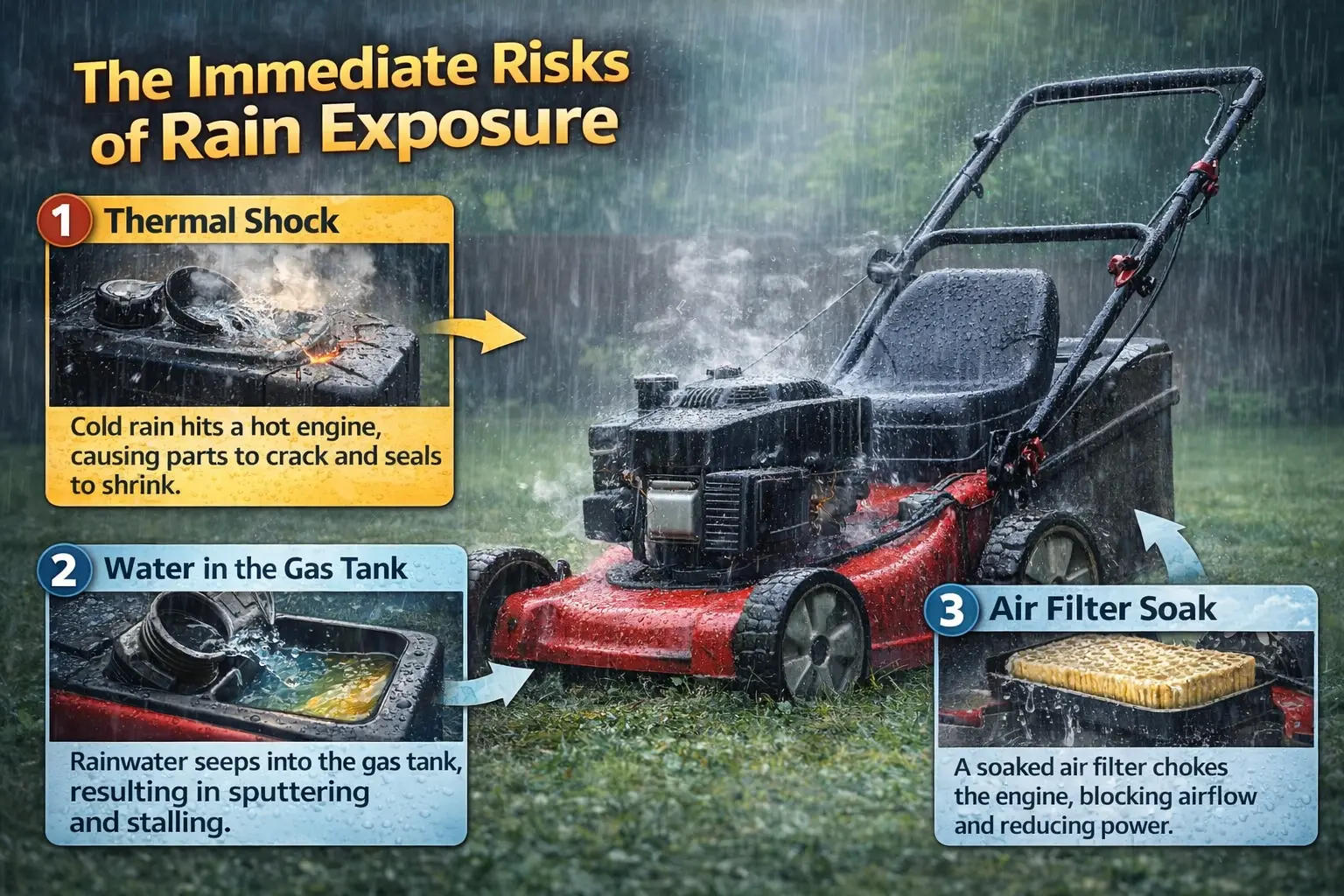
The Immediate Risks of Rain Exposure
Water acts fast. It does not play fair when it hits hot metal or sensitive parts.
The “Thermal Shock” Factor
Imagine pouring cold water on a hot pan. It sizzles. It steams. The metal warps.
This happens to your mower too. You just finished cutting the grass. The engine is hot. Then the cold rain hits it.
-
The metal cools down too fast.
-
Casings can crack.
-
Seals can shrink and leak.
I once heard a loud hiss from the yard. It was the rain hitting the muffler. That sound is the sound of stress. Your engine does not like it.
Water in the Gas Tank
This is the most common issue. Rain is sneaky. It can get past the gas cap.
Most gas in the US has ethanol. Ethanol loves water. It pulls moisture from the air. When rain gets in, the gas separates. The water sinks to the bottom.
-
The engine tries to burn water.
-
It sputters.
-
It stalls out.
I tried to start a wet mower once. I pulled the cord for ten minutes. My arm hurt for days. It was a waste of a good Saturday morning.
Air Filter Soak
Paper filters hate water. If your filter gets wet, it acts like a wet blanket.
-
Air cannot get through.
-
The engine chokes.
-
You lose power.
I use a foam filter on my old push mower. They handle a little mist better. But a paper filter? If it gets soaked, you have to toss it. It is money down the drain.
Long-Term Damage: The Silent Killers
It is not just about today. It is about the rust that eats your machine next winter.
The Deck Rot Reality
I have seen good mowers die young. It starts under the deck.
Wet grass sticks to the metal. It acts like a wet sponge. It holds water against the steel.
-
Steel Decks: These rust fast. If the paint chips, it is over.
-
Aluminum Decks: These are better. Brands like Honda use them. They cost more, but they last.
I had a cheap mower in college. I left it out all summer. By fall, I could poke my finger through the deck. It was trash.
Control Cables and Linkages
Water loves to wick. It travels up inside the cable tubes.
-
The throttle gets stiff.
-
The brake cable snaps.
-
Levers get stuck.
In the Midwest, this is bad. The water gets in during the fall. Then winter comes. The water freezes. The cable cracks.
I once snapped a brake cable on a job. I was just trying to start it. The whole afternoon was ruined. I had to load it back on the truck. It was embarrassing.
Electrical System Weakness
Water and sparks do not mix.
-
Spark Plugs: Water can short them out. The boot gets wet. The spark jumps to the wrong place.
-
Switches: Kill switches can rust. You might not be able to turn it off. Or turn it on.
I keep a tube of dielectric grease in my tool box. It helps keep water out of the boots. It is a cheap fix.
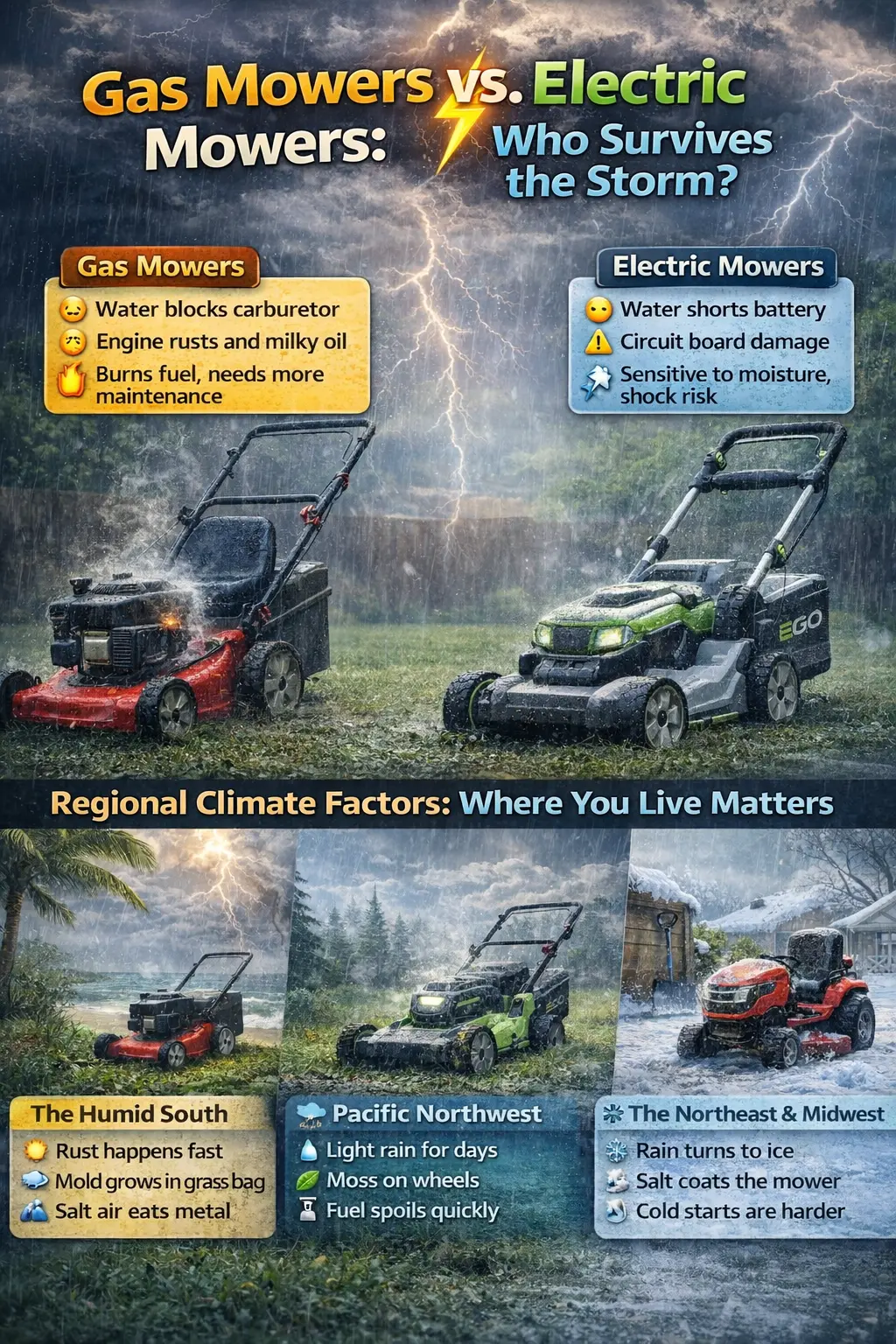
Gas Mowers vs. Electric Mowers: Who Survives the Storm?
Not all machines handle a soaking the same way. Knowing your power source is key.
Gas-Powered Mowers (Push and Riding)
Gas engines are tough. But they have open parts.
-
Carburetors: These have tiny holes. A drop of water can block fuel.
-
Oil: Water can get into the crankcase. If your oil looks milky, stop. Do not run it.
I like older engines for this. Briggs & Stratton motors are tanks. They can take a beating. But even a tank rusts if you leave it in the rain.
Battery and Electric Mowers
I see more of these now. Brands like EGO and Ryobi are popular. They are quiet. They are clean.
But they hate water.
-
Batteries: Lithium-ion batteries are sensitive. Water can kill the circuit board.
-
Motors: The electric motor can rust inside.
-
Safety: Water can cause a short.
I made a mistake once. I left a battery on the charger outside. A storm rolled in. That battery never worked again. It was an expensive lesson.
Most of these have water resistance. But they are not waterproof. Do not test them.
Regional Climate Factors: Where You Live Matters
A rainstorm in Seattle is not the same as a thunderstorm in Texas.
The Humid South
I spent time in Florida. The air is always wet.
-
Rust happens fast.
-
Mold grows in the grass bag.
-
The sun bakes the paint after the rain.
If you live near the coast, salt air is worse. It eats metal. You need to wash your mower more often.
The Pacific Northwest
In places like Oregon, it drizzles for days.
-
The mower never fully dries.
-
Moss can grow on the wheels.
-
Fuel goes stale faster.
You have to be diligent. Use a fuel stabilizer. Keep it under a roof.
The Northeast and Midwest
Here, the seasons fight you.
-
Rain turns to ice.
-
Salt from the driveway gets on the mower.
-
Cold starts are harder on a wet engine.
I protect my equipment each winter by draining the gas and fogging the engine, and it always pays off when spring arrives.
What to Do If Your Mower Got Rained On
Don’t panic. Just follow these steps before you try to pull that cord.
Immediate Rescue Steps
Speed matters here. The longer it sits, the worse it gets.
-
Move it: Get it to a dry spot. A garage is best. A shed works too.
-
Dry it: Use a leaf blower. It pushes water out of the cracks. Or use a towel.
-
Tip it: If it is a gas mower, be careful. Tip it with the carburetor up. If you tip it the wrong way, oil floods the filter.
I always carry a rag. I wipe down the spark plug area first. That is where problems start.
Check the Fluids
You need to be a detective. Look closely.
-
Check the Oil: Pull the dipstick. Does it look like coffee with milk? If yes, water is in the engine. Change it now.
-
Check the Gas: If you are unsure, drain it. It is better to lose five dollars of gas than fix a carburetor.
I use a glass jar to check gas. Let it sit. Water will settle at the bottom. You can see it clearly.
Drying the Internals
You can’t see inside, but you can help it dry.
-
Air Filter: Take it out. If it is paper and wet, throw it away. If it is foam, squeeze it out. Let it dry in the sun.
-
WD-40: This stands for “Water Displacement.” Spray it on the cables. Spray the exposed metal.
It smells strong. But it works. It pushes the water away.
Storage Solutions for the Outdoor Gardener
If you lack a garage, you still have options to protect your gear.
Covers and Tarps
You need something. But be careful.
-
Plastic Tarps: These are cheap. But they trap moisture. It creates a “greenhouse” effect. The mower sweats. Rust loves this.
-
Breathable Covers: These are worth the money. They let air move.
I ruined a paint job with a blue tarp once. I tied it too tight. The moisture got trapped. The paint peeled right off.
Temporary Shelters
You don’t need a big barn.
-
Deck Boxes: These are great for push mowers. They look nice too.
-
Overhangs: Park it under the eaves of your house. Just check the wind. Rain can blow sideways.
I built a small lean-to against my shed. It took just one day to build, cost under fifty dollars, and it protects my mower every single time.
FAQs for Can a Lawnmower Be Left Out in the Rain
Is it safe if a lawnmower is left out in the rain once?
Yes, but dry it off fast. Can a lawnmower be left out in the rain often? No. Water causes rust and engine issues. It is best to store it inside a shed.
Will rain ruin my gas lawn mower engine?
Water can hurt the engine. It may get into the gas or oil. This stops it from running. Check your fluids if the mower sat out in a storm.
How do I fix a wet lawn mower?
Wipe it with a towel. Let it sit in the sun. Remove the spark plug wire first. This keeps you safe while you clean off the water.
Can electric mowers get wet in the rain?
Electric mowers hate water. Rain can ruin the battery or motor. Always keep them dry. Water damage can be very costly to fix.
Do I need a cover for my mower?
A cover helps a lot. It stops rain from hitting the metal. Make sure the cover breathes. This stops moisture from getting trapped inside.
Final Thoughts on Mower Care
If you value a machine that starts on the first pull, keeping it dry is key. However, if you leave it out often, you might face rust and costly repairs. Can a lawnmower be left out in the rain? It happens to us all, but it is a risk. I learned this the hard way when my deck rusted out. It was a sad day for my wallet. Take a moment to cover your gear. A little care goes a long way.
Read More: Drive a Lawnmower on the Road