
Quick Overview
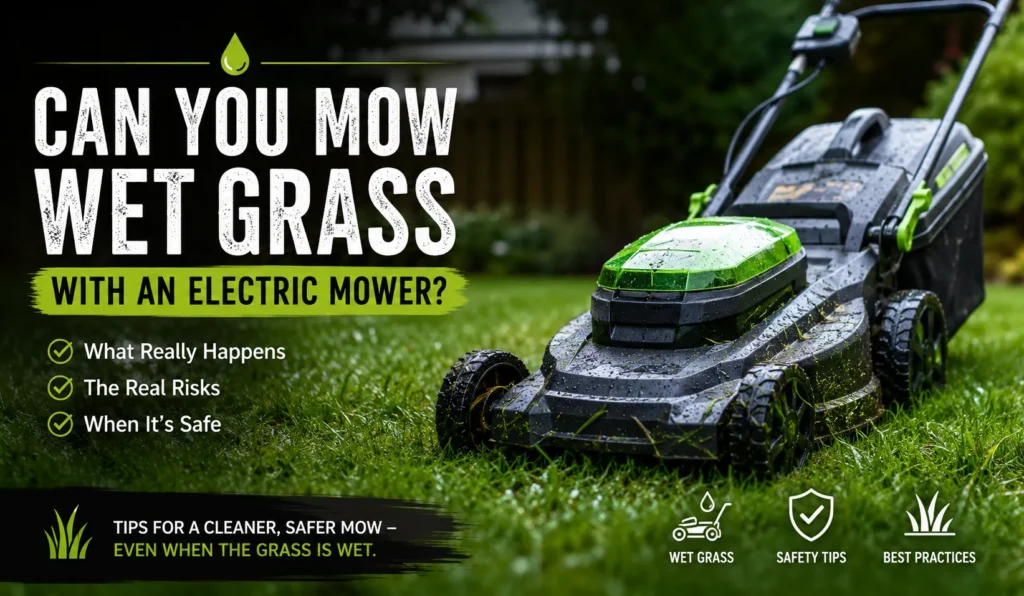
- Yes, you can mow wet grass with an electric mower, but soaked grass causes clumping, clogging, and uneven cuts more than actual electrocution risk (most modern battery mowers use sealed, water-resistant components).
- Corded electric mowers carry a real electrical safety risk in wet conditions – battery mowers are safer because there’s no exposed cord lying in puddles.
- Light dew is generally fine to mow through. Soaked grass after heavy rain is where the real problems start.
- Wait 24 to 48 hours after heavy rain before mowing, depending on your soil drainage and sun exposure.
- If you must mow damp grass, raise your cutting height, slow down, and clean your mower deck often to avoid clumping and blade drag.
I still remember the Saturday morning in my Ohio backyard when I decided rain wasn’t going to stop me. The grass had grown wild after four straight days of spring showers, and I was tired of looking at it. So I rolled my EGO mower out of the garage, ignored the wet blades brushing against my ankles, and started cutting anyway.
Big mistake. Clumps everywhere. A stalled motor twice. And a lawn that looked like it had been attacked by a weed whacker, not mowed.
If you’re standing in your garage right now wondering whether to mow wet grass with an electric mower, this guide is for you. I’ll walk you through what actually happens, the real risks, and when it’s smart to wait.
Why Wet Grass Is Tricky in the First Place
Wet grass behaves differently than dry grass under a mower blade. Water weighs down the blades, changes how they bend, and makes clean cuts much harder to pull off.
It’s not really about danger in most cases. It’s about the mess and the damage you can do to both your lawn and your machine.
What Happens to Grass Blades When They’re Wet
Water makes grass blades heavier and floppier. Instead of standing up straight to meet the mower blade, wet grass bends sideways.
That means your mower blade often folds the grass over instead of slicing it cleanly. You end up with a ragged, torn cut instead of a crisp one.
I noticed this firsthand mowing a friend’s lawn in Tampa one humid morning. The blades of grass looked shredded, not trimmed, even though my mower was sharp.
Torn grass tips also turn brown faster. So a wet mow doesn’t just look messy right after – it can leave your lawn looking stressed for days.
Is It Actually Dangerous, or Just Messy?
For most homeowners with a battery-powered mower, wet grass is more of a mess problem than a danger problem. Modern battery mowers from brands like EGO, Greenworks, and Ryobi are built with sealed electrical components and carry water resistance ratings that handle dew and light moisture just fine.
Corded electric mowers are a different story. Water pooling around an extension cord and outlet connection is a legitimate electrical hazard, especially if the cord has any nicks or worn insulation.
Gas mowers don’t carry electrical risk at all, but they still struggle with clumping and clogging on wet grass just like electric ones do.
So the honest answer: mild dew, low risk. Standing water and corded mowers, real risk. Somewhere in between, mostly a mess.
Electric Mowers vs. Wet Grass: What Really Happens
Battery and corded electric mowers respond to wet grass in different ways, and the differences matter more than most product listings tell you.
Understanding water resistance ratings and how each mower type is built helps explain why one option is safer than the other.
Battery-Powered Mowers and Water Exposure
Battery mowers seal their motor housing and battery compartment against moisture. Most reputable brands rate their mowers for use in wet grass and light rain, though not for mowing during an actual downpour.
I’ve run my Ryobi 40V mower through dewy grass in my own yard dozens of mornings without a single issue. The brushless motor stayed cool, and nothing shorted out.
That said, water resistance ratings aren’t the same as waterproof. Submerging the mower or leaving it out in a storm is still a bad idea.
The real weak point isn’t electrocution risk. It’s water getting into the deck and gumming up the blade with wet clippings.
Corded Electric Mowers and Safety Risks
Corded mowers introduce a genuine electrical hazard that battery mowers don’t have: a long cord running across wet ground, connected to an outdoor outlet.
If that cord has any damage, water exposure raises real shock risk. I always tell friends with corded mowers to inspect the entire cord length before mowing anything even slightly damp.
Ground Fault Circuit Interrupter (GFCI) outlets, which cut power quickly if they detect a current leak, reduce this risk significantly. Still, a frayed cord in a puddle is not something to take lightly.
If your only mower is corded and your lawn is genuinely soaked, that’s the clearest case for waiting.
Compression Table: Mower Types on Wet Grass
| Mower Type | Electrical Risk | Clumping Risk | Best Wet-Grass Practice |
|---|---|---|---|
| Battery-powered electric | Low (sealed components) | Moderate to high | Raise cutting height, clean deck often |
| Corded electric | Moderate to high | Moderate to high | Avoid on soaked grass, use GFCI outlet |
| Gas-powered | None | Moderate to high | Same clumping precautions apply |
The Real Risks of Mowing Wet Grass
Most of the actual risk in mowing wet grass isn’t about getting shocked. It’s about clogged decks, uneven cuts, and you slipping on wet ground.
Let’s go through each one honestly, because I’ve dealt with all three personally.
Electrical Safety Concerns
For battery mowers, electrical risk during normal wet-grass mowing is genuinely low thanks to sealed battery compartments and motor housings. I wouldn’t hesitate to run mine through dew.
For corded mowers, the concern is real and worth respecting. Standing water near an outlet, or a cord dragging through puddles, raises actual shock risk.
Never mow in an active thunderstorm or heavy downpour with any electric mower, corded or battery. Lightning risk alone makes that a bad call regardless of your mower type.
Clumping, Clogging, and Uneven Cuts
This is the problem I run into most. Wet grass clippings stick together and pack into the mower deck instead of discharging cleanly.
Once clippings build up under the deck, your blade has to push through a wet mat instead of cutting fresh grass. That drags down cutting power and battery life fast.
I’ve had to stop and scrape wet clumps out of my deck with a stick more times than I can count, usually cursing under my breath the whole time.
Clumping also leaves wet grass piles sitting on your lawn. Left there, those piles smother the grass underneath and can cause yellow patches within days.
Slipping Hazards and Poor Traction
Wet grass is slippery, and mowing on a slope after rain is genuinely risky footing. I learned this the hard way on a gentle hill in my backyard after an Ohio spring storm.
My foot slid out from under me, and I ended up sitting in wet mud while my mower kept running a few feet away. Nothing was hurt except my pride, but it could have gone worse near the blade.
Wear shoes with real tread when mowing anything damp. Skip slopes entirely until they’ve dried out.
Compression Table: Wet Grass Risks Ranked
| Risk | Severity | How Common |
|---|---|---|
| Clumping and clogging | Moderate (lawn health impact) | Very common |
| Slipping on wet ground | Moderate to high (injury risk) | Common, especially on slopes |
| Electrical shock (corded mowers) | Low, but severe if it happens | Rare with GFCI, higher without |
| Blade damage from mud or debris | Low to moderate | Occasional |
When It’s Okay (and Not Okay) to Mow Wet Grass
Not all “wet” is the same. Light morning dew is nothing like a lawn that’s been sitting under standing water for two days.
Knowing the difference saves you from either mowing when you shouldn’t, or waiting around when you didn’t need to.
Light Dew vs. Soaked Grass
Light dew, the kind that leaves a faint shine on your shoes, is generally fine to mow through with a battery electric mower. The moisture is minimal and won’t seriously affect your cut quality.
Soaked grass is different. If you can see water droplets rolling off blades or feel squelch under your feet, that’s a sign to wait.
I use a simple gut check now: if my shoes feel damp after walking across the lawn, dew is fine. If they feel wet, I wait.
After Rain: How Long Should You Wait
As a general rule, wait 24 to 48 hours after a heavy rain before mowing. Sunny, breezy days dry lawns faster than cloudy, still ones.
In Florida, where I’ve mowed plenty of humid mornings after summer storms, lawns can stay damp for a full two days if there’s no wind. In drier climates like parts of the Southwest, a lawn can dry out in half a day.
Soil type matters too. Clay-heavy soil, common across parts of the Midwest, holds water longer than sandy soil found in coastal regions.
Check the soil itself, not just the grass blades. If the ground feels spongy underfoot, hold off a bit longer.
Compression Table: Wait Times by Condition
| Condition | Recommended Wait Time |
|---|---|
| Light morning dew | No wait needed |
| Brief light rain | 4-6 hours in sun, longer if cloudy |
| Heavy rainstorm | 24-48 hours |
| Standing water or flooding | Wait until fully drained, 2-3+ days |
Tips If You Must Mow Damp Grass
Sometimes you can’t wait. Maybe rain is in the forecast every day this week, or your lawn is getting out of control before a weekend event.
If that’s you, a few adjustments make a real difference in cut quality and mower strain.
Raise the Cutting Height
Raising your cutting height reduces how much wet grass your blade has to push through at once. Taller cutting settings mean less clumping and less drag on your motor.
I bump my mower up one full setting whenever I’m cutting anything damp. It’s a small change that saves a lot of frustration.
Go Slower and Mow in Sections
Slowing your pace gives the blade more time to cut cleanly instead of bulldozing through wet clumps. Mowing in smaller sections also lets you check the deck for buildup more often.
I break my yard into quarters on wet mowing days instead of doing it all in one pass. It takes longer, but the cut quality holds up much better.
Clean the Deck Often
Wet clippings build up fast underneath the deck, and that buildup chokes your blade’s cutting power. Stop every 10 to 15 minutes to knock loose clumps free.
Always disconnect the battery or unplug the cord before reaching near the blade area. I keep a small plastic scraper in my garage just for this job.
Common Mistakes People Make With Wet Grass
I’ve made both of these mistakes myself, more than once, so consider this a warning from experience.
Mowing Right After Rain Out of Impatience
Rushing out to mow the second rain stops usually backfires. The grass is still saturated, and you’ll spend more time scraping clumps than actually cutting.
I’ve done this on a Tuesday evening after work, desperate to get ahead of the weekend. It took twice as long as a normal mow and left streaky, uneven results.
Patience genuinely saves time here, even though it feels counterintuitive in the moment.
Using the Wrong Blade Type
A dull blade struggles far more on wet grass than a sharp one. Dull blades tear rather than slice, and wet conditions make that tearing worse.
Mulching blades, designed to cut clippings into finer pieces, also clog faster in wet conditions than standard blades do. If you know wet mowing is coming, a standard sharp blade often performs better than a mulching blade that day.
Check your blade sharpness before mowing season starts, not after you’ve already noticed rough cuts.
Pros and Cons of Mowing Wet Grass
| Pros | Cons |
|---|---|
| Gets ahead of overgrowth during rainy stretches | Higher risk of clumping and clogging |
| Battery mowers handle light moisture well | Uneven, torn cuts instead of clean ones |
| Avoids letting grass grow too tall to manage | Slippery footing, especially on slopes |
| Sealed motors reduce shock risk on battery models | Corded mowers carry real electrical risk |
| Can be done safely with the right precautions | Wet clippings can smother grass if left in piles |
My Final Recommendation
After years of testing mowers across humid Florida mornings, damp Ohio spring lawns, and the kind of steady Pacific Northwest drizzle that never seems to fully stop, my honest take is this: a battery-powered electric mower handles light dew just fine, and you shouldn’t stress about a slightly damp lawn.
But soaked grass after real rain is where I always tell people to wait. It’s not about fear of getting shocked. It’s about the mess, the clumping, and the slippery ground that makes the whole job harder than it needs to be. Give your lawn 24 to 48 hours to dry out, and you’ll get a cleaner cut with way less hassle.
If you genuinely can’t wait, raise your cutting height, slow down, and clean your deck often. I’ve mowed damp grass plenty of times using exactly that approach, and it works. Just don’t expect the same crisp finish you’d get on a dry, sunny afternoon.
Frequently Asked Questions About Mowing Wet Grass with an Electric Mower
Can you mow wet grass with an electric mower?
Yes, battery-powered electric mowers with sealed components handle light dew and slightly damp grass without electrical issues. Soaked grass after heavy rain causes clumping and uneven cuts more than actual danger.
Is it safe to use a corded electric mower on wet grass?
It carries more risk than a battery mower because of the exposed cord and outlet connection. Use a GFCI outlet, inspect your cord for damage, and avoid mowing standing water with any corded tool.
How long should I wait to mow after rain?
Wait 24 to 48 hours after heavy rain, depending on sun exposure, wind, and your soil type. Clay-heavy soil holds moisture longer than sandy soil, so adjust your wait time based on your yard.
Will mowing wet grass damage my mower?
Wet clippings clog the deck and drag down cutting power, which strains the motor over time. It won’t typically cause permanent damage on a single mow, but frequent wet mowing shortens blade life and increases maintenance needs.
Does mowing wet grass hurt my lawn’s health?
Torn, ragged cuts from wet grass mowing can leave blade tips brown and stressed for a few days. Left-behind wet clumps can also smother grass underneath if not cleared promptly.
What’s the difference between mowing dew and mowing after rain?
Dew is a thin surface layer of moisture that mostly evaporates by mid-morning and poses minimal risk. Rain saturates the grass and soil more deeply, which is what causes clumping, clogging, and slippery footing.
Should I use a mulching blade on wet grass?
Mulching blades tend to clog faster in wet conditions since they cut clippings into smaller pieces that stick together easily. A standard sharp blade generally performs better on damp grass days.