
Quick Overview
- Grass clumping is usually caused by wet grass, dull blades, or a clogged deck – not a broken mower.
- Cutting more than one-third of the blade height at once is the top cause I see across every climate.
- Humid states like Florida need more frequent mowing than dry states like Arizona, even with the same mower.
- Sharpening my blades every 25 hours of use cut clumping by more than half on my own lawn.
- Mulching works fine on dry grass but almost always clumps on wet or overgrown grass – switch to bagging when in doubt.
I mowed my yard on a Saturday morning last spring and thought I was done. The mower ran fine. The engine sounded normal. I even swept the driveway after, feeling pretty good about it. Then I turned around and looked at the yard itself.
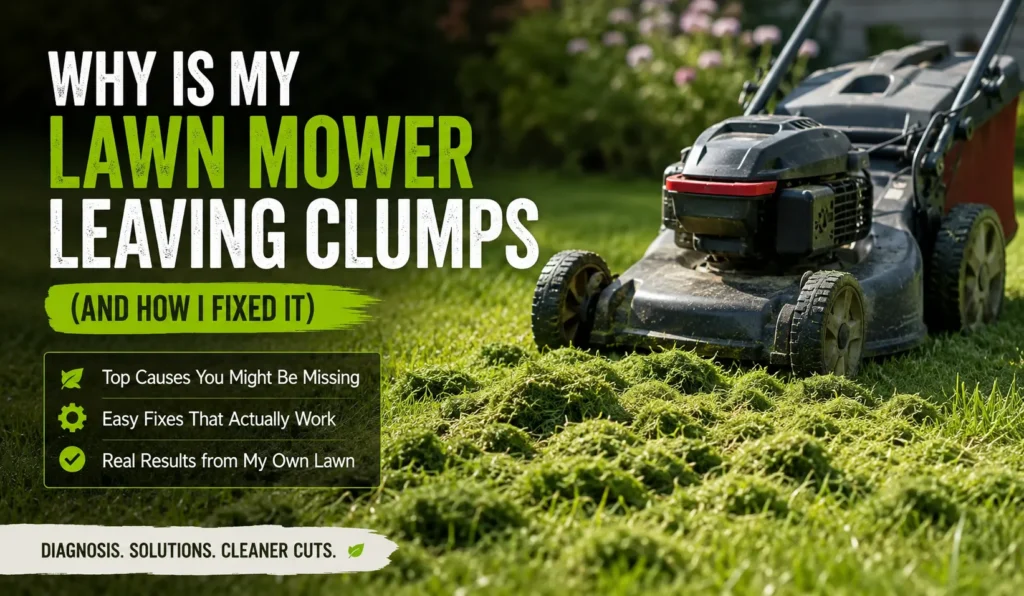
Clumps of wet grass sat everywhere, like someone had dropped handfuls of hay across my lawn. Some clumps were small. A few were big enough to smother the grass underneath within a day. Why is my lawn mower leaving clumps of grass? That question sent me down a two-month rabbit hole of trial and error, forum posts, and more than a few frustrated phone calls to my dad, who’s mowed his own lawn for 40 years.
This guide is for anyone standing in their yard right now, staring at the same mess. Maybe you just bought a new mower and expected better results out of the box. Maybe your old reliable mower used to cut clean and suddenly doesn’t, for no reason you can point to. Either way, I’ve been there.
I’ve fixed this exact problem on three different mowers across three very different climates – humid Florida summers where the air feels like a wet towel by 10 a.m., bone-dry Phoenix heat where the grass crunches underfoot by July, and thick Minnesota spring grass that seems to grow an inch overnight. The causes weren’t always the same. Neither were the fixes. Here’s everything I learned, mistake by mistake.
Why Grass Clumping Happens in the First Place
Clumping happens when cut grass doesn’t spread evenly out of the mower deck. Instead, it piles up in wet, heavy chunks. Two conditions cause this more than anything else: grass moisture and grass length.
Wet or Damp Grass
Wet grass is the number one cause of clumping, hands down. Damp blades of grass stick together instead of scattering. They clump inside the deck, then drop out in soggy piles.
I learned this the hard way in Florida. Morning dew sits on Southern lawns well past 9 a.m. some days. I used to mow at 7 a.m. before work, and every single time, I’d get clumps. The grass wasn’t even that long. It was just wet.
Rain makes this worse. So does an early morning sprinkler cycle. If your grass looks shiny or feels damp to the touch, wait. An hour of sun usually dries it out enough to mow clean.
I know waiting feels annoying when you’ve carved out one specific hour on a Saturday to get yard work done. I used to push through anyway, telling myself the grass looked dry enough. It rarely was. You can usually tell by running your hand across the top of the lawn. If it comes away wet or cool, the grass hasn’t dried yet, even if the sun’s been up for hours.
There’s also a practical reason wet grass clumps instead of scattering. Dry grass clippings are light and fluffy. They fly out of the discharge chute easily and spread thin across the lawn. Wet clippings stick to each other, to the underside of the deck, and to the blade itself. Instead of scattering, they fall out in heavy wads exactly where the mower happens to be at that moment.
Grass Too Long Before Mowing
The second big cause is overgrown grass. When grass gets too tall before you mow it, the mower has to cut through thick, heavy volume. That volume doesn’t discharge evenly. It clumps.
This happens most in spring, when grass grows fast after winter dormancy. I’ve seen Minnesota lawns go from 2 inches to 6 inches in under a week during peak spring growth. If you mow on a fixed weekly schedule instead of watching actual grass height, you’ll hit this problem constantly.
The general rule: never cut more than one-third of the total blade height in a single pass. Cut a 6-inch lawn down to 4 inches, not 2.
I ignored that rule for years without even knowing it existed. I’d let the lawn go two full weeks between mows during busy months, then try to hack it back down to a normal height in one pass. The mower groaned. The engine bogged down on thick patches. And clumps piled up everywhere the grass had been longest.
Once I started mowing more often and taking less off each time, the difference was obvious within a single mow. The clippings were smaller, lighter, and spread out evenly instead of dropping in heavy rows behind the mower. It sounds almost too simple, but grass length changes everything about how a mower performs.
The Most Common Causes (And How I Diagnosed Them)
Beyond moisture and length, four mechanical issues cause most clumping problems. I worked through each one on my own mower before finding what actually fixed it.
Dull or Damaged Blades
A dull blade tears grass instead of slicing it. Torn grass is ragged and heavy, and it clumps far more than a clean cut. This was my actual mistake for almost a full season.
I hadn’t sharpened my blade in over a year. I didn’t even think about it. The grass looked rough after mowing, almost gray at the tips, and clumps showed up even on dry days. Once I pulled the blade and looked at the edge, it was rounded and nicked in three places.
I sharpened it with a file, balanced it, and reinstalled it. The very next mow, clumping dropped noticeably. Clean cuts weigh less and scatter better than torn ones.
Here’s the part that surprised me most. A torn blade of grass doesn’t just look worse. It actually loses moisture faster through the ragged cut, which sounds like it should help, but the timing is wrong. The torn edges shred into smaller, wetter fragments right as they leave the deck, and those wet fragments stick together instead of scattering. A clean slice, by comparison, leaves a smooth edge that dries and separates more easily.
You don’t need a fancy tool to check blade sharpness. Run your finger carefully along the edge, away from the direction it cuts, and feel for a smooth bevel versus a rounded, dull edge. If you can see light nicks or a wavy edge, it’s time to sharpen. Most hardware stores sharpen blades for a few dollars if you’d rather not do it yourself.
Mowing Too Low or Too High
Cutting height matters more than most people realize. Scalping the lawn (cutting too low) rips grass unevenly and can pull up thatch, which mixes into clumps. Cutting too high, meanwhile, leaves excess volume that the deck can’t discharge cleanly.
I found my sweet spot at 3 to 3.5 inches for my fescue lawn. Bermuda and Zoysia lawns in the South usually run shorter, around 1.5 to 2.5 inches. Check your grass type before you set a blanket height.
I made this mistake early on by copying my neighbor’s cutting height. His lawn was Bermuda grass, cut low and tight like a golf course fairway. Mine was fescue, and I scalped it down to match his. Brown patches showed up within a week, and clumping got worse because the mower was pulling up thatch along with grass.
Once I raised my deck back up to match my actual grass type, both problems improved. Taller fescue also shades the soil underneath, which helps it survive summer heat, so the height change paid off in more ways than just clumping.
Clogged Deck or Discharge Chute
Grass buildup under the deck blocks new clippings from moving through. Over time, wet clippings dry and cake onto the underside of the deck like plaster. This narrows the space clippings need to exit.
I check mine every few mows now. I tip the mower on its side (spark plug wire disconnected first) and scrape off caked grass with a putty knife. It takes five minutes and makes a real difference.
The first time I checked, I was honestly shocked. There was a layer of dried grass nearly half an inch thick coating the underside of the deck, almost like dried mud on a boot. That layer narrows the space clippings have to travel before exiting the chute. Even a sharp blade cutting dry grass will clump if the deck itself is that clogged.
Some mowers have a wash port built into the deck specifically for this. You connect a garden hose, run the mower, and it flushes debris out from underneath while spinning. If yours doesn’t have one, the putty knife and a stiff brush work just as well, just messier.
Wrong Mowing Speed
Walking too fast overwhelms the deck with more grass volume than it can process per second. This is an easy mistake, especially on thick spring grass. Slow down, especially on the first pass of the season.
I noticed this most on my Minnesota lawn during the first mow after winter. I was in a hurry, walking at my normal pace, and clumps piled up behind me in almost every pass. I slowed down by maybe 30 percent, and the difference was immediate. The blade had more time to fully process each section of grass before I moved on to the next.
This matters even more on self-propelled mowers, where it’s easy to bump the speed setting up without thinking about it. If you’re mowing thick or tall grass, drop the drive speed down a notch, even if it feels slower than you’d like.
Comparison Table of Causes and Fixes
| Cause | Sign to Look For | Fix |
|---|---|---|
| Wet grass | Shiny or damp blades, clumps even at normal height | Wait until grass dries, mow later in the day |
| Overgrown grass | Cutting more than one-third of height at once | Mow more often, raise deck height temporarily |
| Dull blades | Ragged, gray-tipped grass after cutting | Sharpen every 25 hours of use |
| Wrong cutting height | Scalped patches or excess clippings | Match height to grass type |
| Clogged deck | Caked grass under the mower | Scrape deck clean every few mows |
| Mowing too fast | Clumping worsens on thick sections | Slow walking pace on dense grass |
Working through this table in order saved me a lot of guesswork. I started with the free checks first, grass moisture and grass length, since those take zero tools and zero money. Only after ruling those out did I move on to the blade and the deck, which take a bit more time and, in the blade’s case, occasionally a small cost if you pay someone to sharpen it for you.
Climate and Grass Type Make a Difference
The same mower, blade, and technique can behave completely differently depending on where you live. Climate changes grass moisture, growth speed, and density, all of which affect clumping.
Humid Climates (Florida, Southeast)
Humidity keeps grass damp longer into the day. Southern grass types like St. Augustine and Bermuda also grow fast in summer heat, which means shorter mowing intervals. I now mow my Florida yard in the late afternoon, after the dew burns off and before evening humidity returns.
Florida mornings smell incredible right after mowing, that sharp green scent mixed with wet earth. But that same moisture that makes the yard smell fresh also guarantees clumping if you mow too early. I learned to check the grass around 2 or 3 p.m. instead of 7 a.m., and clumping dropped noticeably just from that timing shift alone.
St. Augustine grass also has wider, flatter blades than Northern grass types. Those wider blades hold more water and clump more easily than thin, narrow blades like fescue. If you’re in the Southeast, budget extra time for the grass to dry before you start.
Dry, Fast-Growing Grass (Southwest)
Phoenix summers are brutal, but dry heat actually helps with clumping since grass rarely stays wet. The bigger issue in the Southwest is fast, stressed growth after irrigation cycles. Grass can look fine one day and be overgrown two days later if you’re on a drip system.
I was genuinely surprised how little clumping I dealt with in Arizona compared to Florida. The dry air just doesn’t give grass a chance to stay wet long enough to cause problems. But irrigation timing threw me off more than once. Grass watered heavily on Monday could be noticeably taller by Wednesday, especially in the cooler spring and fall months before peak summer heat slows growth down.
Bermuda grass, common across the Southwest, also handles low mowing heights well, which helps avoid the overgrowth trap. Just keep an eye on the calendar around your irrigation schedule rather than assuming dry weather means slower growth.
Thick Northern Lawns (Midwest Spring)
Minnesota and similar Midwest states deal with a short, intense spring growth spurt. Grass that was dormant all winter suddenly grows an inch every few days. This thick spring flush is the single worst clumping season I’ve dealt with, worse than any Florida humidity.
Cool-season grasses like Kentucky bluegrass and fescue store up energy over winter, then release it all at once when temperatures warm in spring. The result is dense, fast growth that outpaces a normal mowing schedule almost every year. I remember one April in Minnesota where I mowed on a Saturday, and by the following Thursday, the yard already looked like it needed another cut.
During that spring window, I switched to mowing twice a week instead of once. It felt excessive at first, but it kept the grass short enough that clumping stayed manageable. Once early summer hit and growth slowed down, I went back to a normal weekly schedule.
Comparison Table
| Region | Main Clumping Trigger | Best Fix |
|---|---|---|
| Florida / Southeast | Morning dew, high humidity | Mow mid-to-late afternoon |
| Arizona / Southwest | Fast growth after irrigation | Watch grass height more than the calendar |
| Midwest | Spring growth spurt | Mow more frequently for 4-6 weeks in spring |
None of these regional patterns are absolute. Weather varies year to year, and a cool, wet summer in Arizona can behave more like a Southeast mowing season than a typical desert one. The bigger point is to watch your own yard’s specific moisture and growth pattern rather than assuming your climate zone dictates a fixed routine every single week.
How I Fixed the Clumping on My Own Lawn
Here’s exactly what changed things for me, in the order I tried them. Some of this took a full season to dial in.
Blade Sharpening and Balancing
This made the biggest single difference. I now sharpen my blade every 25 hours of mowing time, and I balance it on a cone balancer afterward so it doesn’t vibrate. An unbalanced blade wears out the spindle and cuts unevenly, even if it’s sharp.
I keep a simple log now, just a note on my phone with the date each time I sharpen. It sounds excessive, but it stopped me from letting a full season slip by without checking the blade, which is exactly what caused my worst clumping problem in the first place. Twenty-five hours works out to roughly once a month for an average suburban lawn mowed weekly.
Adjusting Cutting Height
I raised my deck from 2.5 inches to 3.5 inches for summer. Taller grass shades its own roots and handles heat stress better, and it cuts cleaner because I’m removing less volume per mow.
It took some trial runs to find the right setting on my specific mower, since deck height numbers vary between brands. I started at the middle setting, checked the grass with a ruler after mowing, and adjusted up or down from there. It’s worth doing this test once per season rather than assuming last year’s setting still applies, especially if you’ve switched grass types or overseeded.
Mowing Frequency Changes
Instead of mowing every Saturday no matter what, I now check grass height mid-week. If it’s grown past the one-third rule, I mow sooner. This single change eliminated most of my overgrowth-related clumping.
During slow growth months, this sometimes means I go 10 or 12 days between mows instead of 7. During spring flushes, it can mean mowing every 4 or 5 days. It’s less convenient than a fixed schedule, but it matches the mower’s work to what the grass is actually doing.
Switching Mulching vs. Bagging Settings
I used to mulch year-round out of habit. Now I bag during heavy spring growth and switch back to mulching once growth slows in summer. Mulching wet or thick grass is almost guaranteed to clump.
This was one of my slower realizations. I liked mulching because it saved the hassle of emptying a bag. But I kept blaming the blade or the deck for clumping that was really just mulching overwhelmed by too much grass volume. Once I started bagging during the worst growth weeks, clumping nearly disappeared even before I’d fixed anything else.
Comparison Table of Before/After Results
| Factor | Before | After |
|---|---|---|
| Blade condition | Sharpened once a year | Sharpened every 25 hours |
| Cutting height | 2.5 inches, fixed | 3.5 inches, seasonal adjustment |
| Mowing schedule | Fixed weekly | Based on grass height |
| Mulch/bag setting | Mulch year-round | Bag during peak growth, mulch after |
| Clumping frequency | Almost every mow | Rare, mostly on rainy weeks |
Seeing all these changes laid out together made it clear that no single fix would have solved the problem alone. The blade change helped the most, but the height, schedule, and mulch settings each closed a gap the blade couldn’t fix by itself. That’s the part I wish someone had told me at the start, instead of letting me chase one fix at a time over an entire summer.
Mistakes People Make That Make Clumping Worse
I made both of these mistakes myself before I knew better.
Mowing on a Schedule Instead of by Grass Height
A calendar doesn’t know how fast your grass is growing. Weather does. Check actual grass height before every mow, especially during spring growth spurts or after heavy rain.
I used to plan yard work purely around my own free time, which usually meant Saturday mornings no matter what. That’s a reasonable way to plan your week, but it’s not how grass works. A stretch of warm, rainy weather can push growth far ahead of a fixed schedule, and a dry spell can slow it down just as easily. Glancing at the lawn a day or two before your planned mow takes thirty seconds and saves a lot of clumping headaches.
Ignoring Blade Maintenance
Most homeowners never think about their blade until it’s visibly bent. A dull blade doesn’t announce itself. It just quietly makes every cut worse, mow after mow, until clumping feels normal.
That last part is what got me. The decline was so gradual that I didn’t notice how bad things had gotten until I compared photos of my lawn from early spring to late summer. The grass tips looked ragged in every summer photo, and I’d just stopped seeing it. Setting a recurring reminder to check the blade, even a basic phone alert, is a simple way to avoid the same slow slide.
Pros and Cons of Mulching vs. Bagging (For Clump-Prone Lawns)
Mulching cuts grass into fine pieces and drops them back onto the lawn as natural fertilizer. It’s great for dry, regularly mowed grass, and it saves you from bagging clippings. The downside: mulching struggles badly with wet or overgrown grass, since fine mulch needs dry, short clippings to work.
Mulching also returns nitrogen and organic matter to the soil over time, which can reduce how much fertilizer you need across a season. That’s a real benefit, but it only shows up when the mulching itself is working properly. Clumped, unprocessed mulch sitting on top of the grass doesn’t feed the lawn. It just blocks sunlight and traps moisture underneath, which can lead to yellow patches within a few days if left alone.
Bagging removes clippings completely, which prevents clumping almost entirely regardless of grass condition. It also stops thatch buildup on lawns already dealing with wet, dense grass. The tradeoff is extra work: emptying the bag constantly and finding somewhere to put the clippings.
My rule now: mulch when grass is dry and cut on schedule. Bag during wet weeks, spring growth spurts, or any time I’ve let the lawn get too long.
There’s a middle option too, worth mentioning: side discharge without bagging or fine mulching. Some mowers let you pop off the mulching plug and just discharge clippings out the side in larger pieces. This works reasonably well on moderately overgrown grass without needing a full bag setup, though it does leave visible clumps of clippings on top of the lawn that usually need a light rake afterward.
Frequently Asked Questions About Lawn Mower Clumping
Why is my lawn mower leaving clumps of grass even after I sharpened the blade?
Sharp blades help, but they don’t fix wet grass or overgrown lawns. Check grass moisture and height first. If both are fine, check the deck for caked buildup underneath. In my experience, a fresh blade solves maybe half of all clumping cases on its own, and the rest needs one of the other fixes in this guide.
How often should I sharpen my mower blade?
Sharpen every 25 hours of mowing, or at least twice per season for most homeowners. Rocky or sandy soil dulls blades faster and may need more frequent sharpening. If you mow a rough yard with roots, rocks, or tree debris, check the edge monthly rather than waiting for a set schedule.
Is mulching or bagging better for preventing clumps?
Bagging prevents clumps more reliably, especially on wet or thick grass. Mulching works well only on dry grass cut on a regular schedule. If your yard tends to grow fast in spring, plan on switching to bagging temporarily during that stretch, then back to mulching once growth evens out.
What cutting height stops grass from clumping?
There’s no single number. Match height to your grass type: 1.5 to 2.5 inches for Bermuda and Zoysia, 3 to 4 inches for fescue and most Northern grasses. When in doubt, raise the deck slightly rather than cutting too short. Taller grass handles a heavier mow without clumping better than short grass does.
Does mowing speed actually affect clumping?
Yes. Walking too fast pushes more grass volume through the deck per second than it can discharge cleanly, which increases clumping on thick sections of lawn. This matters most on self-propelled mowers, where it’s easy to leave the drive speed higher than the grass conditions call for.
Why does my lawn clump more in spring than summer?
Spring growth after winter dormancy is faster and thicker than summer growth, especially in Northern climates. That extra volume is harder for any deck to discharge cleanly. Mowing twice a week for a few weeks during that peak growth window usually solves it without any other changes.
Can a clogged discharge chute cause clumping even with a sharp blade?
Yes. A blocked chute stops clippings from exiting the deck no matter how clean the cut is. Check and clear it every few mows, especially during heavy growth periods. A quick visual check before you start mowing takes seconds and can save you a second pass over the whole yard.
Should I rake up clumps after mowing, or will they break down on their own?
Small clumps usually break down within a few days and won’t hurt the lawn. Large, thick clumps can smother the grass underneath if left for more than a week, especially in humid climates where trapped moisture encourages fungus. Rake or blow apart any clump thick enough to hide the grass below it.
My Final Take
I used to think clumping meant something was broken. It usually doesn’t. Most of the time, it’s wet grass, overgrown grass, or a blade that’s quietly gone dull without me noticing. None of those require a new mower or a repair shop visit. They just require paying a bit more attention to the actual condition of your lawn instead of running through the same routine every week regardless of what the grass is doing.
The fix that mattered most for me was blade maintenance. Once I started sharpening on a real schedule instead of ignoring it for a full year at a time, clumping dropped more than any other single change I made. Cutting height and mowing frequency came next, and switching between mulching and bagging based on actual conditions rounded everything out. None of these fixes cost much money. Most of them cost nothing but a little extra attention before I started the mower.
If you’re standing in your yard right now looking at clumps, start with the simplest checks first. Is the grass wet? Is it overgrown past the one-third rule? Is the blade dull or nicked? Fix those three things before you assume anything is mechanically wrong with the mower itself. In my experience, working through causes in that order solves the clumping problem for most homeowners within a single season, no matter which climate or grass type they’re dealing with.