
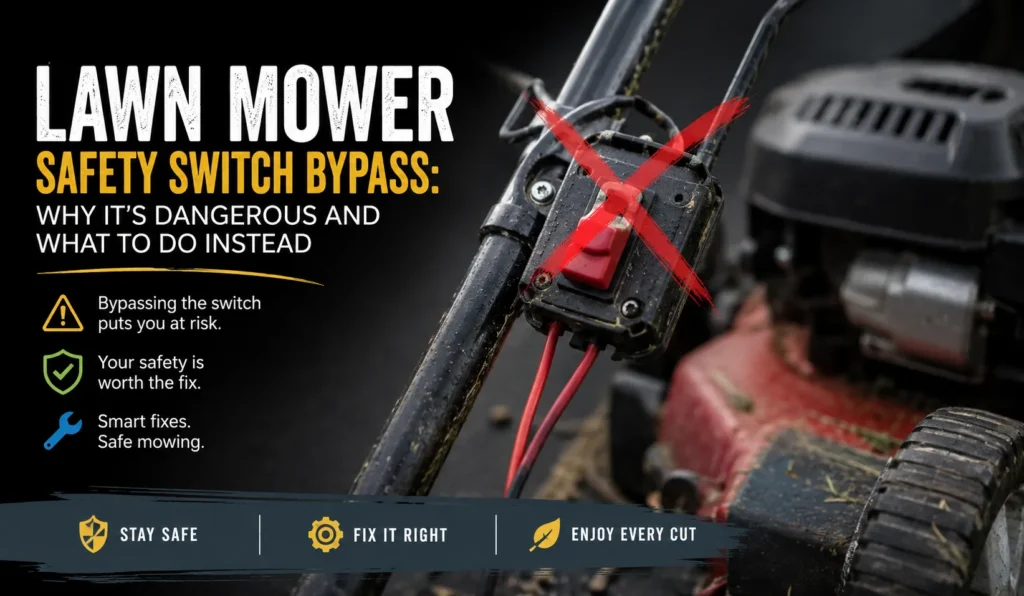
Quick Overview
- A lawn mower safety switch bypass means disabling the mechanism that stops the blade when you let go of the handle, and it removes a federally required protection.
- Walk-behind mower blade contact caused an estimated 35,000 emergency room visits a year in the mid-2010s (CPSC, 2015).
- Most people search for a bypass because the switch feels stuck, not because it’s actually broken beyond repair.
- Cleaning corrosion, replacing a worn cable, or swapping the switch itself fixes the vast majority of cases without touching the safety system.
- A new safety switch typically costs $10 to $30 in parts, far less than the medical or legal cost of a blade contact injury.
What People Mean When They Search for “Safety Switch Bypass”
Someone searching this term wants to keep mowing without fixing a stuck switch. They want a way to hold the switch closed, tape the handle down, remove the kill wire, or trick the mower into running without a hand on the bar.
The intent is almost always frustration, not carelessness. A switch sticks. The mower won’t start. The fastest-looking fix online is a workaround instead of a repair. This article explains why that workaround is dangerous. It also covers what’s really happening inside a failing switch, and how to fix it the right way.
Why Bypassing the Safety Switch Is Dangerous
Bypassing the switch removes the one part built to stop the blade the instant your hand leaves the mower. That gap is exactly where serious injuries happen.
The Switch Exists Because of Real Injury Data
The operator presence control became mandatory on walk-behind mowers in 1982. The Consumer Product Safety Commission tied the rule directly to blade contact injuries (CPSC, 2019). Before the standard, blade contact injuries were far more common across the industry.
Government data still shows the scale of the problem today. An estimated 35,000 adults are treated each year for lawn mower injuries, including lacerations, fractures, and amputations (CPSC, 2022). Roughly 9,400 children under 18 are treated in emergency rooms each year for mower-related injuries (AAP, 2021).
The switch is the reason those numbers aren’t higher. A blade that keeps spinning after you let go has no built-in stop. Reaching down to clear a jam, or tripping on uneven ground, turns into a real hazard once that stop is gone.
What Actually Happens When the Switch Is Bypassed
Once the switch is taped down, wired shut, or otherwise defeated, the blade keeps spinning no matter what your hands do. Slip on wet grass, reach into the discharge chute, or fall near the mower, and there’s nothing left to cut power for you.
This isn’t a theoretical risk. Toe and finger amputations from blade contact stay common enough that CPSC tracks them as their own injury category (CPSC, 2019). A bypassed switch puts that risk back on the table every time the mower runs.
Legal and Financial Exposure
Disabling a safety device carries consequences beyond physical injury. Sell the mower, lend it to a neighbor, or hire help to mow your lawn, and a disabled switch shifts liability onto you if someone gets hurt. Insurance claims involving intentionally disabled safety equipment also get contested far more often.
Common Reasons People Think They Need a Bypass
Most bypass searches start with a switch that seems broken but is actually just dirty, misaligned, or slightly worn. Knowing the real cause changes the fix completely.
The Switch Feels Stuck or Overly Sensitive
A switch that won’t reset, or cuts the engine at the slightest release, feels like a defect worth working around. In most cases it’s corrosion, debris, or a stretched cable. It’s rarely a part that’s broken beyond repair.
The Mower Won’t Start With the Handle Squeezed Normally
When a mower won’t start even with proper hand position, it’s tempting to assume the switch has failed completely. Often the real issue is a loose connector or a cable slipped out of its housing. That’s a five-minute fix, not a reason to disable anything.
A Previous Repair Was Never Finished Properly
Some mowers develop these problems because an earlier repair left the switch slightly out of adjustment. A previous owner or a rushed technician can leave a job half-done. That unfinished repair then gets misread as the switch being unreliable by design.
Wanting to Save Time or Money
Some searches come from a plain desire to skip a repair bill or a trip to the shop. A new switch costs far less than most people assume. Labor is usually under an hour. The time saved by bypassing rarely justifies the risk.
Legitimate Diagnosis Steps for a Faulty Safety Switch
Before assuming the switch needs replacing, walk through these checks. Most safety switch problems trace back to something simple.
Step 1: Test the Handle Connection
Disconnect the spark plug wire on a gas mower. Remove the battery on an electric model. Do this before touching anything near the blade linkage. Squeeze the handle bar and check whether it moves smoothly, with a clean spring-back when released.
Step 2: Inspect the Cable or Wiring Path
Follow the cable or wire from the handle down to the engine or motor housing. Look for fraying, kinks, or a spot where it’s slipped out of a retaining clip. A cable with visible wear needs replacement, not a temporary patch.
Step 3: Clean the Switch Housing
Open the switch housing. It’s usually held by two or three small screws. Check for grass clippings, dirt, or corrosion on the metal contacts. Electrical contact cleaner and a small brush clear this buildup well. Skip general-purpose lubricants. They attract more debris over time.
Step 4: Check for a Bent Bracket
A bracket bumped against a fence post, curb, or garage shelf can shift the geometry the switch depends on. Look for visible bending or misalignment where the handle meets the bracket.
Step 5: Test With a Multimeter If Available
If you own a multimeter, test continuity across the switch while squeezing and releasing the handle. A switch that doesn’t open or close the circuit as expected has failed internally. That calls for replacement, not a workaround.
Safety Switch Replacement Options
If cleaning and adjustment don’t solve the problem, replacing the switch is usually simple and affordable.
Finding the Correct Part
Locate your mower’s model number. It’s typically on a sticker under the deck or on the engine shroud. Order the safety switch part number specific to that model. Skip generic universal switches, since fit and wiring connections vary by brand.
Parts and Labor Costs
A replacement safety switch for a walk-behind mower typically costs $10 to $30 for the part alone. A small engine repair shop usually charges $40 to $90 total for parts and labor on a straightforward swap. Riding mowers with seat safety switches run higher, often $80 to $150, due to the extra wiring involved.
DIY Replacement Basics
Replacing the switch yourself usually means removing the housing cover, disconnecting the old switch’s wiring or cable, and installing the new switch in the same orientation. Manufacturer repair guides for your specific model show the exact screw locations and wire routing. These details vary between brands, so check your model first.
When a Shop Visit Makes More Sense
If you don’t own basic tools like a screwdriver set and contact cleaner, a shop visit saves time. The same goes if the switch is part of a more complex electronic control module on a battery-powered mower. A shop visit here avoids a half-finished repair.
Maintenance Tips to Prevent Future Switch Problems
A little routine care keeps these switches working reliably for years.
- Open the switch housing at the start of each mowing season and check for early signs of corrosion or debris buildup.
- Apply a small amount of dielectric grease to the contacts after cleaning, which repels moisture without blocking the electrical connection.
- Avoid mowing through standing water or very wet grass when possible, since moisture speeds up corrosion inside the housing.
- Ease the handle bar back by hand instead of letting it snap closed on its own, which reduces stress on the bracket and cable over time.
- Store the mower with the housing lightly greased before long off-season storage, especially in climates with humid summers or damp winters.
When to Replace the Switch Instead of Repairing It
Replace the switch outright once cleaning and adjustment stop restoring smooth, reliable operation. A switch that still feels gritty, or won’t snap back after thorough cleaning, has likely worn out inside.
Replace it right away, without more troubleshooting, if you notice melted plastic, a burnt smell near the housing, or any sign that a previous owner already tried a bypass. These signs point to damage beyond a simple cleaning fix. Continued use in that condition raises real risk.
Weigh whether the whole mower is due for replacement if the switch failure comes alongside other wear, such as a rusted-through deck, a tired engine, or a slipping transmission. A $20 switch is worth replacing on a mower with years of life left. It matters less once a mower shows several signs of reaching the end of its service life.
Frequently Asked Questions
What is a lawn mower safety switch bypass?
A safety switch bypass is any method used to disable the mechanism that normally stops the blade when the operator releases the handle. This includes taping the bar down, rewiring around the switch, or removing the kill wire entirely.
Is it illegal to bypass a lawn mower safety switch?
Federal regulation requires the safety feature on new mowers at the point of manufacture and sale, but there’s no federal law against an individual homeowner modifying their own equipment after purchase. That said, doing so voids most manufacturer warranties and can create significant liability if the mower is later sold, lent out, or used by someone else.
Why does my safety switch feel stuck even after I clean it?
A switch that stays stuck after cleaning usually has a worn-out internal spring or a failed contact point. At that stage, replacement is the more reliable fix rather than continued cleaning.
How much does it cost to replace a lawn mower safety switch?
Parts typically run $10 to $30, with total repair costs at a shop between $40 and $90 for most walk-behind mowers. Riding mowers with seat safety switches often cost $80 to $150 due to additional wiring.
Can I test the safety switch myself before replacing it?
Yes. Disconnect the spark plug or battery first, then check the handle bar for smooth movement and a clean spring-back. A multimeter can confirm whether the switch opens and closes the circuit correctly if you want a more definitive test.
What should I do if I bought a used mower with the switch already bypassed?
Replace the switch before using the mower regularly. A previously bypassed switch means the mower has been running without its primary blade-stop protection, and restoring that protection is a straightforward, low-cost repair.