
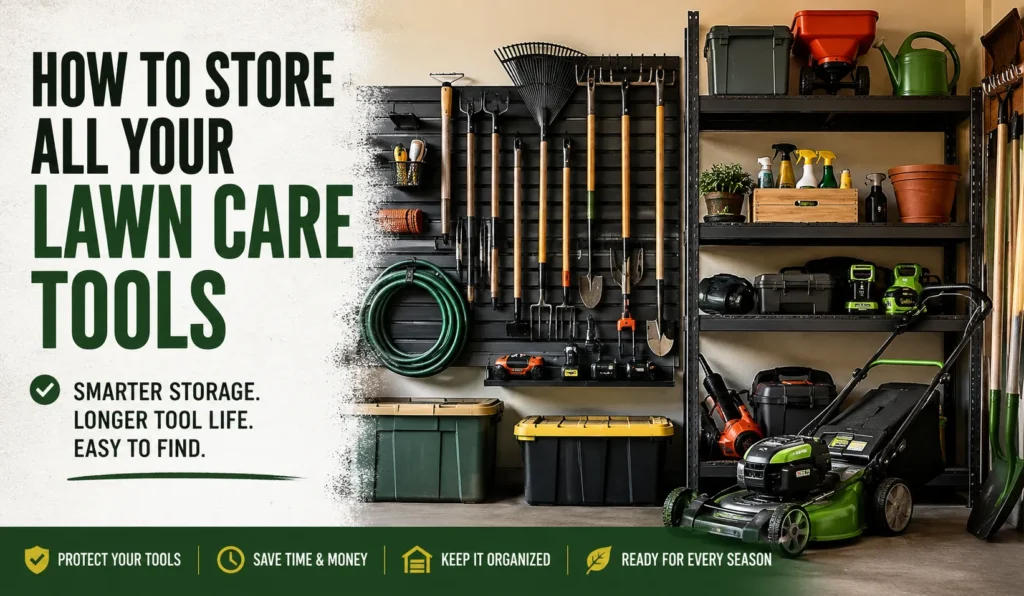
Quick Overview
- Sort tools by type first. Powered tools need different storage than hand tools.
- Wall space beats floor space. Get tools up and off the ground.
- Battery tools need cool, dry spots away from direct sun.
- A $40 pegboard often beats a $300 shed if space is tight.
- Rust starts in weeks, not years. Moisture control matters more than fancy racks.
My garage used to be a mess. Rakes fell every time I opened the door. My hose tangled around my ankles more times than I can count. One July morning in Ohio, I tripped over a spool of wire and dropped a full gas can. That was the day I got serious.
If you want to know how to store all your lawn care tools without losing your mind, you’re in the right place. I’ve set up storage in a tiny apartment shed, a two-car suburban garage, and a barn on five acres in rural Missouri. Each one taught me something new.
This guide is for anyone tired of digging through clutter to find a trowel. Homeowners, renters with a small shed, and rural folks with a full barn will all find something useful here.
Why Tool Storage Matters More Than You Think
Good storage isn’t about looking neat. It saves you money and time. Left in a pile, tools rust fast and break sooner than they should.
Rust, Rot, and Wasted Money
Metal blades rust within weeks if left damp. I learned this the hard way with a pruning shear left outside during a rainy Georgia spring. It was ruined in a month.
Wooden handles rot too. Moisture soaks into the grain and splits it. A $60 shovel can become trash in one bad season.
Store tools dry and off the ground. That single habit saves hundreds of dollars a year.
The Time You Lose Digging Through Clutter
Ever spend ten minutes hunting for pruning shears buried under a tarp? I have. Many times.
Disorganized storage costs real time. Multiply ten minutes by every weekend you do yard work, and it adds up to hours each month.
A clear system means you grab a tool and get to work. No digging. No frustration.
What to Look for Before You Set Up Storage
Before buying anything, look at three things: your space, your tools, and your climate. Skip this step and you’ll waste money on the wrong system.
Space Available (Garage, Shed, Wall, Balcony)
Measure your space first. A one-car garage needs a different setup than a walk-in shed.
Small spaces do best with wall-mounted racks. Large sheds and barns can use freestanding shelving and floor bins.
Even apartment balconies can hold a slim vertical rack for hand tools. I set one up for my sister in her Chicago apartment. It holds six tools in under two square feet.
Tool Types You Own (Powered vs. Hand Tools)
Hand tools like rakes, hoes, and shovels hang well on hooks or pegboards. Powered tools need more thought.
Mowers, trimmers, and blowers need floor space or a wall mount rated for weight. Battery packs need a separate spot away from heat and direct sun.
Make two lists before you shop: one for hand tools, one for powered tools. This makes planning your layout much easier.
Climate and Moisture Control
Humid states like Florida need airflow and moisture control. Dry states like Arizona deal more with heat and sun damage.
Cold states need to think about freeze damage to hoses and fuel lines. Every climate has its own storage risks.
A cheap hygrometer (about $10) tells you the humidity level in your shed or garage. Anything over 60% humidity puts metal tools at rust risk.
Compression Table: Storage Type by Situation
| Space Type | Best Storage Approach | Watch Out For |
|---|---|---|
| Small apartment shed | Vertical wall rack, slim shelving | Overcrowding, poor airflow |
| Suburban one-car garage | Pegboard plus wall hooks | Car door clearance |
| Suburban two-car garage | Wall system plus floor cabinet | Wasted corner space |
| Large rural shed | Freestanding shelving, tool wall | Rodents, moisture buildup |
| Barn | Zoned storage by tool type | Dust, temperature swings |
| Balcony | Slim vertical rack | Rain exposure, wind |
The Best Storage Systems I’ve Actually Used
I’ve tested more storage systems than I’d like to admit, some good, some a total waste of money. Here’s what actually held up.
Best Overall: Gladiator GearWall Panels
This wall panel system is what I use in my own garage now. It’s sturdy, holds real weight, and looks clean.
The downside? It’s not cheap. A full wall setup can run $200 to $400 depending on size.
I’ve had mine for three years. No sagging, no rust on the hardware. Worth the price if you plan to stay in your home a while.
Best for Small Spaces: Suncast Vertical Shed Organizer
For my apartment shed project, I used a Suncast vertical organizer. It’s slim, about 20 inches wide, and holds six to eight long-handled tools.
The plastic feels a bit flimsy compared to metal systems. But for a small space, it does the job well.
At around $35, it’s a solid budget pick for anyone in a tight shed or balcony space.
Best for Large Yards and Sheds: Keter Freestanding Shed Shelving
In my Missouri barn, I use Keter shelving units to zone out different tool categories. One shelf for hand tools, one for chemicals, one for spare parts.
They’re weather-resistant plastic, which matters in a barn with no climate control. The shelves have sagged slightly under heavier loads over time, so I don’t overload them.
Good value for large spaces. Not fancy, but functional.
Best Budget Pick: DIY Pegboard Panel
Nothing beats a plain pegboard for cheap, flexible storage. A 4×8 sheet from a hardware store runs about $25, plus hooks.
I used this setup in my first house’s garage when money was tight. It worked great for hand tools like trowels, shears, and small rakes.
The downside is weight limits. Heavy tools can pull hooks loose over time if you don’t use the right size peg.
Best for Power Tools and Batteries: Milwaukee PACKOUT System
For cordless tools and batteries, the Milwaukee PACKOUT modular boxes are excellent. Stackable, lockable, and rated for garage use.
Battery storage safety matters here. I keep batteries in these boxes away from direct sunlight and away from the water heater in my garage.
It’s pricier than a basic shelf, roughly $50 to $150 per unit depending on size. But for anyone with several battery-powered tools, it earns its keep.
Compression Table: Brand and System Comparison
| System | Best For | Price Range | Main Drawback |
|---|---|---|---|
| Gladiator GearWall | Whole-garage wall systems | $200-$400 | Higher upfront cost |
| Suncast Vertical Organizer | Small sheds, balconies | $30-$45 | Plastic feels flimsy |
| Keter Freestanding Shelving | Barns, large sheds | $80-$150 | Shelves sag if overloaded |
| DIY Pegboard | Budget hand-tool storage | $25-$50 | Weak for heavy tools |
| Milwaukee PACKOUT | Power tools and batteries | $50-$150 per unit | Costly for full sets |
How Storage Needs Change by Climate and Home Type
Your climate changes what actually damages your tools. What works in Arizona will fail in Florida, and vice versa.
Humid Climates (Florida, Southeast)
Humidity is rust’s best friend. In a Florida garage, I’ve seen chrome tools rust in under two months without protection.
Use a dehumidifier or moisture-absorbing packets in enclosed sheds. Keep metal tools slightly oiled to add a rust barrier.
Airflow matters too. A shed with no vents traps moisture and speeds up rot on wood handles.
Dry Climates (Southwest, Arizona)
In Phoenix, my main issue wasn’t rust, it was heat. Plastic bins left in direct sun get brittle and crack within a year or two.
Store plastic storage units in shade whenever you can. Metal hardware also gets hot enough to burn hands if it sits in full sun.
Battery tools especially hate heat. Keep them indoors or in a shaded shed, never in a hot car trunk or sun-facing shed wall.
Cold Winters (Midwest, Northeast)
In Minnesota winters, hoses and fuel lines are the biggest risk. Water left in a hose can freeze and crack the lining.
Drain hoses fully before winter storage. Store them coiled in a garage, not outside where freeze-thaw cycles wear them down fast.
Gas-powered tools need fuel stabilizer before long winter storage. Skip this step and you’ll fight a gummed-up engine in spring.
Compression Table: Climate-Based Storage Priorities
| Climate | Main Risk | Top Fix |
|---|---|---|
| Humid (FL, Southeast) | Rust, mold, wood rot | Dehumidifier, oiled metal, airflow |
| Dry heat (AZ, Southwest) | Plastic cracking, battery heat damage | Shade, indoor battery storage |
| Cold winters (Midwest, Northeast) | Frozen hoses, fuel gumming | Drain hoses, use fuel stabilizer |
Common Mistakes People Make When Storing Tools
I’ve made most of these mistakes myself. Learning from them saved me a lot of money later.
Hanging Everything the Same Way
Not every tool belongs on the same size hook. I once hung a heavy edger on a thin peg hook, and it ripped right out of the pegboard.
Match hook size and weight rating to the tool. Heavy tools need wall studs or metal brackets, not just a small hook.
Ignoring Battery and Fuel Storage Rules
This one matters for safety, not just organization. Storing gas cans near a water heater or furnace pilot light is a real fire risk.
Keep fuel in approved containers, away from heat sources. Store batteries at room temperature, never in an unheated shed during freezing weather.
I once left a battery pack in a cold Minnesota shed overnight. It wouldn’t hold a charge properly for weeks afterward.
Pros and Cons Table
| Storage Solution | Pros | Cons |
|---|---|---|
| Wall-mounted pegboard | Cheap, flexible, easy to install | Weak for heavy tools |
| Freestanding shelving | Good for large spaces, versatile | Takes up floor space |
| Vertical slim organizer | Great for tight spaces | Limited capacity |
| Modular tool boxes | Portable, secure, stackable | Pricier per unit |
| Wall panel systems | Strong, clean look, high capacity | Higher upfront cost |
My Final Recommendation
If I had to start over in a brand-new house tomorrow, I’d begin with a simple pegboard for hand tools and add a wall panel system once budget allowed. It’s the cheapest way to get organized fast without overspending before you know your real storage needs.
For power tools and batteries, don’t cut corners. A cheap plastic bin left in a hot shed will shorten the life of your gear. Spend a little more on proper battery storage, and it pays off within a season or two.
Every home is different. My Missouri barn setup looks nothing like my old apartment shed system, and that’s fine. Look at your space, your climate, and your tool list, then build from there. Start small, add pieces as you need them, and you’ll avoid the clutter and rust that used to drive me crazy every Saturday morning.
Frequently Asked Questions About Storing Lawn Care Tools
What is the best way to store lawn care tools in a small space?
A slim vertical wall organizer works best in tight spaces. It holds several long-handled tools without eating up floor space.
How do I stop my garden tools from rusting?
Keep metal tools dry, lightly oiled, and off the ground. Use a dehumidifier in humid climates to cut moisture in the air.
Where should I store lawn care batteries?
Store batteries at room temperature, away from direct sun and heat sources. Avoid unheated sheds in freezing winter climates.
Is a pegboard or a wall panel system better?
Pegboards are cheaper and good for light hand tools. Wall panel systems cost more but hold heavier tools and last longer.
How do I store lawn tools in a barn without a climate control system?
Use weather-resistant plastic shelving and zone tools by type. Keep chemicals, batteries, and metal tools in separate, ventilated areas.
Do I need to drain my garden hose before winter?
Yes. Drain it fully before cold weather hits. Water left inside can freeze, expand, and crack the hose lining.