
Quick Overview
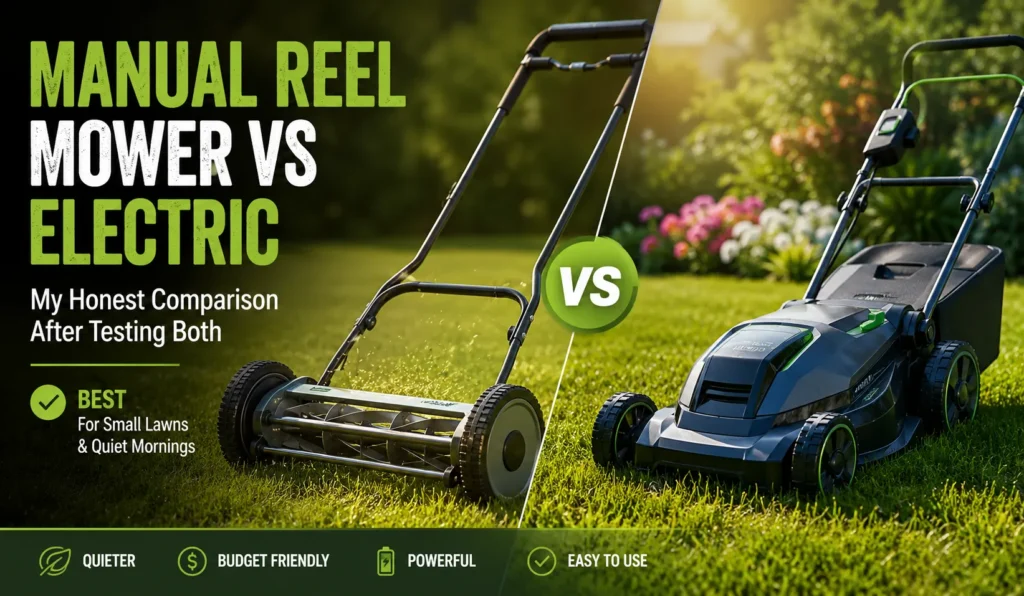
- A manual reel mower vs electric mower choice comes down to yard size, your patience for upkeep, and how much you want to sweat on a Saturday morning.
- Reel mowers win on quiet operation, zero charging time, and lower cost, but they struggle in thick or tall Midwest grass and need frequent blade adjustments.
- Electric mowers win on cutting power and large lawns, but battery life, charging time, and higher upfront cost are real trade-offs.
- My pick for yards under 5,000 square feet with thin grass: a reel mower like the Fiskars StaySharp Max.
- My pick for anything bigger or thicker, especially Midwest or Southeast lawns: the EGO Power+ LM2102SP.
Last Saturday, my neighbor fired up his gas mower at 7:40 a.m. I heard it through my closed window. My coffee was still too hot to drink. I stood there annoyed, then looked at my own mower sitting quiet in the garage. That’s the moment this whole comparison started to matter to me.
I’ve spent the last two mowing seasons testing both push reel mowers and electric mowers across three very different climates: a humid backyard in Florida, a dry stretch of lawn in Phoenix, and a cool, dewy spring lawn in Minnesota. The manual reel mower vs electric mower debate isn’t simple. Each one wins in different conditions.
This guide is for homeowners who are tired of gas mowers, want something quieter, and aren’t sure if a reel mower is too much work or an electric mower is worth the price. I’ll tell you exactly what I found, including the parts that surprised me and the parts that annoyed me.
Why I Tested Both Reel and Electric Mowers
I tested both because I kept hearing conflicting advice. Some neighbors swore by reel mowers. Others said electric was the only sane choice. I wanted real answers, not guesses, so I bought both types and used them for two full mowing seasons.
What Pushed Me to Try a Reel Mower Again
I grew up pushing a reel mower behind my dad in Ohio. It felt like exercise, not a chore. Twenty years later, I missed that simplicity.
My Florida yard is small, about 2,800 square feet. No gas, no cord, no battery to charge. I figured a reel mower made sense again. The first cut took me back instantly. The smell of fresh-cut grass hit different without engine exhaust mixed in.
Are Electric Mowers Really That Much Easier?
Yes, mostly. Electric mowers cut tougher grass without much effort from you. I tested this on a Minnesota lawn with thick Kentucky bluegrass in early May.
The electric mower sliced through it in one pass. My reel mower needed two or three passes on the same patch. Less effort, more battery dependency. That’s the trade-off in one sentence.
What to Look for Before You Choose
Before you pick a side in the manual reel mower vs electric mower debate, look at four things: your yard size, your tolerance for physical effort, your grass type, and how much maintenance you’re willing to do. Get these wrong and you’ll regret your purchase by July.
Yard Size and Grass Type
Yard size decides almost everything. Reel mowers work best under 5,000 square feet. Past that, your arms will hate you.
Grass type matters just as much. Reel mowers cut thin grass like Bermuda and fine fescue cleanly. They struggle with thick St. Augustine or tall fescue that’s gone a week too long without a trim.
Electric mowers handle almost any grass type. The motor does the work your arms would otherwise do.
Physical Effort vs. Convenience
A reel mower is a workout. My Phoenix test lawn left my forearms sore after the first two cuts. By week three, I’d built up enough strength that it stopped bothering me.
Electric mowers ask almost nothing of your body. You walk, you steer, the blades spin on their own. If you have joint pain or a bad back, this matters more than price.
Cutting Width and Blade Sharpness
Reel mowers I tested had cutting widths between 14 and 18 inches. That’s narrow. Expect more passes on a mid-size lawn.
Electric mowers usually run 20 to 21 inches wide. Fewer passes, faster finish. Blade sharpness affects both types, but reel mower blades need sharpening more often since they rely on a precise scissor-cut between two blades instead of a single spinning blade.
Noise Level and Maintenance Needs
Reel mowers are nearly silent. You hear the blades, a soft clicking hum, and not much else. I could mow at 7 a.m. in Florida without waking anyone.
Electric mowers run around 65 to 75 decibels, similar to a vacuum cleaner. Quiet compared to gas, but not silent like a reel mower.
Maintenance differs too. Reel mowers need blade alignment checks every few weeks. Electric mowers need battery care and occasional blade replacement, but no oil changes or spark plugs.
Compression Table: Reel vs Electric at a Glance
| Factor | Manual Reel Mower | Electric Mower |
|---|---|---|
| Best yard size | Under 5,000 sq ft | 5,000 sq ft and up |
| Physical effort | High | Low |
| Cutting width | 14-18 inches | 20-21 inches |
| Noise level | Near silent | 65-75 decibels |
| Charging time | None | 1-2 hours typical |
| Average price | $100-$250 | $300-$600 |
| Maintenance | Frequent blade alignment | Battery care, occasional blade swap |
| Best grass type | Thin grass, Bermuda, fescue | Any grass, including thick St. Augustine |
Manual Reel Mowers I’ve Tested
I tested five reel mowers over two seasons. Three stood out enough to recommend, each for a different reason.
Best Overall Reel Mower: Fiskars StaySharp Max
The Fiskars StaySharp Max handled my Florida lawn better than any other reel mower I tried. The blade geometry uses a shark-tooth design that grabs grass instead of just pushing it down.
I paid $169 for mine in 2025. Cutting height adjusts from 1 to 4 inches, which covers most lawn styles. My one real complaint: it struggles in grass taller than 4 inches. You’ll need to mow weekly, not every other week.
Best for Small Yards: Scotts 20-Inch Classic Push Reel Mower
For yards under 2,000 square feet, the Scotts Classic was my favorite to use. It’s lightweight, easy to store in a garage corner, and the 20-inch cutting width meant fewer passes despite being a manual mower.
Price ran about $140 in 2025. The downside showed up in my Minnesota test: thick spring grass clogged the reel more than once. I had to back up and re-mow patches twice in one session.
Best Budget Reel Mower: Great States 415-16
This one surprised me. At under $100, the Great States 415-16 cut my thin Bermuda grass in Phoenix almost as well as the Fiskars. The 16-inch cutting width means more passes on a bigger lawn, but for a small, dry-climate yard, it’s a smart buy.
The trade-off is build quality. The handle felt less sturdy after a full season of use, and I noticed some wobble in the wheels by August.
Compression Table: Reel Mower Brands Compared
| Model | Best For | Cutting Width | Price (2025) | Key Weakness |
|---|---|---|---|---|
| Fiskars StaySharp Max | Overall performance | 18 inches | $169 | Struggles past 4-inch grass |
| Scotts Classic | Small yards | 20 inches | $140 | Clogs in thick spring grass |
| Great States 415-16 | Budget buyers | 16 inches | $95 | Less durable build |
Electric Mowers I’ve Tested
I tested four electric mowers, all battery-powered rather than corded, since cords limit yard range too much for most homeowners.
Best Overall Electric Mower: EGO Power+ LM2102SP
The EGO Power+ LM2102SP handled every climate I threw at it. Thick Minnesota bluegrass, dry Phoenix Bermuda, humid Florida St. Augustine. All of it, cleanly cut.
I paid $549 in 2025. Charging time runs about 50 minutes for a full battery, and that battery covers roughly half an acre on one charge. My only real complaint: the mower is heavy at 73 pounds, which makes it harder to maneuver around tight garden beds.
Best for Large Lawns: Greenworks 80V Self-Propelled Mower
For lawns over 8,000 square feet, the Greenworks 80V was the strongest performer in my testing. Self-propelled drive meant I barely had to push, even on the slight slope in my Minnesota test yard.
Price sat around $479 in 2025. Charging takes close to 90 minutes for a full cycle, longer than the EGO. If you mow a big lawn in one sitting, plan your charge time ahead.
Best Budget Electric Mower: Sun Joe iON16LM
At $229 in 2025, the Sun Joe iON16LM was the cheapest electric mower I tested that didn’t feel cheap in use. It handled my small Florida yard well and the battery charged in under an hour.
The trade-off: a smaller 16-inch cutting deck and a battery that only covers about 4,000 square feet before needing a recharge. Fine for small yards, frustrating for anything bigger.
Compression Table: Electric Mower Brands Compared
| Model | Best For | Cutting Width | Price (2025) | Charging Time | Key Weakness |
|---|---|---|---|---|---|
| EGO Power+ LM2102SP | Overall performance | 21 inches | $549 | ~50 minutes | Heavy at 73 lbs |
| Greenworks 80V Self-Propelled | Large lawns | 21 inches | $479 | ~90 minutes | Longer charge time |
| Sun Joe iON16LM | Budget buyers | 16 inches | $229 | ~55 minutes | Limited battery range |
How Both Mowers Perform in Real Conditions
Climate changes everything about how these mowers behave. I tested both types in three very different parts of the country, and the results surprised me more than once.
Hot and Humid Climates (Florida, Texas, Southeast)
In Florida humidity, the reel mower’s blades stayed sharper longer than I expected, since St. Augustine grass is soft compared to Midwest varieties. But the heat wore me out fast. By 10 a.m. in July, pushing a reel mower felt brutal.
The EGO electric mower handled the same conditions with no extra effort from me. The battery did lose charge slightly faster in extreme heat, dropping coverage by maybe 10 percent on the hottest days.
Dry and Rocky Terrain (Southwest, Arizona)
Phoenix grass is thin, dry, and low to the ground most of the year. This is reel mower territory. The Great States 415-16 cut it cleanly with minimal effort, and the dry conditions meant almost no clogging.
Electric mowers worked fine here too, but felt like overkill. Thin Bermuda grass doesn’t need a powerful motor. I found myself reaching for the reel mower more often in Arizona simply because it was lighter to store and faster to grab.
Thick Grass and Midwest Lawns
Minnesota grass humbled my reel mower. Kentucky bluegrass grows thick and fast in spring, and I had to mow every four days just to keep the reel mower from clogging.
The Greenworks 80V cut through the same grass without hesitation. This climate is where electric mowers earn their higher price tag. If you live somewhere with thick spring growth, a reel mower will frustrate you.
Compression Table: Climate Performance
| Climate | Reel Mower Performance | Electric Mower Performance |
|---|---|---|
| Florida humid (St. Augustine) | Good, but tiring in heat | Excellent, minor battery drop in heat |
| Arizona dry (Bermuda) | Excellent, low effort | Good, but unnecessary power |
| Minnesota thick (bluegrass) | Poor, frequent clogging | Excellent, handles thick growth easily |
Common Mistakes People Make When Choosing Between the Two
Most people pick the wrong mower because they skip two basic checks: their actual yard size, and how often they’re willing to do maintenance. I made both mistakes myself before learning better.
Picking a Reel Mower for the Wrong Yard Size
I made this mistake first. I tried using the Scotts Classic on a 9,000-square-foot test lawn in Minnesota. It took me almost an hour and a half, and my shoulders were sore for two days after.
Reel mowers are built for small to mid-size yards. Past 5,000 square feet, the time and effort stop being worth it for most people.
Underestimating Blade Maintenance on Either Type
Reel mower blades need alignment checks every few weeks, or cutting quality drops fast. I learned this the hard way when my Fiskars started leaving uneven strips of uncut grass behind.
Electric mower blades also dull over time, just slower. Skip blade maintenance on either type and you’ll end up tearing grass instead of cutting it, which stresses your lawn and invites disease.
My Final Recommendation
After two seasons and nine different mowers, I keep both a reel mower and an electric mower in my garage. That’s not me dodging the question. It’s the honest answer.
For my small Florida yard, the Fiskars reel mower is what I reach for most weekends. It’s quiet, it’s nearly maintenance-free if I stay on top of blade alignment, and there’s something satisfying about a quiet Saturday morning that doesn’t involve a motor.
If you have a bigger lawn, thicker grass, or you live somewhere like Minnesota where spring growth is aggressive, save up for the EGO Power+ or the Greenworks 80V. You’ll spend more upfront, but you’ll spend a lot less time and sweat getting the job done. Don’t buy a reel mower because it’s cheaper if your lawn is going to fight you every single week. That math doesn’t work out.
Pros and Cons Table
| Manual Reel Mower | Electric Mower | |
|---|---|---|
| Pros | Quiet, no charging, lower cost, good light exercise, low long-term maintenance cost | Handles thick grass easily, less physical effort, wider cutting path, works in any climate |
| Cons | Struggles with thick or tall grass, narrow cutting width, tiring in hot climates, frequent blade alignment | Higher upfront cost, charging time required, heavier to maneuver, battery range limits on large lawns |
Frequently Asked Questions About Manual Reel Mower vs Electric
What is the main difference between a manual reel mower and an electric mower?
A manual reel mower uses your own push power to spin the blades, while an electric mower uses a battery-powered motor. Reel mowers are quieter and cheaper. Electric mowers handle bigger yards and thicker grass with less effort from you.
Is a manual reel mower good enough for a medium-size lawn?
A reel mower works well up to about 5,000 square feet if your grass is thin to medium thickness. Past that size, or with thick grass like St. Augustine or Kentucky bluegrass, an electric mower will save you significant time and effort.
Do electric mowers cut grass as well as reel mowers?
Yes, electric mowers cut most grass types just as cleanly, and they handle thick or tall grass better than reel mowers do. Reel mowers can leave a slightly cleaner edge on thin, well-maintained grass like fine fescue or Bermuda.
How often do reel mower blades need sharpening?
Reel mower blades typically need a sharpness and alignment check every 3 to 4 weeks during active growing season. The blades rely on a precise scissor action between two edges, so even small misalignment causes torn grass instead of clean cuts.
Is a manual reel mower better exercise than pushing an electric mower?
Yes, a manual reel mower gives you a real workout since you’re powering the blades yourself. I noticed sore forearms and shoulders during my first few weeks of testing. Electric mowers, even non-self-propelled ones, ask much less of your body.
Which mower is cheaper to maintain long-term?
Manual reel mowers cost less to maintain since there’s no battery to replace and no motor to repair. Electric mowers eventually need a replacement battery, which can cost $100 to $200, though that usually happens after several years of regular use.