
Quick Overview
- Mulching returns nitrogen to your soil and saves cleanup time, but it clumps badly on tall or wet grass.
- Bagging gives the cleanest immediate finish and works best before overseeding, though it removes nutrients and slows down mowing.
- Side discharge is the fastest method and handles overgrown grass well, but it leaves the most visible clippings and scatters debris.
- Climate matters: humid Southeast lawns need frequent mowing to mulch successfully, while dry Southwest climates make side discharge and mulching equally easy.
- My pick most weeks is mulching, switching to bagging in spring for seed control and side discharge for overgrown first passes.
It was a Saturday morning in my Tampa backyard. The grass was wet from overnight rain. I pushed my mower three feet and the chute clogged solid. Clumps of wet St. Augustine sat on top of the lawn like little green hills. I stood there, sweating, wondering if I’d picked the wrong setting again.
That morning is why I started testing bagging vs side discharge vs mulching seriously, not just guessing which button to press. Over two mowing seasons, I ran all three methods on different lawns, in different states, with different grass types.
This guide is for anyone standing at their mower wondering which setting to use. Maybe you just bought a new mower with three modes. Maybe a neighbor mowing next door is using something different than you. I’ll walk you through what each method actually does, where it shines, and where it lets you down.
Why Grass Clipping Disposal Matters More Than People Think
Where your clippings go affects your lawn’s health, not just how it looks afterward. Clippings carry nitrogen, moisture, and organic matter that either feed your soil or smother it, depending on how you handle them.
Most people pick a setting once and never think about it again. That’s a mistake. The right choice changes with grass height, weather, and even the season.
What Happens to Your Lawn With Each Method
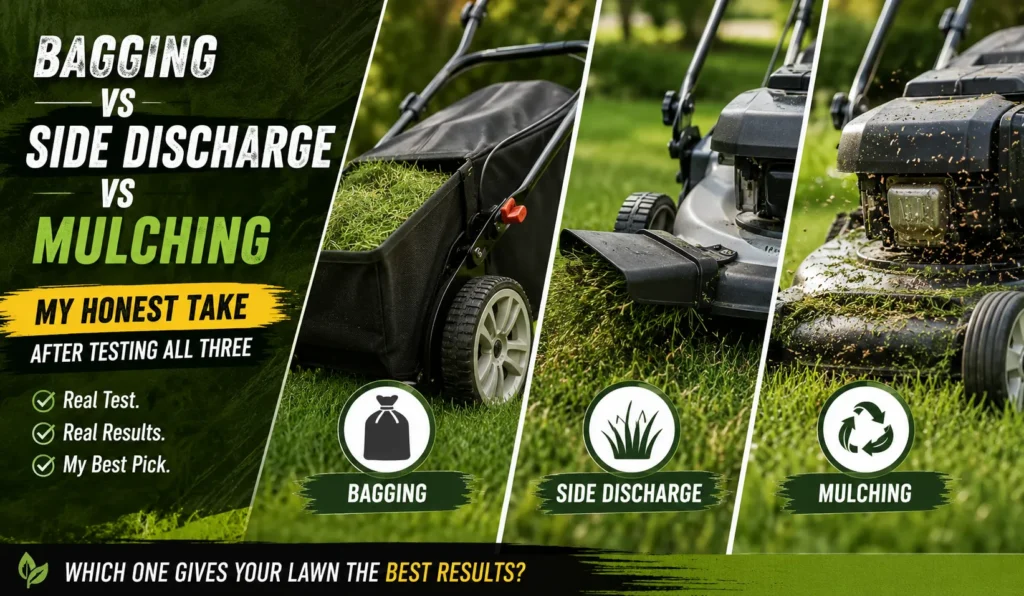
Mulching chops clippings fine and drops them back onto the soil. Bagging collects everything and removes it from the yard entirely. Side discharge flings clippings out sideways onto the surface, mostly unchopped.
Each path changes what’s left behind. Mulched clippings break down and return nutrients. Bagged clippings leave the yard clean but take nutrients with them. Side-discharged clippings sit on top until they decompose or get tracked indoors.
Does It Really Affect Lawn Health?
Yes, more than most homeowners realize. Mulching returns nitrogen to the soil through clipping decomposition, which can cut fertilizer needs by a noticeable amount over a season.
I tested this on my own fescue lawn in Ohio. After switching to mulching for one full summer, I skipped a fertilizer round and the lawn stayed just as green. That’s not magic. It’s just nitrogen return doing its job.
What to Look for Before You Choose a Method
The right method depends on your grass type, lawn size, and how often you mow, not just personal preference. Get these wrong and you’ll fight clumping, clogging, or thatch no matter which mode you pick.
Before testing, I always check three things: how fast the grass is growing, how big the area is, and what attachments my mower actually supports.
Grass Type and Growth Rate
Fast-growing grasses like Bermuda produce more clippings per mow than slower types like fescue. More clippings mean more risk of clumping if you mulch or side discharge without adjusting your schedule.
Bermuda and St. Augustine in the Southeast often need mowing every five to six days in peak summer. Cool-season grasses like Kentucky bluegrass can stretch to seven or eight days without trouble.
Lawn Size and Clipping Volume
Larger lawns generate more clipping volume per session, which makes bagging more time-consuming and mulching more dependent on mowing frequency. A quarter-acre lawn might fill a bagger twice in one mow during fast growth periods.
On my half-acre Minnesota property, I learned this the hard way one June. I had to stop and empty the bag four separate times. That’s when I switched to mulching for the rest of the season.
Mower Features That Support Each Mode
Not every mower handles all three methods well. Mulching needs sharp blades and the right deck design to chop clippings fine enough to avoid clumping.
Side discharge needs a wide, unobstructed chute. Bagging needs a bag large enough that you’re not stopping every few minutes. Check your mower’s deck height range too, since that affects how evenly clippings get distributed either way.
Maintenance and Cleanup Time
Bagging adds cleanup time after mowing, since you have to empty and often dispose of the clippings somewhere. Mulching and side discharge skip that step but can leave a mess on the lawn surface if grass was too tall going in.
I’ve spent entire Saturday afternoons just hauling bagged clippings to a compost pile. With mulching, I’m usually done the moment the mower stops.
Compression Table: Setup Needs by Method
| Method | Blade Sharpness Needed | Mowing Frequency Needed | Cleanup Time | Best Deck Type |
|---|---|---|---|---|
| Mulching | Very sharp | Frequent (every 5-7 days) | Minimal | Mulching deck or kit |
| Bagging | Standard | Flexible | High | Bag-compatible deck |
| Side Discharge | Standard | Flexible | Low to moderate | Open-chute deck |
Mulching: My Honest Experience
Mulching worked well for me on lawns I mowed often and never let grow too tall. It struggled the moment I skipped a week or hit thick, wet grass.
I tested mulching across three different lawns: a small Florida backyard, a Minnesota front yard, and a friend’s Arizona xeriscaped patch with Bermuda strips.
How It Performed in Real Lawns
On my Tampa St. Augustine lawn, mulching looked great when I mowed every five days. The clippings disappeared into the turf within a day, and the lawn smelled like fresh-cut grass without leaving visible debris.
In Minnesota, mulching on Kentucky bluegrass worked even better. Cooler temperatures meant slower decomposition smell, and the clippings broke down cleanly within two to three days most weeks.
Best Conditions for Mulching
Mulching performs best on grass cut at the recommended height, mowed regularly, and not soaking wet. Dry, shorter grass chops finer and disappears faster into the lawn.
It also works well if you’re trying to cut down on yard waste. I haven’t bagged a single clipping from my home lawn in over a year now.
Where It Falls Short
Mulching falls apart on tall, wet, or thick grass, leaving visible clumps that can smother grass underneath and contribute to thatch buildup. I learned this in Phoenix one August after a rare summer rain delayed my mow by ten extra days.
The grass had grown nearly six inches. My mulching mower left thick rows of wet clumps that took almost two weeks to fully break down. The lawn underneath turned yellow in patches.
Bagging: My Honest Experience
Bagging gave me the cleanest-looking lawn immediately after mowing, every single time, but it cost me time and effort that mulching never asked for.
I tested bagging most heavily on a rental property lawn in central Florida where I needed a tidy finish for showings.
How It Performed in Real Lawns
The bagged lawn looked sharp right away. No clumps, no stray clippings tracked onto the sidewalk, nothing to explain to a confused tenant.
On a Kentucky bluegrass lawn in spring, bagging also helped control seed heads before they spread. That’s something mulching and side discharge can’t do as well.
Best Conditions for Bagging
Bagging works best when you want an immediately clean finish or you’re dealing with diseased grass, heavy seed production, or thick thatch you’re trying to remove. It also helps right before overseeding, since clippings won’t block new seed from reaching soil.
I always bag in early spring on any lawn I plan to overseed within a week or two.
Where It Falls Short
Bagging removes nitrogen and organic matter from your lawn every single time, which can increase your fertilizer needs over a season. It also slows down mowing significantly on larger properties.
On that half-acre Minnesota lawn, bagging during a fast-growth week in June meant stopping every ten minutes to dump the bag. What should have been a 40-minute mow turned into well over an hour.
Side Discharge: My Honest Experience
Side discharge got me through mowing jobs fastest, especially on larger or overgrown lawns, but it left the most visible mess behind.
I tested side discharge mostly on an Arizona property with patchy Bermuda grass and a lot of open, dry ground.
How It Performed in Real Lawns
On dry Bermuda in Phoenix, side discharge worked fine. The clippings were light and dry enough to scatter without clumping, and the heat dried them out within hours.
On a thicker, wetter lawn in Florida, the results were worse. Clippings landed in visible rows, and I had to do a second pass with the mower just to break them up.
Best Conditions for Side Discharge
Side discharge works best on dry grass, overgrown lawns that need a first pass before mulching, or large properties where speed matters more than appearance. It’s also the easiest setting on most mowers, since nothing clogs as often as a mulching chute.
I reach for side discharge whenever I’m mowing a lawn that’s gotten away from me and just needs a first cut.
Where It Falls Short
Side discharge leaves the most visible clippings on the surface, can clog gutters and walkways if you’re not careful with mowing direction, and offers no nitrogen return like mulching does. It also tends to throw debris toward whatever’s downwind, including cars and windows.
I once side-discharged toward my own patio furniture in a Texas yard and spent ten minutes afterward sweeping clippings off the chair cushions.
Compression Table: All Three Methods Side by Side
| Method | Appearance After Mowing | Nitrogen Return | Speed | Best Grass Condition |
|---|---|---|---|---|
| Mulching | Clean if frequent | High | Moderate | Short, dry, regular mowing |
| Bagging | Cleanest | None | Slowest | Any, especially before overseeding |
| Side Discharge | Messiest short-term | None | Fastest | Dry, overgrown first passes |
How Each Method Holds Up in Real Conditions
Climate changes how well each method performs, since humidity, grass type, and growth speed all shift the results. What worked perfectly in Arizona gave me trouble in Florida using the exact same mower.
Hot and Humid Climates (Florida, Texas, Southeast)
In hot, humid climates, mulching needs more frequent mowing to avoid clumping, since St. Augustine and Bermuda grow fast and hold moisture longer. Side discharge handles overgrown patches better here but leaves more visible clippings due to the added moisture.
I mow every five days during Florida summers specifically to keep mulching viable. Skip even two extra days and the clumping returns.
Dry and Rocky Terrain (Southwest, Arizona)
In dry climates, side discharge and mulching both perform well, since lower moisture means clippings dry out fast and rarely clump. Bagging becomes less necessary here unless you’re dealing with weed seed control.
On the Phoenix lawn, I switched between mulching and side discharge freely without much difference in results. Dry heat does a lot of the work for you.
Thick Grass and Midwest Lawns
In the Midwest, Kentucky bluegrass and fescue grow dense and can choke a mulching mower if you let growth get ahead of your schedule. Bagging or side discharge work better during the fast spring growth spurt before things slow down in summer.
My Minnesota lawn taught me to switch to bagging every April and May, then move back to mulching once growth slowed by June.
Compression Table: Method Performance by Region
| Region | Best Primary Method | Backup Method | Why |
|---|---|---|---|
| Southeast (FL, TX) | Mulching (frequent mowing) | Side discharge | Fast growth, high moisture |
| Southwest (AZ, NM) | Mulching or side discharge | Bagging (seed control) | Dry clippings, low clumping risk |
| Midwest (MN, OH) | Bagging (spring) | Mulching (summer) | Growth spurt outpaces mulching capacity |
Common Mistakes People Make When Choosing a Method
The biggest mistakes come from sticking to one method regardless of conditions, instead of adjusting based on grass height and weather. Methods aren’t fixed choices. They’re tools you switch between.
Mulching Overgrown Grass
Mulching grass that’s grown too tall produces thick clumps that smother the lawn underneath and invite fungal problems. If you’ve missed a mow by more than a few days, switch to side discharge or bagging for that one session instead.
I learned this lesson in Phoenix and never mulched overgrown grass again without a side-discharge pass first.
Ignoring Clipping Buildup and Thatch
Letting clippings or thatch buildup pile up over multiple mows traps moisture against the grass and blocks sunlight from reaching the soil. Thatch over half an inch thick starts choking root growth in most common lawn grasses.
Check your lawn for thatch buildup at least once a season by pulling back a small patch with your hand. If it feels spongy and thick, it’s time to bag for a few mows or dethatch directly.
My Final Recommendation
After two seasons of testing, I don’t think there’s one right answer here. I use mulching most of the time because I mow often enough to make it work, and I like skipping fertilizer rounds when I can.
But I still switch to bagging every spring when seed heads show up, and I reach for side discharge whenever a lawn gets away from me and needs a rough first pass. The method that wins isn’t the one with the best reputation. It’s the one that matches your grass, your schedule, and how much cleanup you’re willing to do that day.
If I had to pick just one setting for a brand-new homeowner mowing a typical suburban lawn, I’d say start with mulching and mow every five to seven days. Switch to bagging or side discharge only when conditions call for it, not out of habit.
Pros and Cons Table
| Method | Pros | Cons |
|---|---|---|
| Mulching | Returns nitrogen, saves time, less yard waste | Clumps on tall or wet grass, needs frequent mowing |
| Bagging | Cleanest finish, helps before overseeding, controls seed heads | Removes nutrients, slows mowing, requires disposal |
| Side Discharge | Fastest, handles overgrown grass well, rarely clogs | Messiest appearance, no nitrogen return, can scatter debris |
Frequently Asked Questions About Bagging vs Side Discharge vs Mulching
What is the difference between bagging, side discharge, and mulching?
Mulching chops clippings fine and drops them back onto the soil. Bagging collects clippings and removes them from the yard. Side discharge throws clippings out sideways onto the lawn surface without bagging or fine chopping.
Is mulching better than bagging for lawn health?
Mulching generally supports lawn health better through nitrogen return, as long as you mow frequently enough to avoid clumping. Bagging removes that nitrogen but gives you a cleaner immediate finish.
Does side discharge cause thatch buildup?
Side discharge can contribute to thatch if clippings sit on the surface for long periods without breaking down. Regular mowing and occasional bagging help prevent that buildup from becoming a problem.
Should I bag or mulch in the spring?
Many lawns benefit from bagging in early spring, especially during fast growth spurts or before overseeding, then switching to mulching once growth slows. This pattern worked well on my own Midwest lawn for two seasons.
Can I switch between methods on the same mower?
Most mowers with interchangeable attachments let you switch between mulching, bagging, and side discharge depending on the model. Check your mower’s manual to confirm which attachments it supports before assuming all three are available.
How often should I mow if I’m mulching?
Mulching works best with mowing every five to seven days, depending on grass type and growth rate. Faster-growing grasses like Bermuda need the shorter end of that range during peak season.
Does side discharge work on small lawns?
Side discharge works fine on small lawns, though the visible clippings left behind tend to be more noticeable on smaller, more visible yards. Many homeowners with small front lawns prefer bagging or mulching for that reason.