

It was a Saturday morning in late May. I was standing in my backyard in suburban Georgia, coffee in hand, staring at grass that had officially crossed the line from “a little long” to “genuinely embarrassing.”
My neighbor pulled into his driveway. He glanced over. I waved. He just looked at my lawn. That was enough.
I grabbed my Husqvarna, fired it up, and started mowing. Halfway through, I realized I had no real idea if I was doing this right. Was I mowing too late? Too short? Too often last month? Not often enough this month?
That question — how often should you mow your lawn — sounds simple. But the honest answer is: it depends. And most lawn care advice online either gives you a vague “once a week” answer or buries you in turf science you never asked for.
I’ve mowed lawns in three different states. I’ve made every mistake in the book. Scalped my Bermuda in Texas. Ignored my fescue in Ohio until it looked like a hay field. Over-fertilized my front yard in Tennessee and then mowed it four times in one week.
So this is what I actually know — from real experience, real grass, and a whole lot of trial and error.

The One Rule That Changes Everything — The One-Third Rule
Before we talk schedules, there’s one lawn care principle that matters more than any calendar.
I wish someone had told me this before I spent two summers wondering why my lawn looked rough. Everything changed once I understood this one rule.
What Is the One-Third Rule?
The rule is simple. Never cut more than one-third of the grass blade in a single mow.
That’s it. That’s the whole rule.
If your grass should be three inches tall, mow it when it hits four and a half inches. Not when it hits six. Not when you finally have a free Saturday.
Here’s why it matters:
- Grass grows from the crown, not the tip
- The leaf blade captures sunlight for energy
- Cutting too much at once puts the plant into stress mode
- Stressed grass grows slower, looks worse, and invites disease
I saw this firsthand with my Bermuda grass in Dallas. I skipped two weeks of mowing in June. The grass hit nearly five inches. I came home, panicked, and cut it all the way down to one inch in one session.
Within three days, my lawn looked like a sun-bleached parking lot.
That yellow-brown straw color? That’s what turf stress looks like. It’s not pretty.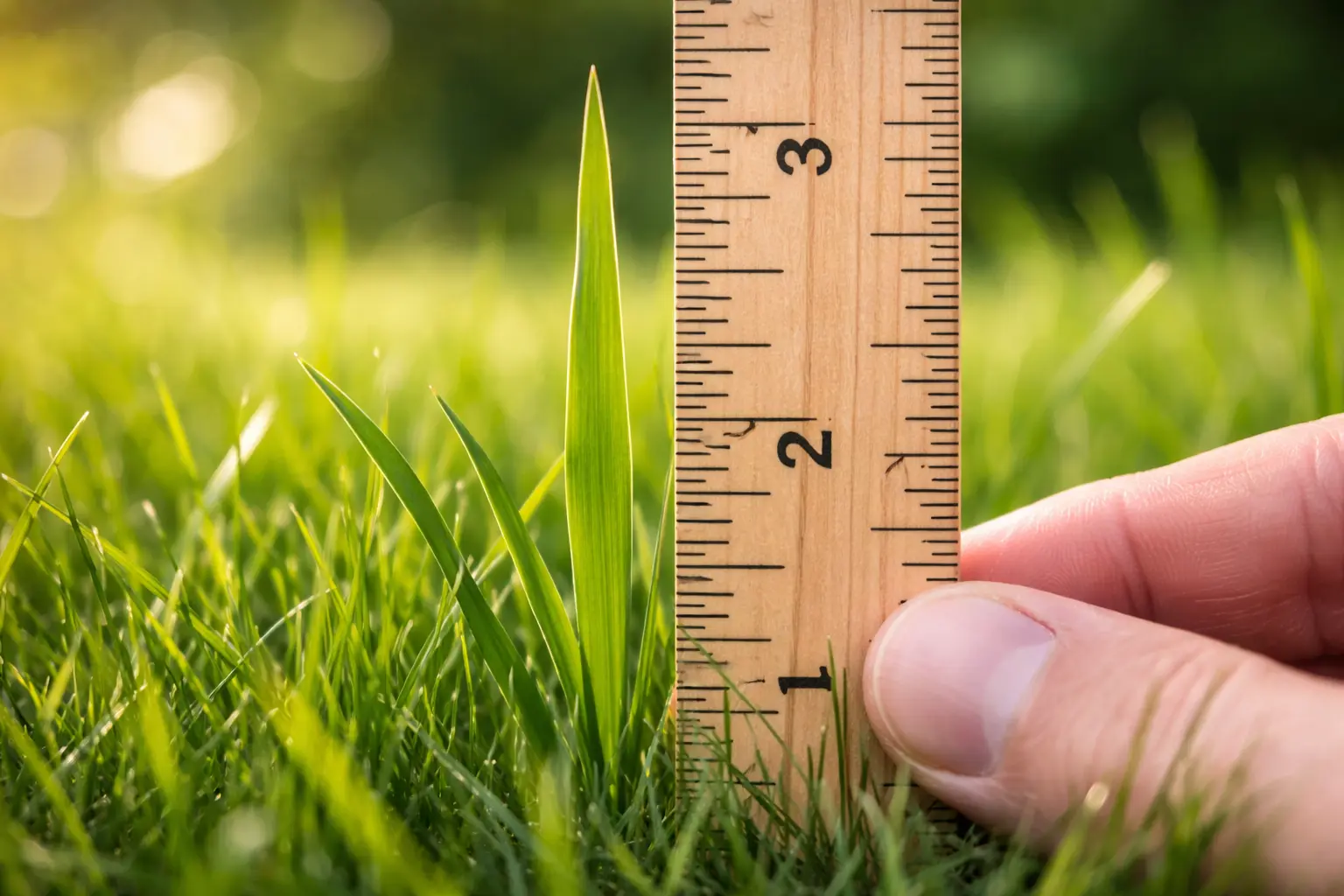
What Happens When You Break It?
When you cut too much at once, the grass loses most of its leaf surface. It can’t photosynthesize properly. It can’t produce enough energy to recover fast.
The result is ugly. Real ugly.
- Brownish patches that take weeks to green up
- Thin, weak turf that weeds love to invade
- Roots that stop growing deep and start struggling
And here’s the thing — it’s not just about how it looks. A stressed lawn is a vulnerable lawn. Fungal diseases move in fast. Crabgrass seeds germinate easier when the canopy thins out.
I’ve watched a perfectly healthy fescue lawn in North Carolina turn into a weed patch in under three weeks. The homeowner mowed it way too short in April, right after a wet spring. By May, there were dandelions everywhere.
The grass never really recovered that season.
How to Use the One-Third Rule to Set Your Mowing Schedule
Here’s the practical part. You don’t need a complicated formula.
Just measure your grass type’s ideal height. Then mow when it grows one-third above that.
For example:
- Bermuda — ideal height 1 inch → mow at 1.5 inches
- Tall Fescue — ideal height 3.5 inches → mow at 4.75 inches
- St. Augustine — ideal height 3.5 inches → mow at 5 inches
Most mowers like Toro and Craftsman have easy deck height adjustments. Set it once per season and check it. Don’t just eyeball it.
I use a cheap ruler. Takes ten seconds. Saves me a lot of grief.
How Often Should You Mow Your Lawn? It Depends on These 5 Things
The honest answer to how often should you mow
your lawn? It depends. Here’s what it actually
depends on — no fluff..
People want a simple number. Mow once a week, done. But your lawn doesn’t care about your schedule. It grows when it grows.
1. Your Grass Type (Warm-Season vs. Cool-Season Grasses)
This is the biggest factor. Two lawns can look identical in May but need completely different care by July.
Warm-Season Grasses
Warm-season grasses love heat. They grow fastest in summer and go dormant when it gets cold.
Common types:
- Bermuda grass — popular in Texas, Georgia, Arizona
- Zoysia — common in the Southeast and Mid-Atlantic
- St. Augustine — loves Florida and the Gulf Coast
- Centipede — low-maintenance option across the Southeast
These grasses hit their peak growth from late spring through August. During that window, mowing every five to seven days is completely normal. Sometimes more.
My neighbor in Tampa mows his St. Augustine twice a week in July. That’s not obsessive — that’s just Florida.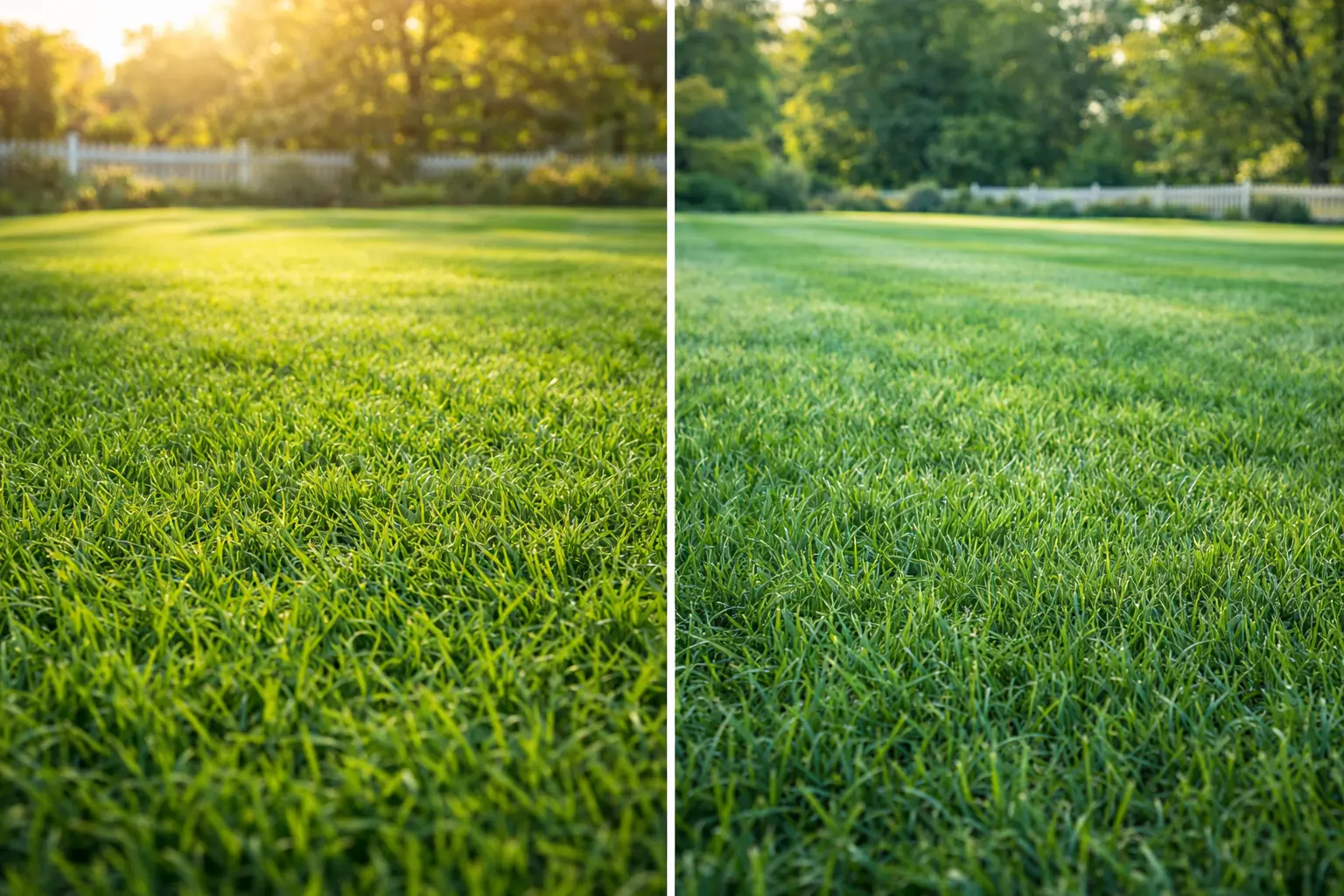
Cool-Season Grasses
Cool-season grasses are the opposite. They love spring and fall. Summer heat slows them way down.
Common types:
- Kentucky Bluegrass — gorgeous but high-maintenance, common in Ohio, Minnesota
- Tall Fescue — tough and adaptable, great for the Transition Zone
- Perennial Ryegrass — fast-germinating, often mixed with bluegrass
These lawns grow fastest in April, May, September, and October. In the heat of July? Growth nearly stops. Mowing every ten to fourteen days in midsummer is totally fine.
I learned this in Ohio. I kept mowing my bluegrass every five days in August out of habit. It was pointless. The grass barely grew. I was just stressing it for no reason.
2. The Season and Regional Climate
Season matters just as much as grass type.
Spring is where most lawns explode with growth. Cool-season grasses especially — I’ve had weeks in April where my fescue grew over an inch in just four days. Mowing twice a week wasn’t unusual.
Summer splits in two directions:
- Southern lawns (Bermuda, Zoysia) peak — mow often
- Northern lawns (bluegrass, fescue) slow down — mow less
Fall brings a second growth surge for cool-season grasses. It’s almost like spring again. Mowing frequency picks back up.
Winter — for most of the country, you just stop. Your mower can rest. You can rest.
I remember my first fall in Tennessee. My tall fescue suddenly woke up in September after a lazy August. Caught me off guard. Had to mow three times in two weeks just to keep up.
There’s regional nuance here too:
- In Florida and Southern California, you may mow year-round
- In the Midwest, you might get a hard first frost in October that ends things fast
- In Seattle, the mild, rainy winters mean cool-season grasses grow almost all year
Your zip code shapes your schedule more than any general advice ever will.
3. Rainfall and Irrigation Habits
More water means faster growth. It’s that simple.
If you’re running sprinklers every other day or live somewhere that gets regular summer rain, your grass is growing faster than your neighbor who hand-waters twice a week.
I had two identical lawns side by side one summer. One house had an irrigation system set to three days a week. The other relied on rain. By mid-June, the irrigated lawn needed mowing every six days. The dry lawn? Every ten.
Same grass. Same neighborhood. Very different schedules.
A few things to keep in mind:
- After heavy rain, wait at least 24 to 48 hours before mowing
- Wet grass clumps, sticks to the deck, and cuts unevenly
- Soft, wet soil can leave ruts from mower wheels
I’ve clogged a mower deck more than once by going out too soon after a storm. It’s a mess. Trust me — just wait.
4. Fertilization Schedule
Fertilizer is like rocket fuel for grass. The nitrogen especially.
After a good fertilization, you can almost watch the lawn grow. And that means you’ll be mowing more for the next two to three weeks.
I over-fertilized my front yard in May one year. Used a fast-release nitrogen product — Scott’s Turf Builder, applied a little too generously. My lawn went from “slightly slow” to “out of control” within a week.
I mowed it on Monday. By Thursday, it needed it again. Saturday, same thing. By the following Monday, I was back out there, muttering to myself.
Four mows in one week. I still think about it.
The fix? Use slow-release fertilizers like Milorganite when you can. They feed steadily over time instead of triggering a growth explosion.
And always factor in your mowing schedule before you fertilize. Don’t add fuel right before a vacation.
5. Your Mower Type and Cut Quality
Your equipment matters more than people realize.
A reel mower cuts at very low heights — great for Bermuda, not ideal for tall fescue. A rotary mower handles most lawns well but needs sharp blades to do it cleanly.
Dull blades don’t cut grass — they tear it. Torn grass turns brown at the tips. It looks bad and opens the plant up to disease.
I switched to an Ego battery-powered mower two years ago. Best mowing upgrade I’ve ever made. Consistent blade speed, easy deck adjustment, quiet enough that my neighbors don’t give me looks on Sunday mornings.
For bigger lots, John Deere and Cub Cadet riding mowers are workhorses. For tight, precise cuts on small yards, a Honda push mower is hard to beat.
Whatever you use — keep those blades sharp.
A Practical Mowing Schedule by Season (U.S.-Specific Guide)
Here’s what I actually follow — adjusted by region, grass type, and real lawn behavior.
This is the real-world schedule for how often
should you mow your lawn — not the textbook version. Not the textbook version. The one that actually accounts for how grass grows in the real world, through real seasons, in real American backyards.
Spring Mowing Schedule (March–May)
Spring is when things get serious.
For cool-season lawns, growth accelerates fast once soil temps hit 50°F. I start watching mine closely in late March. By mid-April in the Midwest, I’m usually mowing every five to seven days.
For warm-season lawns, hold off until temps are consistently above 65°F. Mowing Bermuda grass before it fully wakes up just damages it.
A few spring mowing habits I swear by:
- Check blade sharpness before the first cut of the season
- Don’t rush the first mow — let the grass wake up first
- Scalp dormant Bermuda in early spring to remove dead material and let sunlight in
- Start at your grass’s normal height — don’t try to catch up by cutting low
There’s something genuinely satisfying about that first spring mow. The fresh-cut smell. The clean green stripes across the lawn. The dog running through them immediately and ruining everything.
Worth it every time.
Summer Mowing Schedule (June–August)
Summer is where schedules diverge the most.
If you’re in Atlanta with Bermuda grass, you’re mowing every five to six days. No exceptions. That grass grows relentlessly from June through August.
If you’re in Wisconsin with Kentucky bluegrass? You might mow every twelve to fourteen days in July. The heat slows everything down. Cutting it more often just stresses it.
Key summer mowing habits:
- Raise your deck height by half an inch in peak heat — taller grass = deeper roots = better heat tolerance
- Never mow at midday — late morning or early evening is ideal
- Skip the mow if your lawn is showing heat stress (grayish color, footprints staying visible)
- Water the day before you mow if it’s been very dry — dry, rigid grass cuts poorly
In Phoenix, I’ve seen homeowners mowing St. Augustine every ten days in July even with daily irrigation. The heat is so intense it slows even warm-season grasses. Regional climate really does change everything.
Fall Mowing Schedule (September–November)
Fall is my favorite lawn season. Cool nights, lower humidity, and for cool-season grasses — a second wind.
My tall fescue in Tennessee would go from sluggish in August to visibly growing in September. I’d be back to mowing every seven days by October.
Warm-season lawns start slowing down. You can stretch Bermuda and Zoysia to every ten to fourteen days by late September.
Fall mowing tips:
- Keep mowing until growth actually stops — don’t quit too early
- Use your mower to mulch fallen leaves instead of raking — it’s faster and feeds the lawn
- Do a slight deck lowering for the last mow before dormancy — but never below two inches
- Clean your mower deck and sharpen blades before winter storage
That last fall mow matters. Too long going into winter invites snow mold. Too short leaves roots exposed to freezing temps.
Winter Mowing Schedule (December–February)
In Minnesota? Your mower is hibernating. Let it rest.
For most of the U.S., winter means no mowing. Lawns go dormant. Growth stops. You put the mower away, clean it up, and forget about it until March.
But if you’re in Southern California, South Florida, or along the Gulf Coast, you might do light mowing every three to four weeks through winter. The grass doesn’t fully go dormant in mild climates.
One thing to remember — never mow a dormant warm-season lawn aggressively. You can damage the crown and delay spring green-up. If you must mow in winter (leaves, debris), raise the deck way up and keep it brief.
Mowing Frequency by Grass Type — Quick Reference Guide
This is the cheat sheet I wish someone had given me when I first started.
I’ve grown just about every major grass type at this point. Here’s the honest rundown — no sugarcoating.
Bermuda Grass Mowing Frequency
Bermuda is aggressive. It grows fast, spreads everywhere, and needs frequent mowing to look its best.
- Ideal height: 0.5–1.5 inches
- Mowing frequency: Every 5–7 days; twice weekly at peak growth
- Common in: Southeast U.S., Texas, Arizona, Gulf Coast
- Best mower: Reel mower for clean low cuts, or a low-deck rotary
Bermuda responds well to frequent mowing. The more you cut it (within reason), the thicker and denser it gets.
Kentucky Bluegrass Mowing Frequency
Bluegrass is beautiful when it’s happy. It’s also demanding.
- Ideal height: 2.5–3.5 inches
- Mowing frequency: Every 7–10 days in growing season
- Common in: Midwest, Northeast, mountain states
- Tip: Never cut below 2 inches — bluegrass doesn’t bounce back quickly
This is the grass of perfect suburban lawns in Ohio and Minnesota. It rewards good care with deep blue-green color and a lush look.
St. Augustine Grass Mowing Frequency
St. Augustine is thick, tough, and loves warmth.
- Ideal height: 3–4 inches
- Mowing frequency: Every 7–10 days in summer
- Common in: Florida, Gulf Coast, Hawaii
Never scalp it. St. Augustine has limited ability to regenerate from the crown if you cut it too low. Ask anyone who’s made that mistake in their Florida yard — it takes weeks to recover.
Tall Fescue Mowing Frequency
Fescue is the workhorse of the Transition Zone.
- Ideal height: 3–4 inches
- Mowing frequency: Every 7–10 days
- Common in: Virginia, Missouri, Tennessee, the Mid-Atlantic
I’ve grown tall fescue more than any other grass. It’s forgiving, drought-tolerant, and handles shade better than most. Keep it tall in summer. It thrives at the higher end of its range.
Zoysia Grass Mowing Frequency
Zoysia is the slow grower of the warm-season world.
- Ideal height: 1–2 inches
- Mowing frequency: Every 7–14 days (sometimes longer in slow seasons)
- Common in: Southeast, Mid-Atlantic
Honestly? Zoysia is the low-maintenance dream. It’s dense, it chokes out weeds on its own, and it just doesn’t grow that fast. I’ve gone twelve days between mows with Zoysia and it still looked presentable.
Signs You’re Mowing Too Often (And Damaging Your Lawn)
Mowing more is not always better. I learned this the hard way one June in Tennessee.
Most people assume a perfectly trimmed lawn is a healthy one. Not always true. There’s a real cost to over-mowing — and most homeowners never connect the mowing habit to the damage they see.
Scalping and Soil Exposure
Scalping is when you cut too short and expose bare soil through the turf.
Signs include:
- Brownish, straw-colored patches
- Visible soil between grass plants
- Thinning turf that never seems to fill back in
The fix is simple — raise your deck height and let the grass recover. Stop mowing until it fills back in.
Increased Weed Pressure
Short grass lets sunlight hit the soil directly. That’s basically a welcome mat for weed seeds.
Crabgrass, dandelion, and goosegrass all love a short, stressed lawn. In the humid Southeast especially, weed seeds are waiting in the soil for exactly this opportunity.
I watched crabgrass take over a front lawn in Georgia in less than one season. The homeowner had been mowing low all summer to get that “golf course look.” By August, it looked like a crabgrass showcase.
The lawn height was the problem all along.
Weakened Root System
Every time you mow, the grass plant has to recover. Cut too often, and you’re constantly interrupting that recovery cycle.
The result is shallow roots. Shallow roots mean poor drought tolerance. In a dry summer in Texas or Kansas, that lawn will fry fast.
Let the grass grow a little. Deeper blades mean deeper roots. Deeper roots mean a more resilient lawn.
Disease and Fungal Issues
Frequent mowing on wet grass is the fastest way to spread lawn fungus.
Mower blades carry spores from one part of the lawn to another. Over-mowed, stressed turf can’t fight back.
Common problems from over-mowing in humid areas:
- Brown patch (especially on fescue and bluegrass)
- Dollar spot (shows up on Bermuda and Zoysia)
- Gray leaf spot (common on St. Augustine in Florida)
Always mow dry when you can. And clean your deck if you’re dealing with disease.
Signs You’re Not Mowing Enough (And What It Costs You)
On the flip side — waiting too long has its own set of problems. Ask my neighbor.
He went on a two-week vacation in July. Georgia summer, Bermuda grass, full irrigation system running. He came home to what I can only describe as a small jungle.
I felt bad. But also, I’d warned him.
Clumping and Thatch Buildup
When grass gets too long before you cut it, the clippings are too big to break down naturally.
They sit on top of the turf in thick clumps. Those clumps smother the grass underneath. If this happens regularly, it contributes to thatch buildup over time.
The fix:
- Bag clippings when the lawn is overgrown
- Switch to mulching only after you’ve gotten back to the proper height
- Never dump a full bag of clippings back onto the lawn in one spot
Weed Takeover
Tall grass sounds like it would crowd out weeds. Sometimes it does. But often, the weeds are already tall too — and now they’re seeding.
Skip two weeks of mowing in a Florida summer and you’ll find weeds seeding at eye level. Once those seeds drop, you’re fighting a war that extends into next season.
Difficult Mowing and Equipment Strain
Overgrown lawns are hard on mowers.
I’ve bogged down a perfectly good Toro self-propelled trying to cut through six-inch fescue. The engine strains. The blades slow. You get an uneven, ragged cut.
For really overgrown lawns:
- Make the first pass at a higher deck setting
- Let the clippings settle
- Come back in two to three days and cut at your target height
This is called double-cutting. It’s slow and tedious. Good reminder to never let it get that far again.
Pest Habitat Creation
Tall grass is a five-star hotel for ticks and mosquitoes.
In the Northeast and Midwest, tick populations are genuinely concerning. Lyme disease is real. Keeping the lawn trimmed is one of the simplest ways to reduce tick habitat around your home.
Nobody wants to find a tick on their kid because the backyard got away from them for a few weeks. That thought alone motivates me to stay on schedule.
Pro Tips for Mowing Better, Not Just More Often
These are the habits that separate a healthy lawn from just a mowed one.
You can follow the perfect schedule but still get mediocre results. These habits are what actually move the needle.
Always Mow With Sharp Blades
This is the single most impactful thing most homeowners ignore.
Dull blades rip and tear grass instead of cutting it cleanly. The torn tips turn brown within a day. It makes a green lawn look patchy and tired.
How to check: After mowing, look at a grass blade up close. A sharp blade leaves a clean, horizontal cut. A dull blade leaves a frayed, jagged edge.
Sharpening schedule:
- Once at the start of each season minimum
- Every 20–25 hours of use on larger lawns
- More often if you’re mowing sandy or gritty soil (dulls blades faster)
Replacement blades for Honda, Toro, and Ego mowers are all under $30. It’s cheap insurance.
Vary Your Mowing Pattern
This one surprised me when I first learned it.
Mowing in the same direction every single time compacts soil in the same tracks. It also trains grass to lean one way, which reduces upright growth and can create shallow ruts over time.
Just rotate 90 degrees each mow. North-south one week, east-west the next, diagonal the week after.
Your lawn will grow more upright. You’ll get better-looking stripes. And your soil stays healthier.
There’s something almost meditative about laying fresh diagonal stripes across a well-kept fescue lawn. It looks intentional. It looks cared for.
Mow at the Right Time of Day
Best time: mid-morning, after the dew dries but before the afternoon heat.
Here’s why timing matters:
- Early morning — grass is wet with dew; uneven cut, clumping, disease risk
- Midday — heat is brutal; freshly cut grass gets stressed harder in peak sun
- Late evening — cut grass left overnight in moisture increases fungal risk
In the humid Southeast, timing is especially important. Fungal diseases spread faster in warm, moist conditions. Mowing dry, in the morning, is your best defense.
Mulch Clippings When Possible
Bagging clippings every single mow is unnecessary work. It also throws away free fertilizer.
Grass clippings are rich in nitrogen. Mulched back into the lawn, they break down and feed the soil. This practice is called grasscycling. It genuinely reduces how much fertilizer you need to buy.
When to mulch:
- Whenever you’re mowing within the one-third rule
- When the lawn is dry and clippings will scatter evenly
When to bag:
- When the grass is overgrown and clippings are thick
- When disease is present and you don’t want to spread it
Most Toro, John Deere, and Craftsman mowers have a mulch mode. Use it as the default.
Adjust Height Seasonally
Don’t set your deck once and forget it.
A simple seasonal adjustment makes a real difference:
- Spring and fall — standard height for your grass type
- Peak summer — raise by 0.5 to 1 inch to protect roots from heat
- Last fall mow — lower slightly to discourage snow mold and pest habitat
This is a two-minute adjustment with a tool that comes with your mower. It’s worth doing every season.
Mowing Frequency and Lawn Health — The Science Behind It
You don’t need a PhD. But knowing the basics changes how you think about every mow.
Once I understood a little of the biology, I stopped thinking of mowing as a chore. It’s actually management. You’re guiding how the plant grows.
How Grass Grows (And Why It Matters for Mowing)
Grass grows from the crown — the dense growing point at the base of the plant.
This is why you can cut the tips off repeatedly without killing the plant. The crown keeps pushing new growth upward.
But the leaf blade matters too. It’s where photosynthesis happens. More leaf surface = more sunlight captured = more energy produced.
When you cut too much, you strip that energy-producing surface. The plant has to tap into its stored carbohydrates just to survive. If you keep doing it, those reserves run out.
That’s when you see real decline.
Stress Responses in Turfgrass
Mowing is a controlled stress. Done right, it actually builds resilience.
Regular mowing at the right height encourages tillering — the process where grass produces new lateral shoots. More tillers mean denser, thicker turf.
But too much mowing stress tips the balance. The plant stops producing tillers and starts conserving energy. Growth becomes thin and vertical. Weeds move in.
The difference between a thick, lush lawn and a thin, weedy one often comes down to mowing stress management.
The Relationship Between Mowing Height and Root Depth
Research from university turf programs consistently shows the same thing: taller mowing height equals deeper roots.
It makes biological sense. A taller plant produces more energy. More energy goes into root development. Deeper roots access more water and nutrients.
In dry states like Texas, Arizona, and California, this isn’t just academic. A lawn with deep roots can handle a stretch of drought that would fry a shallow-rooted lawn. Mowing height is one of the cheapest drought-tolerance tools you have.
I raised my fescue height from 3 inches to 4 inches two summers ago. In a dry stretch in August, it stayed green two weeks longer than my neighbor’s lawn. Same grass seed. Same soil. Just different deck settings.
Mowing Frequency for Different Lawn Sizes and Setups
A quarter-acre in Ohio plays by different rules than a half-acre in Mississippi.
The frequency of mowing doesn’t change based on lawn size — the grass still grows at the same rate. But the equipment, time commitment, and strategy all shift.
Small Yards (Under 5,000 sq ft)
Small lawns are where battery-powered mowers shine.
- Ego, Greenworks, and Honda make excellent options in this range
- A single charge handles most small yards easily
- You have precise control over height and direction
- Time per mow: 20 to 30 minutes
For a city lot or a tight suburban yard, a push mower is all you need. No need to overthink it.
Medium Yards (5,000–15,000 sq ft)
This is where a self-propelled mower starts earning its place.
- The Toro Recycler and Honda HRX series are excellent here
- Husqvarna’s self-propelled lineup handles hilly terrain well
- Time per mow: 45 to 60 minutes
- Mowing pattern matters more — think about efficiency
For medium lawns, I’ve found that a consistent pattern (north-south one week, diagonal the next) makes the mow faster and the results more uniform.
Large Yards (Over 15,000 sq ft / Over ⅓ Acre)
At this size, a riding mower or zero-turn becomes a practical necessity.
Popular choices:
- John Deere — dependable, widely serviced, great for straightforward terrain
- Cub Cadet — solid mid-range option with good deck width
- Husqvarna zero-turn — fast and precise once you get used to the controls
Time per mow: one to two hours depending on terrain and layout.
For large properties, I recommend mowing in zones. Divide the yard into sections and rotate. It helps you notice issues in specific areas and keeps the mowing more manageable mentally.
Slopes, Hills, and Complex Terrain
Slopes change everything — safety first, then technique.
- For slopes under 15 degrees: a self-propelled mower with good traction works well
- For steeper slopes: consider a wheeled string trimmer or a slope-rated mower
- Zero-turn mowers should never be used on steep grades — they can tip or slide
Always mow across a slope, not up and down. Going up and down risks the mower sliding back toward you. Going across keeps the machine stable.
I’ve mowed some genuinely steep backyard slopes in Tennessee. The self-propelled Husqvarna was my best friend on those days. Good torque, good wheel grip, manageable.
Common Mowing Mistakes U.S. Homeowners Make (And How to Fix Them)
I’ve made most of these. Probably all of them, honestly.
Nobody starts out knowing the right way. Most of us just copy what we saw our parents do, which was probably learned from someone equally clueless. Here are the big ones.
Mistake #1 — Mowing on a Rigid Weekly Schedule Regardless of Growth
“Every Saturday, no matter what” is not a lawn care strategy. It’s just a habit.
Some weeks the grass grows an inch in four days. Other weeks it barely moves. A rigid calendar ignores all of that.
The fix: use your grass height as the trigger, not the day of the week. Check it Tuesday. If it’s hit the one-third threshold, mow. If not, leave it.
Mistake #2 — Cutting Wet Grass
We’ve all done it. You have a window on Sunday morning and the lawn is still damp from Saturday’s rain.
The cut is uneven. Clippings clump. Fungal spores spread. Your deck gets packed with wet grass that you’ll spend twenty minutes cleaning.
Just wait. Give it a day.
How to tell if it’s too wet: press your foot into the lawn. If it leaves a visible impression in the soil, too wet. If the grass bends and doesn’t spring back upright, too wet.
Mistake #3 — Never Changing the Mowing Height
Set it in April and forget it until November. I used to do this.
The problem is that grass needs different things in May versus July. In May, standard height is fine. In July, raising the deck protects those roots from heat stress.
It’s a two-minute adjustment. Just do it.
Mistake #4 — Ignoring Blade Maintenance
The most overlooked mower task in America. Hands down.
Most homeowners sharpen their mower blades once every few years. Maybe never. Meanwhile, they’re tearing through their grass every week with something closer to a butter knife than a blade.
Sharpen at the start of each season. Check them mid-season if you’re doing a large lawn. Your grass will look noticeably better within one mow of a fresh blade.
Mistake #5 — Mowing Dormant Grass
In the Southeast, this comes up every mild winter. There’s a warm week in January. The lawn looks kind of green. The itch to mow is real.
Don’t do it. Warm-season grasses in dormancy aren’t ready to be mowed. You can damage the crown — the part that generates all new spring growth.
If you must get out there for debris cleanup, raise the deck as high as it goes and barely skim the surface. That’s the only exception.
Frequently Asked Questions About Lawn Mowing Frequency
These are the questions I get asked most about
how often should you mow your lawn — from neighbors, online forums, and my own years of figuring it out.
Is It Okay to Mow Twice a Week?
Yes — for the right grass type in the right season.
Bermuda grass in peak summer in Georgia? Twice a week is normal and healthy. It’s dense, it’s aggressive, and it rewards frequent cutting.
For cool-season grasses in summer? Twice a week is probably too much. You’d be stressing grass that’s already struggling with heat.
Follow the one-third rule and let growth drive the decision.
What If I Miss a Week of Mowing?
Don’t panic. Don’t scalp it trying to get it back to normal height in one pass.
Here’s the right approach:
- Set the deck one level higher than usual
- Make the first cut to remove the top third
- Wait three to four days
- Lower the deck slightly and cut again
- Repeat until you’re back to your target height
We’ve all come back from vacation to a jungle. Work your way back down gradually. Your lawn will recover.
Should I Mow After It Rains?
Give it at least 24 hours. Ideally 48 if the rainfall was heavy.
Wet grass:
- Cuts unevenly and leans to one side
- Clumps under the deck
- Spreads fungal disease through the mower
- Leaves ruts in soft soil from mower wheels
Lightly damp is usually manageable. Soaked and muddy is a hard no.
How Short Should I Mow in the Fall?
Do not go below two inches for any grass type.
A slight reduction from your summer height is fine for the final fall mow — maybe half an inch lower. This reduces the risk of snow mold over winter and helps the crown harden off before frost.
But scalping in the fall is just as damaging as scalping in summer. The grass needs some leaf coverage going into winter.
Can I Mow in the Heat of Summer?
Yes — with adjustments.
- Raise the deck height by at least half an inch compared to spring
- Never mow between 10 AM and 4 PM on hot days
- If your lawn shows heat stress (grayish tint, wilting look), skip the mow and water instead
- Early morning or after 5 PM is ideal
Mowing heat-stressed grass causes double damage. The cut exposes fresh tissue to harsh sun at exactly the wrong time.
The Honest Bottom Line on Mowing Frequency
There is no perfect answer to how often should
you mow your lawn that works for every lawn
in every state.
But here’s what I know for sure: a lawn cared for based on actual growth — not a rigid schedule, not guesswork — looks better, stays healthier, and requires less intervention over time.
Follow the one-third rule. Know your grass type. Adjust for the season. Keep those blades sharp.
Whether you’re in humid Louisiana with St. Augustine going wild in August, or in Minnesota watching your bluegrass barely move in a dry July — the principles are the same. Only the timing shifts.
Your lawn is telling you when it needs attention. Once you start reading those signals instead of following a calendar, everything gets easier.
And honestly? There’s real pride in a well-kept lawn. The kind where the stripes are clean, the edges are tight, and the color is that deep, genuine green.
You put in the work. You learned the right way to do it.
That’s worth something.