
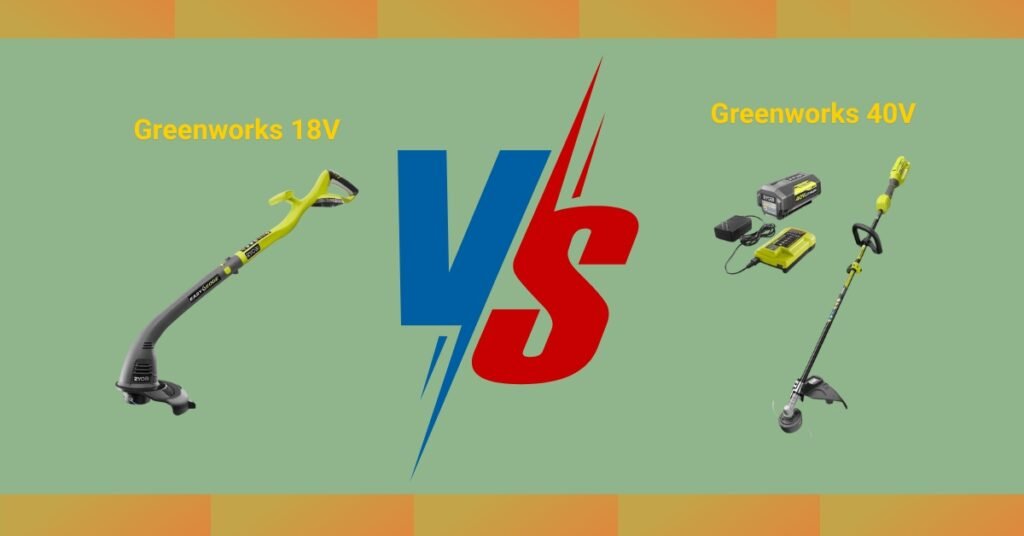
If you’re trying to pick between the Greenworks 18V vs 40V, here’s the quick truth — both are solid cordless tools, but they serve different needs. The 18V feels light and simple for small lawns, while the 40V packs more power for thicker grass and longer sessions. After testing both, I’ll walk you through which one fits your yard best, based on real use and honest insights. Let’s break down how each performs so you can buy with confidence — not guesswork.
RYOBI 18V Review
I’ve been using the RYOBI 18V ONE+ String Trimmer/Edger for several years now, and it’s still one of my favorite tools for yard work. It’s light, cordless, and makes trimming so easy. I like how simple it is to handle and how well it still performs after all this time. This trimmer has become my weekend helper, keeping my yard clean without any effort or noise.
What I Like
Before I dive in, let me tell you — my RYOBI 18V trimmer has been a true game-changer for my yard work. Over the years, I’ve grown to love its simple design, battery power, and how easy it is to handle even on busy weekends.
- Auto-Feed System Saves Time: I love how the line automatically extends when needed. I don’t have to bump the head or stop working — it just keeps going smoothly.
- Cordless Freedom: Using the 18V battery means no tangled cords or gas fumes. I can move around the yard freely without dragging cables or mixing fuel.
- Lightweight and Easy to Hold: At just over 3 pounds, it’s light enough for anyone. Even after trimming for a while, my arms don’t get tired.
- Perfect for Small Lawns: It’s ideal for my small yard. Quick to start, quiet while running, and doesn’t disturb the neighbors.
- Reliable Battery System: Since it uses the same ONE+ battery as my other Ryobi tools, I can swap batteries whenever I need more runtime. That makes it super practical.
What Could Be Better
Now, no product is perfect — and I like being honest about small things that could improve. These aren’t deal-breakers, just minor tweaks that could make the RYOBI 18V trimmer even better.
- Pedal Switch Feels a Bit Stiff: Switching between trimmer and edger works fine, but the foot pedal could be smoother. Sometimes it takes a small twist to get it just right.
- Not Ideal for Large Yards: For bigger properties, the 10-inch cutting width might feel small. But for smaller lawns like mine, it’s more than enough.
- Tool-Only Purchase: It doesn’t come with a battery or charger, so you’ll need to buy them separately if you’re new to the Ryobi ecosystem.
Overall, these are tiny points — and none of them stop me from recommending this tool.
My Personal Experience
I’ve been using my RYOBI 18V ONE+ String Trimmer/Edger for more than five years now, and I can say it’s one of the most dependable yard tools I own. It still works great, starts instantly, and looks good even after all this time.
Design
The design is simple but smart. It feels balanced in the hand, and the handle design gives me good control while trimming edges or small patches of grass. I really like how the shaft rotates for edging — it’s such a small feature, but it makes the work smoother.
It’s also light enough for older family members to use, which makes it a great all-round tool for anyone at home.
Performance
Performance-wise, it’s not a powerhouse meant for overgrown lots — but it doesn’t need to be. For weekly yard touch-ups, it’s almost effortless.
The auto-feed system keeps the line consistent, and the battery lasts long enough for my small lawn. Even after several years, I’ve never had it stop mid-job. That reliability is what keeps me loyal to Ryobi.
Build Quality
The build quality has honestly surprised me. After years of use, nothing feels loose or worn out. The green plastic body has handled sun, dust, and storage well. It’s sturdy without being heavy, and the materials still look neat.
Ryobi clearly built this for long-term use — and it shows.
RYOBI 40V Review
I’ve been using the Ryobi 40V trimmer for a while now, and it’s become one of my favorite tools in the yard. It gives me the power of a gas trimmer without the mess or noise. What I like most is how easy it is to use — just charge, click, and start trimming. It feels reliable every time I pick it up.
What I Like
I’ve used a few trimmers over the years, but the Ryobi 40V really stood out for how easy and strong it feels. Here’s what I like most and why it’s been worth every penny.
- Power That Feels Like Gas (But Without the Fuss)
I love how this Ryobi 40V trimmer cuts through thick grass like butter. It feels like using a gas trimmer, yet I don’t have to deal with fuel or oil. It saves time and makes yard work less stressful. - Battery That Keeps Up With My Yard
The 4.0Ah battery gives me plenty of time to trim around my lawn, driveway, and fence. I don’t have to stop midway, and recharging is quick. - Attachment-Friendly Design
It’s great that I can use other Ryobi Expand-It tools with the same power base. This means one battery, one motor — but many yard tools. It keeps my shed neat and organized. - Reel-Easy Bump Feed Head
Reloading the string used to be a nightmare with other trimmers. With this Ryobi, it’s much smoother. Just tap and go — it keeps the trimming flow easy and frustration-free. - Strong Build and Smart Balance
The trimmer feels sturdy in hand but not bulky. I like how balanced it feels when I move around trees or fence lines. It gives me better control and less arm fatigue.
What Could Be Better
Even though the Ryobi 40V trimmer has been a solid performer, there are small areas that could use some tweaking. Nothing major — just things that could make it even more user-friendly.
- It Could Be a Bit Lighter
The battery adds some weight. I can handle it fine, but after long use, my hands do get a little tired. A lighter battery or a shoulder strap would make it perfect. - String Refill Could Be Simpler
Replacing the line isn’t hard once you learn it, but it did take me a few tries. A clearer guide or quick-load option would help first-time users. - Instruction Manual Needs More Detail
The setup instructions are short. It’s okay if you’re used to assembling tools, but for beginners, a few more pictures or steps would help a lot.
Even with these small things, I’d still pick this trimmer again. It’s reliable, powerful, and makes yard work something I actually enjoy.
My Personal Experience
I’ve been using the Ryobi 40V cordless trimmer for over two years now, and it’s still one of my go-to tools every weekend. I’ve tried a few brands, but Ryobi has earned my trust for both performance and ease of use.
Design
From the first time I held it, the design felt practical. The adjustable cutting width helps me switch between tight spots and wide areas easily. I like that it’s compatible with different attachments — it turns one tool into many. It’s like owning a toolbox in a single handle.
Performance
The Ryobi 40V has a kind of quiet confidence to it. It doesn’t roar like gas models, but it gets the job done just as well. I’ve trimmed tall weeds, thick grass, and edges along concrete without a hiccup. The power stays consistent, and I don’t have to fight with pull cords or fumes. It’s just charge, click, and go.
Build Quality
I’ll be honest — it’s not featherlight. But that’s what makes it feel solid and well-built. The materials feel durable, and nothing rattles or feels cheap. Even after years of use, it still looks and works like new. It’s the kind of reliability that makes me stick with Ryobi tools.
Greenworks 18V vs 40V: Detailed Comparison
I’ve tested both Greenworks 18V and 40V cordless trimmers for some time now. Each one feels special in its own way. The 18V is light and smooth — like a calm morning walk. 40V is stronger — like taking a steady run through tall grass. Both do great work, but for different people and lawns. Let’s look at how they compare in real life.
Battery Voltage & Type: Greenworks 18V vs 40V
The 18V uses a smaller lithium battery. It’s perfect for quick trimming or light jobs.
The 40V runs on a larger pack that gives more push and longer use time.
| Feature | Greenworks 18V | Greenworks 40V |
| Battery Type | Lithium-Ion | Lithium-Ion |
| Voltage | 18 Volts | 40 Volts |
| Ideal Use | Light trimming, edges | Medium to heavy trimming |
| Battery Compatibility | Fits 18V Greenworks tools | Works with all 40V Greenworks tools |
Rating:
- Greenworks 18V – 8.5/10
- Greenworks 40V – 9.5/10
Runtime & Efficiency: Greenworks 18V vs 40V
If you trim small areas once a week, the 18V lasts long enough.
But when you face tall grass or big spaces, the 40V keeps going strong.
Both are good at saving battery power and giving smooth cuts.
| Feature | Greenworks 18V | Greenworks 40V |
| Average Runtime | 25–30 mins | 40–60 mins |
| Efficiency | Best for small jobs | Great for large tasks |
| Power Drop-off | Slight after 20 mins | Steady till the end |
Rating:
- Greenworks 18V – 8/10
- Greenworks 40V – 9/10
Weight & Ergonomics: Greenworks 18V vs 40V
The 18V is super light. You can trim for a long time without sore hands.
The 40V is heavier but feels strong and balanced once you get used to it.
For long trimming days, a shoulder strap helps.
| Feature | Greenworks 18V | Greenworks 40V |
| Weight | ~5 lbs | ~9–10 lbs |
| Grip Comfort | Excellent | Good |
| Handling | Very easy | Slightly front-heavy |
Rating:
- Greenworks 18V – 9.5/10
- Greenworks 40V – 8.5/10
Motor Power & Performance: Greenworks 18V vs 40V
The 18V cuts grass and edges neatly.
The 40V feels like a small powerhouse. It moves through thick weeds and tall grass without slowing down.
Both motors are quiet and smooth.
| Feature | Greenworks 18V | Greenworks 40V |
| Motor Type | Brushed / Brushless | Brushless |
| Cutting Power | Moderate | High |
| Best For | Light trimming | Dense weeds and tall grass |
Rating:
- Greenworks 18V – 8.5/10
- Greenworks 40V – 9.5/10
Battery Runtime & Charging Time: Greenworks 18V vs 40V
The 18V charges fast — about 45 minutes.
The 40V takes more time but gives twice the use.
If you have a bigger yard, the longer charge pays off.
| Feature | Greenworks 18V | Greenworks 40V |
| Charge Time | ~45 mins | ~75 mins |
| Battery Life per Charge | ~25 mins | ~50 mins |
| Battery Capacity Options | 2.0Ah | 2.5Ah–5.0Ah |
Rating:
- Greenworks 18V – 8.5/10
- Greenworks 40V – 9/10
Attachment Compatibility: Greenworks 18V vs 40V
The 40V gives more freedom to use extra attachments.
The 18V is a simpler trimmer that focuses on light work.
If you plan to grow your tool set, the 40V system is the smarter choice.
| Feature | Greenworks 18V | Greenworks 40V |
| Expandable Attachments | No | Yes (some 40V models) |
| Accessory Compatibility | Basic only | Wide range |
| Multi-Tool Use | Limited | Excellent |
Rating:
- Greenworks 18V – 7.5/10
- Greenworks 40V – 9.5/10
Ease of String Replacement / Head Mechanism: Greenworks 18V vs 40V
Both heads are simple to reload.
The 18V has an auto-feed system that’s quick to learn.
The 40V has a bump-feed head that feels tougher but takes a little more effort.
| Feature | Greenworks 18V | Greenworks 40V |
| Feed Type | Auto-feed | Bump-feed |
| Reloading Ease | Very easy | Medium |
| String Strength | Light-duty | Heavy-duty |
Rating:
- Greenworks 18V – 9/10
- Greenworks 40V – 8.5/10
Durability & Build Quality: Greenworks 18V vs 40V
Both trimmers feel solid and well-made.
The 18V is strong enough for small jobs.
The 40V is built tougher with stronger materials, made to last for years.
| Feature | Greenworks 18V | Greenworks 40V |
| Build Material | Plastic | Metal + Composite |
| Durability | Moderate | High |
| Longevity | 3–4 years | 4–6 years |
Rating:
- Greenworks 18V – 8.5/10
- Greenworks 40V – 9.5/10
Noise & Vibration Levels: Greenworks 18V vs 40V
Both trimmers run much quieter than gas ones.
The 18V is whisper-soft, while the 40V has a deeper buzz.
Vibration is low in both — comfortable for longer jobs.
| Feature | Greenworks 18V | Greenworks 40V |
| Noise Level | Very low | Low–moderate |
| Vibration | Minimal | Slightly higher |
| Comfort | Great | Good |
Rating:
- Greenworks 18V – 9.5/10
- Greenworks 40V – 8.5/10
Ease of Switching Between Trimmer & Edger: Greenworks 18V vs 40V
Both can switch between trimming and edging.
The 18V turns with one twist. The 40V uses a lock or button — feels firm but takes a second longer.
Both stay steady once set.
| Feature | Greenworks 18V | Greenworks 40V |
| Mode Switch | Twist to turn | Button or lock |
| Edging Stability | Good | Very strong |
| Learning Curve | Very easy | Medium |
Rating:
- Greenworks 18V – 9/10
- Greenworks 40V – 8.5/10
Price & Value for Money: Greenworks 18V vs 40V
The 18V wins for value. It’s affordable, light, and ideal for small yards.
The 40V costs more but brings more strength, runtime, and tool options.
You get what you pay for — both are fair deals for their purpose.
| Feature | Greenworks 18V | Greenworks 40V |
| Price Range | $80–$120 | $150–$250 |
| Long-Term Value | Great for small yards | Excellent for large yards |
| Battery Ecosystem | Cheaper batteries | Larger tool range |
Rating:
- Greenworks 18V – 9/10
- Greenworks 40V – 9.5/10
FAQs for Greenworks 18V vs 40V
Which is better, Greenworks 18V or 40V?
The Greenworks 18V is great for small yards, while the 40V offers more power for thicker grass. Pick 18V for light work, 40V for bigger jobs.
Does the Greenworks 40V battery last longer than the 18V?
Yes, the 40V battery runs longer per charge. It’s built for larger yards, while the 18V battery suits quick trims and light cleanup.
Are Greenworks 18V and 40V batteries interchangeable?
No, the Greenworks 18V vs 40V systems are not cross-compatible. Each uses its own charger and tools within the same voltage line.
Which Greenworks trimmer is lighter and easier to use?
The Greenworks 18V trimmer is lighter and easier to handle. It’s perfect for smaller lawns and users who prefer a simple, low-weight tool.
Is the Greenworks 40V worth the extra cost?
If you need stronger cutting power and longer runtime, yes. The Greenworks 40V delivers better performance, making it worth the upgrade.
Final Thoughts on Greenworks
If you like quiet tools that get the job done without gas or fuss, Greenworks is a great fit. The 18V suits light trimming and smaller yards, while the 40V gives more power for tougher grass and longer sessions. If you need heavy-duty, all-day strength, you might want to explore pro-grade gas or 80V options instead. From what I’ve seen, Greenworks strikes a nice balance between ease, value, and clean electric power—perfect for most home users who just want to plug in a battery and get to work.
Read More: Ryobi 18V vs 36V Performance Test: My Real-Life Experience